

EdUHK Establishes Educational Cooperation Alliance with Kazakhstan Universities to Deepen Teacher Education Exchanges
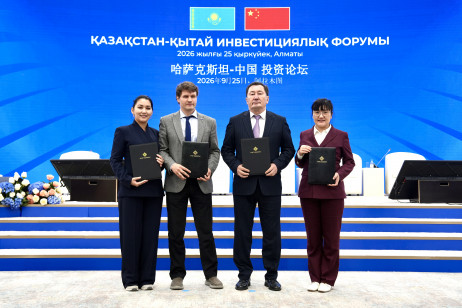
The Education University of Hong Kong (EdUHK) established an educational cooperation alliance with five universities in Kazakhstan and renewed a cooperation agreement with with the Kazakh National Women's Teacher Training University (QyzPU) last month. This initiative seeks to advance practical higher education collaboration between China and Kazakhstan, with a focus on teacher education, while fostering regional people-to-people exchanges and contributing to connectivity under the Belt and Road Initiative.
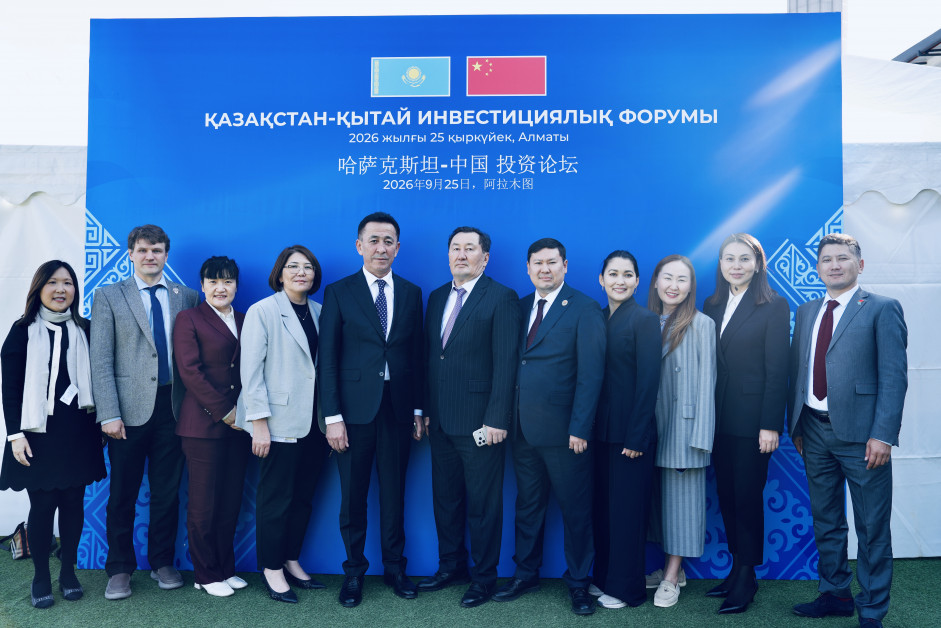
Led by Professor Michelle Gu Mingyue, Assistant Vice-President (Research), an EdUHK delegation visited Almaty on 25 September to attend the inaugural Kazakhstan‑China Investment Forum. Ms Teresa Poon Sin-yi, Assistant Registrar of the Graduate School, and Dr Wang Yifei, Internationalisation Project Manager, also joined the delegation. The forum brought together representatives from government, business, science, and education sectors of both countries to promote multi-faceted cooperation. President Kassym‑Jomart Tokayev of the Republic of Kazakhstan and First Deputy Prime Minister Nurlybek Nalibae attended the event.
EdUHK’s participation underscored the role of cultural and educational exchanges in supporting economic and trade collaboration, while reinforcing Hong Kong’s position as an educational and research hub along the Belt and Road. The alliance’s founding members include Korkyt Ata Kyzylorda University, Suleyman Demirel University, Ualikhanov University, Buketov Karaganda National Research University, and Zhanibekov University.
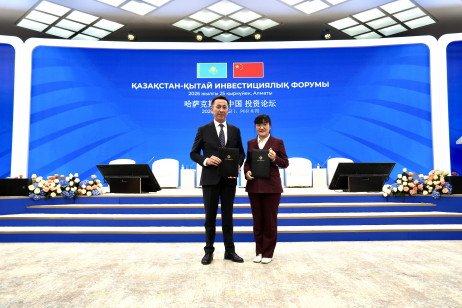
During the visit, EdUHK renewed its cooperation agreement with QyzPU. Building on previous collaboration in teacher training and integrate it with the educational strengths of Central Asia to promote mutual learning.
Professor John Lee Chi-Kin, President of EdUHK, remarked that while economic and trade cooperation facilitates regional connectivity, educational exchange lays the long‑term humanistic foundation for a sustainable partnership. He emphasised that, under the Belt and Road Initiative, cross‑border education cooperation should focus on practical capacity‑building and mutual learning, ultimately fostering people‑to‑people connectivity. He added that EdUHK prioritises teacher capacity‑building in its cross‑border collaboration, advancing China–Kazakhstan cooperation in teacher education and enhancing the teaching and research capabilities of education professionals in Central Asian countries, ensuring that the fruits of cooperation could mutually benefit both professional communities.
Since 2022, EdUHK has deepened its engagement in Central Asia, establishing regular cooperation mechanisms through workshops, teacher training, and joint research projects. The newly formed alliance will focus on teacher training and educational innovation, promoting student and faculty exchanges, academic cooperation, and specialised training to build a long-term higher education cooperation framework between China and Kazakhstan.
In recent years, EdUHK has forged stable partnerships with several key institutions in Kazakhstan. A number of trained professionals have already contributed to local educational reforms, serving as vital bridges for Sino-Kazakh cultural and educational exchange. The establishment of the alliance and the renewal of the agreement further expand the footprint of Hong Kong higher education institutions in Central Asia. Looking ahead, EdUHK will, through collaborative alliances, teacher training, and joint research, explore models for Hong Kong tertiary institutions to participate in people-to-people connectivity under the Belt and Road Initiative, promote interactive exchanges of educational resources among Chinese Mainland, Hong Kong, and Central Asia, and strengthen people-to-people bonds along the Belt and Road.
-Ends-
EdUHK Establishes Educational Cooperation Alliance with Kazakhstan Universities to Deepen Teacher Education Exchanges
Download all images