


EdUHK Prof Hans Ladegaard Affirms Language and Linguistics as Vital Human Capacities Amid the AI Tide
- 2026年04月27日
- 专题故事
- 英语教育学系
While artificial intelligence can translate between languages in milliseconds and produce grammatically correct prose on demand, Prof Hans Ladegaard, Head of the Department of English Language Education (ELE) at the Faculty of Humanities (FHM), The Education University of Hong Kong, argues it lacks the very things that make communication meaningful: critical thought, cultural nuance, and genuine human connection.
Leading a department dedicated to fostering communicative excellence and intercultural literacies, Prof Ladegaard champions a vision of language education that transcends mere technical proficiency. As Hong Kong navigates an increasingly complex, multilingual, and polarised global landscape, he articulates how linguistic and communicative skills cultivate the empathy, criticality, and confidence that no algorithm can replicate.
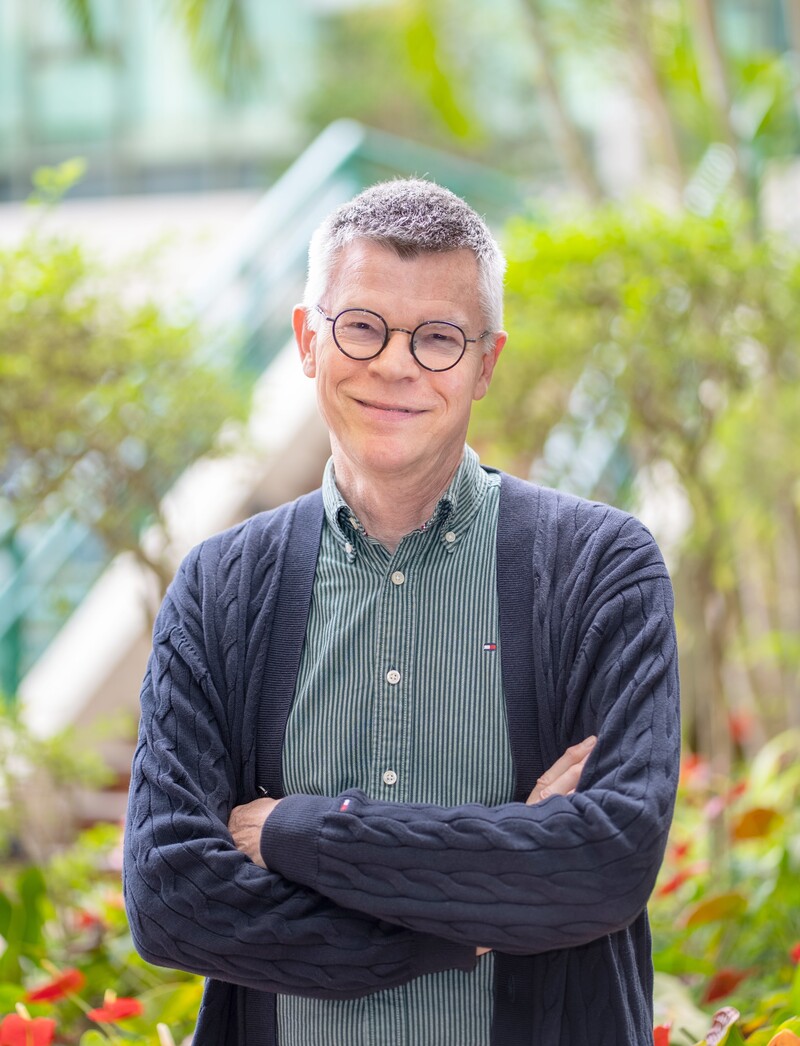
Prof Hans Ladegaard, Head of the Department of English Language Education, FHM
Cultivating Criticality in an Algorithm-Driven World
Prof Ladegaard argues that as AI advances rapidly, language and linguistics become increasingly vital for fostering skills that lie beyond the reach of algorithms. While AI can translate words and generate text with remarkable speed, language education now gravitates towards what he identifies as the most critical skill for the digital age: criticality itself. "The more AI-generated text we get out there, the clearer it becomes that one of the most important criteria for scholars and students is criticality," he explains. "We need to be able to critically assess what we see."
As a journal editor, he has witnessed firsthand the proliferation of AI-generated academic submissions—uniformly generic, impersonal, and lacking innovative insight. "I have never yet seen a creative, innovative text with a personal touch created by an AI robot," he observes. "It is usually a lot of academic jargon with very generic content."
For those anxious about human language skills becoming obsolete in the AI era, Prof Ladegaard offers reassurance grounded in fundamental human capacities. "I honestly don't think we have much to fear because if a job requires creativity and criticality—AI cannot do that. It can replicate. It can copy. It's not actually very intelligent," he emphasises. What technology lacks, he argues, is precisely what humans bring: the ability to think independently, assess information critically, and communicate with authentic personal voice. "I don't think we will get to a point where our skills and expertise as teachers, applied linguists, and professional communicators would ever become obsolete."

Prof Ladegaard emphasises we need to be able to critically assess what we see
Empowering Voices Through Language
For the advocate for criticality, language proficiency is inseparable from personal competence—a connection that becomes even more critical in our technology-saturated world. "Linguistic and communicative competence are closely related to cultural literacy and they're closely related to how we present ourselves in relation to others," he explains. As AI tools handle routine translation and text generation, the distinctly human dimensions of communication—empathy, cultural awareness, and authentic self-presentation—emerge as irreplaceable skills that define meaningful interaction.
His research on classroom participation exemplifies how language education addresses not just technical skills but the confidence essential for thriving in multilingual environments. Many Hong Kong students possess strong English fluency yet hesitate to speak up, fearing peer judgment. In a recent study on Hong Kong students’ reticence in the classroom, which he did with Dr Hassan Nedjadghanbar, he recounts: "A lot of students said, 'Just ask me questions because then I have to answer — and I actually like participating.'" The insight reveals a crucial truth: targeted pedagogical interventions can transform both linguistic ability and personal empowerment.
Championing Language as a Bridge in Polarised Times
ELE’s Head champions language and linguistics as essential tools for fostering cross-cultural understanding in increasingly fragmented societies. As a teacher of intercultural communication and researcher of migration, Prof Ladegaard views language skills as foundational to navigating a globalised world marked by rising tensions. "It becomes perhaps more important than ever before that we understand intercultural competence—our ability to engage in dialogue while recognising the dangers of stereotyping, prejudice, and racism," he reflects.
His classroom becomes a microcosm of this intercultural dialogue. With students from Hong Kong, the Chinese Mainland, Korea, Kazakhstan, Pakistan, and beyond, discussions explore how values and norms vary across cultures—and why these differences matter. "We get to discuss and compare how we see things differently and why we see the world differently," the communication scholar adds. "I hope this will equip students to become more competent intercultural communicators when they leave the university."
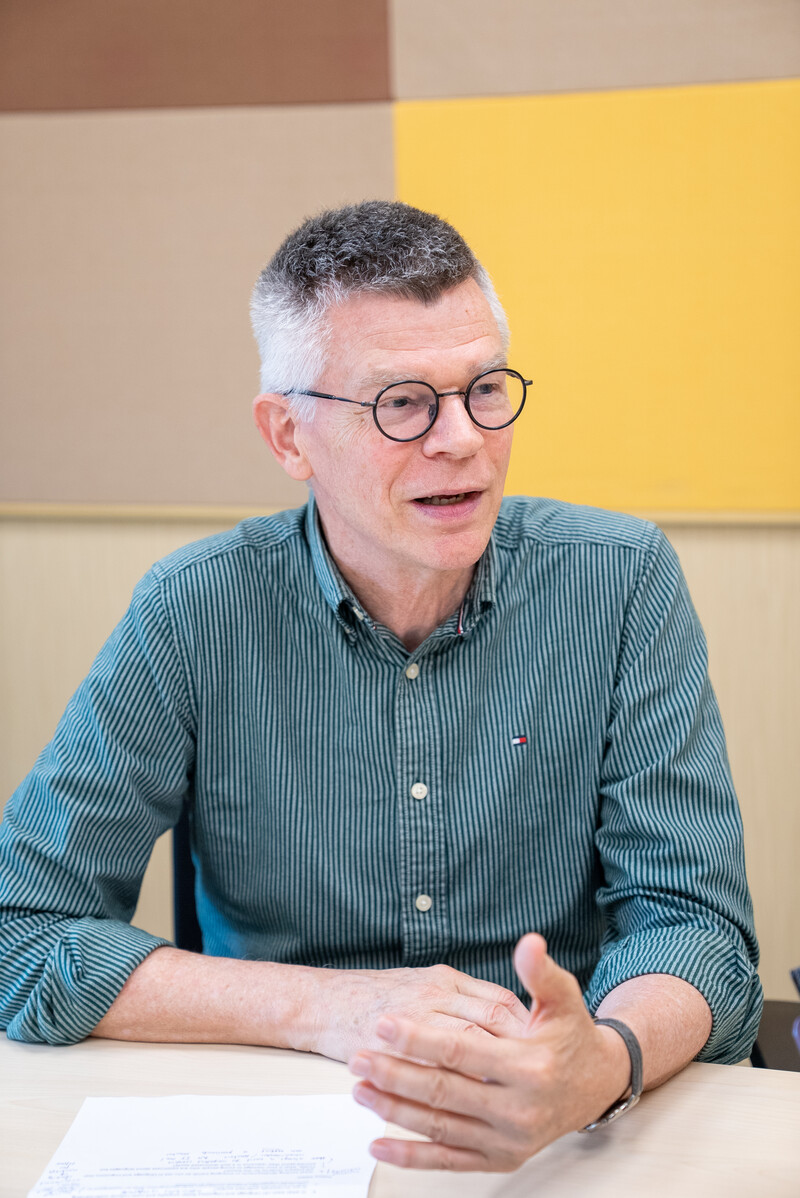
Prof Ladegaard views language skills as foundational to navigating a globalised world marked by rising tensions
Using Language for Social Good
Prof Ladegaard's commitment to using language for social impact extends far beyond the classroom. Since 2008, he has worked with migrant domestic workers—one of Hong Kong's most linguistically isolated and vulnerable communities. His team established weekly language enhancement classes for approximately 100 Indonesian domestic workers, offering English and Cantonese instruction alongside workshops on IT literacy, financial management, and personal empowerment. Students join as teaching assistants, gaining invaluable hands-on experience while contributing to meaningful social change.
"We have workshops on how to speak up—if you're not being treated well by your employer, how do you get the courage to speak positively with them about things you're unhappy about?" Prof Ladegaard explains. "This is a very specific example of how you can use language and communication to empower a group of people that is generally not empowered, often looked down upon because they're 'just maids.'" The programme exemplifies his pedagogical philosophy in action: linguistic skills are not abstract academic exercises but tools for tangible social impact.
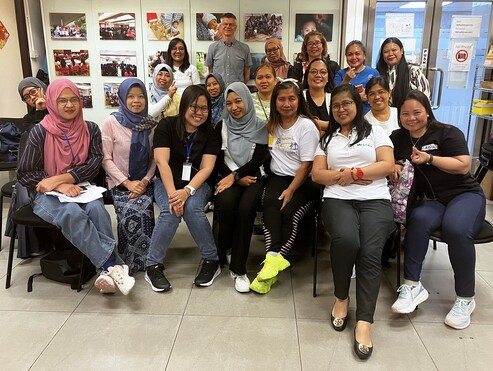
A workshop Prof Ladegaard conducts to empower migrant workers
Envisioning Linguistic Fusion
Looking ahead, Prof Ladegaard envisions language education as fundamentally integrative. "We're not just teaching language and linguistics—we're teaching linguistics and something: linguistics and communication, linguistics and intercultural competence, and linguistics and technology," he emphasises. This integrated approach reflects his belief that linguistic expertise gains its greatest power when combined with other fields of knowledge and practice.
He urges students to take this principle personally: "Do what you're passionate about. Find your own way to combine your interest in language and linguistics with whatever else drives you—whether that's education, technology, creative arts, or anything else."
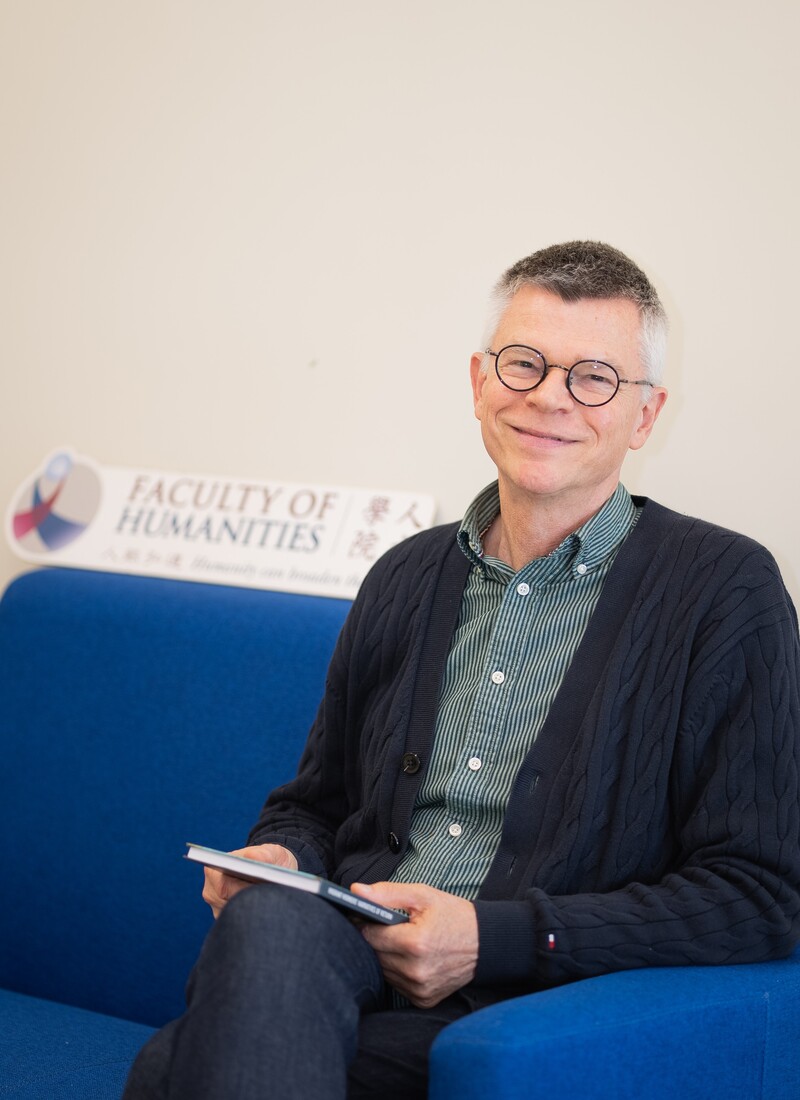
Prof Ladegaard envisions language education as fundamentally integrative
As Prof Ladegaard demonstrates, language and linguistics are far from obsolete in the age of AI—they represent essential human capacities for navigating technological transformation with wisdom, empathy, and critical discernment. By cultivating effective communication, intercultural understanding, and personal confidence, FHM equips students not simply to survive in an AI-driven world, but to lead it with the humanity, creativity, and compassion that technology cannot provide.
Interviewer: Eric Lam
Writer: Eric Lam
Photographer: Chan Chun-yin
Learn more about Prof Ladegaard: https://www.eduhk.hk/en/experts/professor-ladegaard-hans-j