

EdUHK Study Finds Digital Literacy a Moving Shield Against Cyberbullying
A new longitudinal study by The Education University of Hong Kong (EdUHK) has uncovered a nuanced relationship between digital literacy1 and cyberbullying among local adolescents. The findings show that teens with lower levels of digital literacy are more vulnerable to cyberaggression, and those who make the least progress over time are at heightened risk of becoming victims of cyberbullying. In contrast, adolescents who experience cyberbullying early on often develop stronger digital literacy skills, likely because they learn to navigate threats, avoid attacks and protect themselves in an increasingly aggressive online environment.
Led by Dr Tao Sisi, Assistant Professor from the Department of Early Childhood Education at EdUHK, in collaboration with Dr Frank Reichert and Professor Nancy Law at the University of Hong Kong, the study tracked 679 adolescents (average age 15) across two time points during 2018/19 and 2020/21 school years. It examined the bidirectional relationship between digital literacy and cyberbullying, including both cyberaggression and cybervictimisation.
Findings show that:
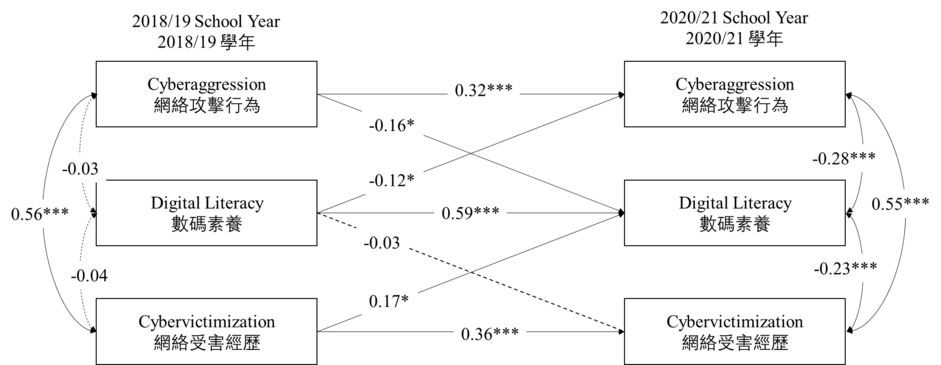
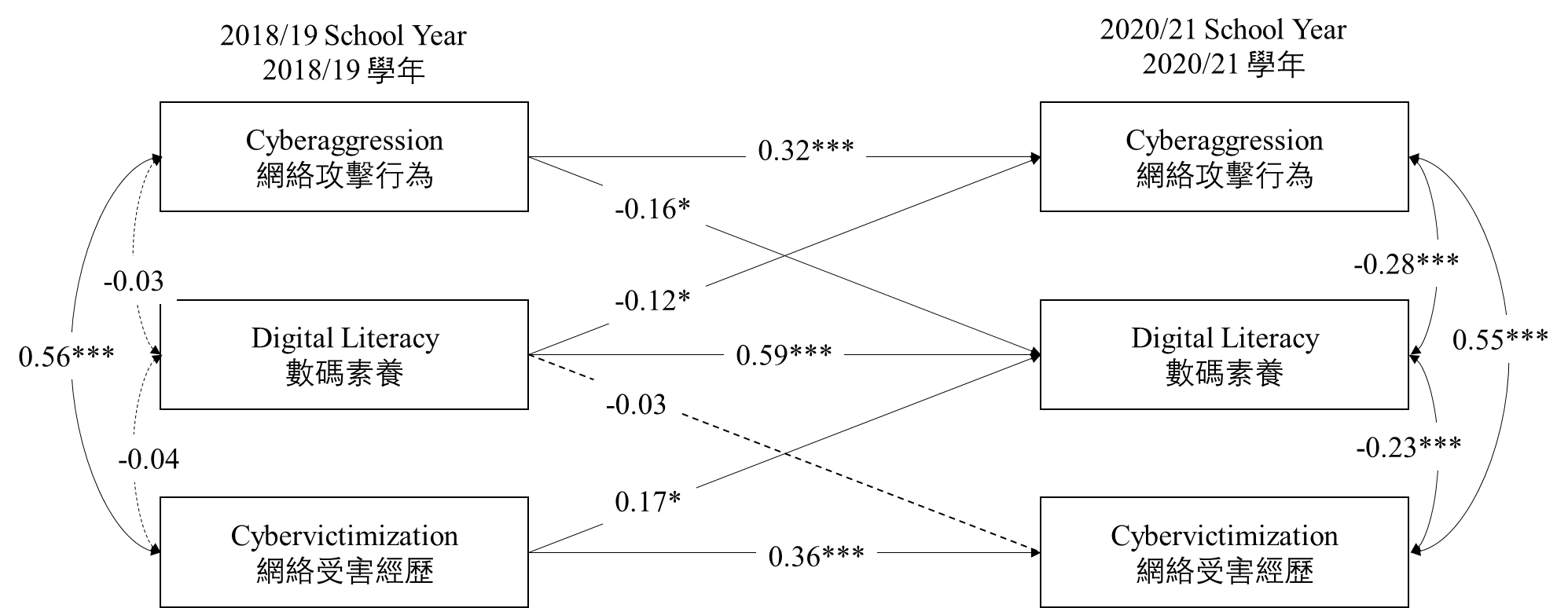
• Adolescents with higher digital literacy - defined as the confident, critical, and responsible use of digital technologies for learning, work, and social participation, were less likely to engage in later cyberaggression.
• Those who had engaged in cyberaggression earlier demonstrated lower subsequent digital literacy.
• Adolescents who had experienced cybervictimization tended to show higher later digital literacy, suggesting that some students respond to online harm by building skills to protect themselves and navigate digital environments more effectively.
Further analysis revealed a critical pattern: adolescents whose digital literacy improved the least over time were more likely to become new victims of cyberbullying, while those who moved out of victimization showed stronger digital literacy growth. This indicates that digital literacy is not a fixed trait, but an ability that must continually develop as adolescents’ online lives change.
The study, recently published in published in Humanities and Social Sciences Communications, used a performance-based assessment of digital literacy rather than relying solely on self-reports, thereby strengthening the evidence on how adolescents’ actual digital competence relates to their online experiences.
The findings also challenge the assumption that once acquired, digital skills continue to provide lasting protection. Instead, the study underscores the need for sustained development of digital literacy, supported by schools, families, and policymakers.
“Effective education should extend beyond technical know-how to include digital ethics, online communication, privacy protection, problem-solving, and cyber-resilience,” Dr Tao said. “Prevention efforts should not only stop harmful behaviour after it occurs, but also build students’ long-term capacity to respond to shifting online risks.”
Next, Dr Tao will further examine how risky online behaviours such as cyberbullying develop in young children, and how they can be effectively prevented and addressed through digital literacy education at the family, school, and community levels.
-Ends-
----------------------------------------------------------------------------------------------------------------------------------------------------------------------------------
1. Digital literacy is the ability to access, manage, understand, integrate, communicate, evaluate and create information safely and appropriately through digital technologies for employment, decent jobs and entrepreneurship. It includes competences that are variously referred to as computer literacy, ICT literacy, information literacy and media literacy. When assessing people’s digital literacy skills, it contains five competence areas: information search, evaluation and management; communication and collaboration; content creation; safety, wellbeing and responsible use of digital technologies ; problem identification and solving. (UNESCO working paper)
EdUHK Study Finds Digital Literacy a Moving Shield Against Cyberbullying
Download all images