

EdUHK Hosts First Chinese History and Culture Education Talk From Unity of Heaven and Humanity to the Inheritance of Chinese History and Culture
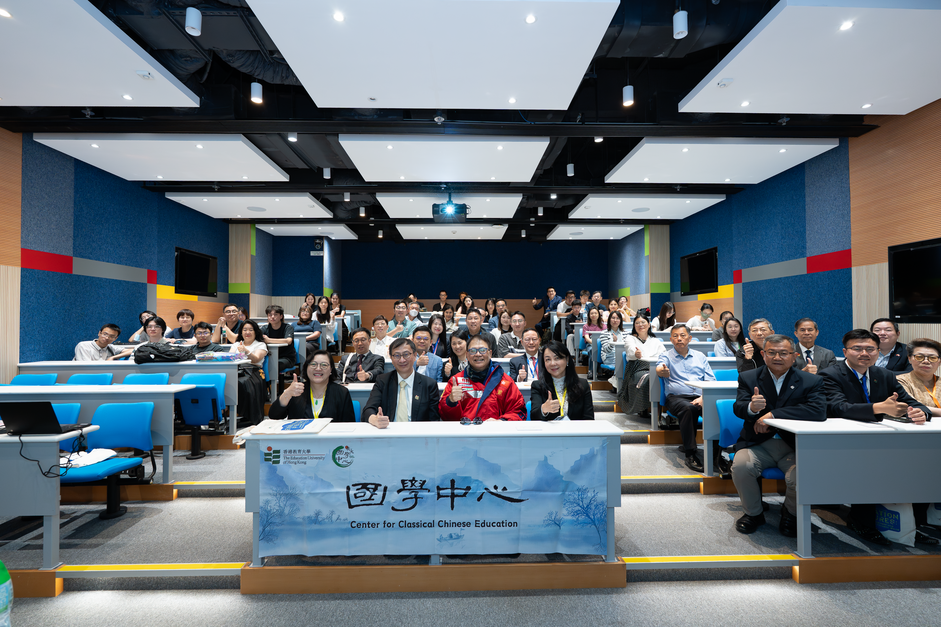
The Education University of Hong Kong (EdUHK) held the first Chinese History and Culture Education Talk on 23 April at its Tai Po Campus, in a bid to further promote Chinese history and cultural education. Drawing on the traditional Chinese philosophical concept of ‘Unity of Heaven and Humanity’, the talk connected natural science, traditional philosophies and contemporary education issues, encouraging teachers and students to explore and think afresh about the place of Chinese culture in today’s world.
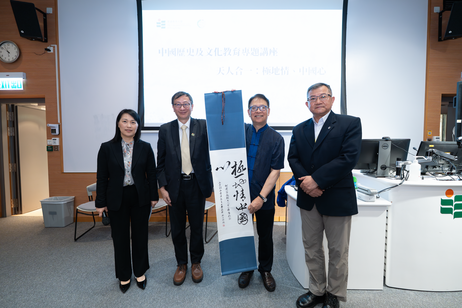
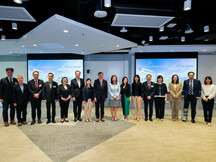
Themed ‘Unity of Heaven and Humanity: Polar Sentiments, Chinese Heart’ (天人合一:極地情、中國心), the talk was conducted in a hybrid mode and drew academics and professionals from a wide range of backgrounds. EdUHK’s senior management members were present in support of the event, including President Professor John Lee Chi-Kin, Vice President (Academic) Professor May Cheng May-hung, Associate Vice President (Quality Assurance) Professor Susanna Yeung Siu-sze, Associate Vice President (Mainland Engagement and Development) Ms Helen Gai Huixia, and Assistant Vice President (Regional Outreach) Professor Li Hui.
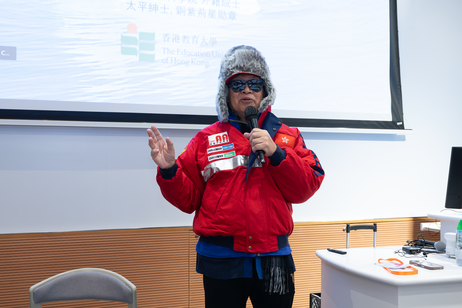
The keynote speaker was Professor Ho Kin-chung, Adjunct Research Chair Professor of Environmental and Polar Studies at the Academy for Applied Policy Studies and Education Futures of EdUHK. Professor Ho has led 22 scientific expeditions to the Arctic and six to the Antarctic. Drawing on his experience, Professor Ho explained the importance of polar research from the perspective of the philosophical concept of ‘Unity of Heaven and Humanity’. His presentation focused on exploring the symbiotic relationship between natural ecology and humanity, and brought out the practical significance of ESG and sustainable development.
Professor Ho noted that changes in the polar regions are not merely issues of climate science, but also reflect how humanity perceives its relationship with nature. Citing the classical Chinese expression “releasing the mind and body and transcending the self to unite with the universe” (心凝形釋、與萬化冥合), he emphasised that scientific research and cultural cultivation are inherently connected.
Professor Ho noted that whether one is engaged in research or education, one must nurture inner depth and broad vision to truly comprehend nature and the universe. Professor Ho encouraged the younger generation to remain humble and sincere, to look outward to the world, and to contribute to society as their learning and capabilities grow.
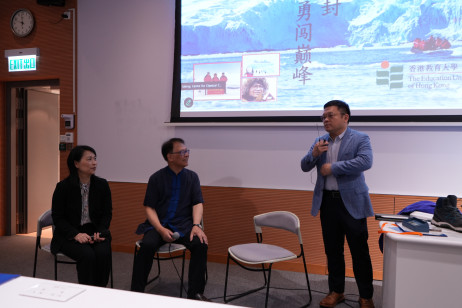
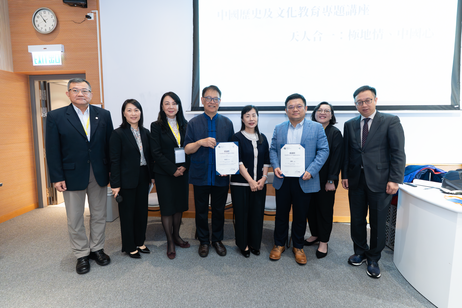
CCCE invited as moderator Dr Deng Wenjing, Acting Head of the Department of Science and Environmental Studies of EdUHK, with Professor Pei Qing, Associate Professor at both the Department of Land Surveying and Geo-Informatics, and the Department of Chinese History and Culture of The Hong Kong Polytechnic University, as the dialogue guest speaker. They discussed how environmental issues, cultural thought and educational practice may be integrated from a cross-disciplinary perspective. The atmosphere was lively, with enthusiastic participation, and attendees expressed hopes for more similar events in the future, to continuously promote the development of Chinese history and culture education.
The talk was initiated by the Task Force on Chinese History and Culture Education and implemented by the Centre for Classical Chinese Education. The Task Force was established in response to the development of national and regional education initiatives, aligning with the University’s strategic planning. The task force aims to deepen Chinese history and cultural education, enrich the knowledge and competencies of students and teachers, and further enhance the education, inheritance, and dissemination of Chinese history and traditional Culture.
Looking ahead, EdUHK will continue to organise a series of thematic seminars and cross‑disciplinary academic activities. Through diverse perspectives, the University seeks to explore the role and value of Chinese history and cultural education in an era marked by globalisation and rapid technological change. These initiatives will also align with the United Nations Sustainable Development Goals, and nurture a new generation equipped with professional expertise, cultural literacy and a strong sense of social responsibility.
-End-