


Dr Prudence Lau Champions Creative and Visual Arts as Essential Humanistic Edge in Tech-Driven Era
- 2026年03月04日
- 专题故事
- 文化与创意艺术学系
Interviewer: Andy Ng and Eric Lam
Writer: Eric Lam
Photographer: Manvil Cheng
In an age where artificial intelligence can generate vivid images in seconds and compose music with algorithmic precision, the relevance of human creativity faces unprecedented scrutiny. Yet Dr Prudence Lau, Acting Head of the Department of Cultural and Creative Arts (CCA) at the Faculty of Humanities (FHM), offers a compelling counterargument: the arts are not threatened by technology—they are becoming more essential than ever.
Leading a department dedicated to fostering creative and visual arts through interdisciplinary collaboration, Dr Lau champions innovative pedagogy that thoughtfully integrates emerging technologies with distinctly human capacities that machines cannot replicate. As Hong Kong navigates rapid technological transformation, she expounds how arts education equips young people with the critical skills needed to lead, rather than follow, in a tech-dominated world.
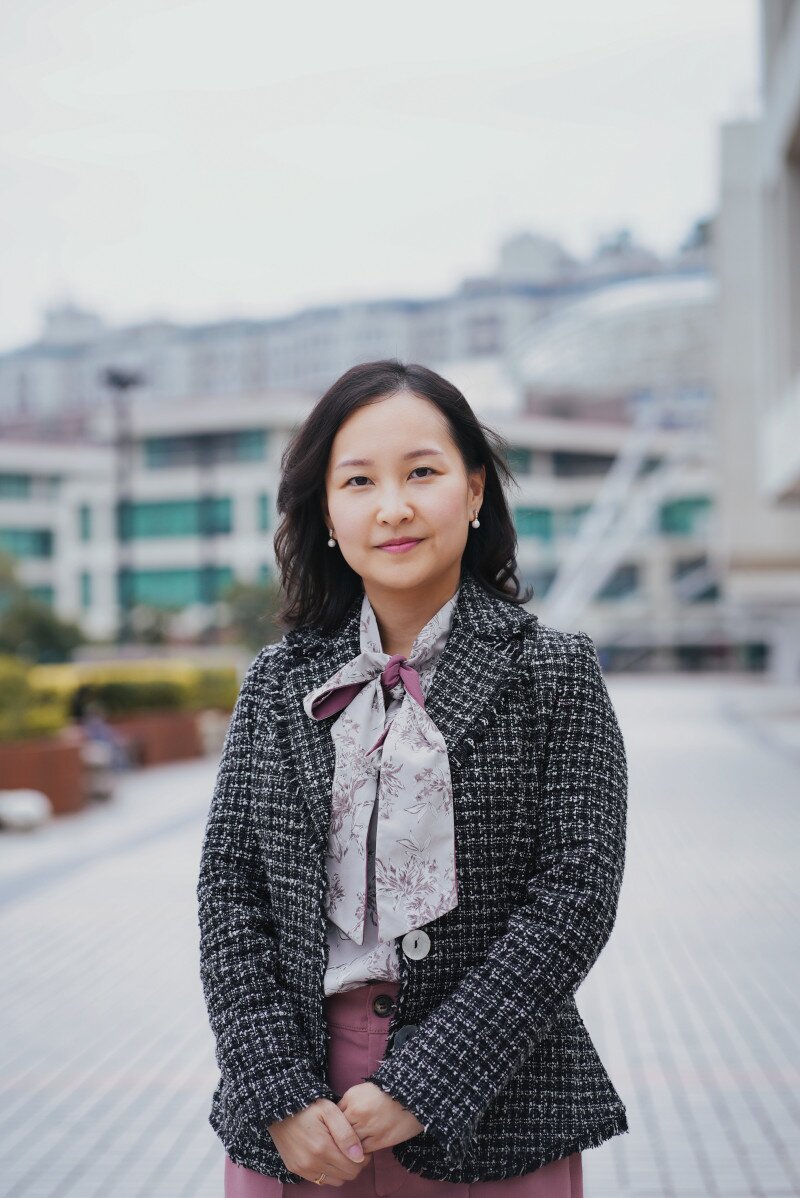
Dr Prudence Lau, Acting Head of the Department of Cultural and Creative Arts
Reframing Arts Education for the AI Era
Dr Lau observes that creative and visual arts serve as a vital counterbalance to rapid AI development by cultivating skills that pure technical training alone cannot provide. "In an era where generative AI can produce images and music in seconds, arts education shifts from focusing solely on technical production to fostering human curation and emotional authenticity," she explains. While traditional skills remain foundational, the pedagogy now embraces critical inquiry. "Arts education will gravitate towards asking 'why' and 'for whom' these works are created," she emphasises. "The goal shifts from producing skilled hands to cultivating critical minds that can communicate with, and respond to, societal needs."
This transformation is evidenced in activities and projects from CCA and within FHM that demonstrate novel engagement with technology. These include a Teaching Development Grant project entitled ‘AI-Driven Creativity in Art Education’1 as well as an open creative competition ‘Humanities in the Digital Age’ that showcased how students treat AI and technology not as a replacement for creativity but as a collaborative medium. Other pioneering projects include the ‘e-Orch’ and ‘Yueju Accomp’ (粵曲拍和) apps2 that leverage AI-enabled technology and multi-touch tablet interfaces to lower barriers for composing and performing orchestral and Cantonese opera music—making these cultural forms accessible, engaging, and relatable to a wider audience.
Moreover, CCA recently collaborated with renowned artist Xu Bing, Visiting Professor at EdUHK from 2025-26, on the ‘Where Sky and Earth Meet’ (天地同框) Space Art Education Programme. This initiative inspired students from EdUHK as well as local secondary schools to create digital artworks for uploading to Prof Xu's SCA-3 art satellite, advancing STEAM and future-oriented learning. "These projects demonstrate how students use technology for cultural preservation as well as a learning tool, revealing how immersive media can engage young generations in sustaining traditional arts through digital media," Dr Lau notes.
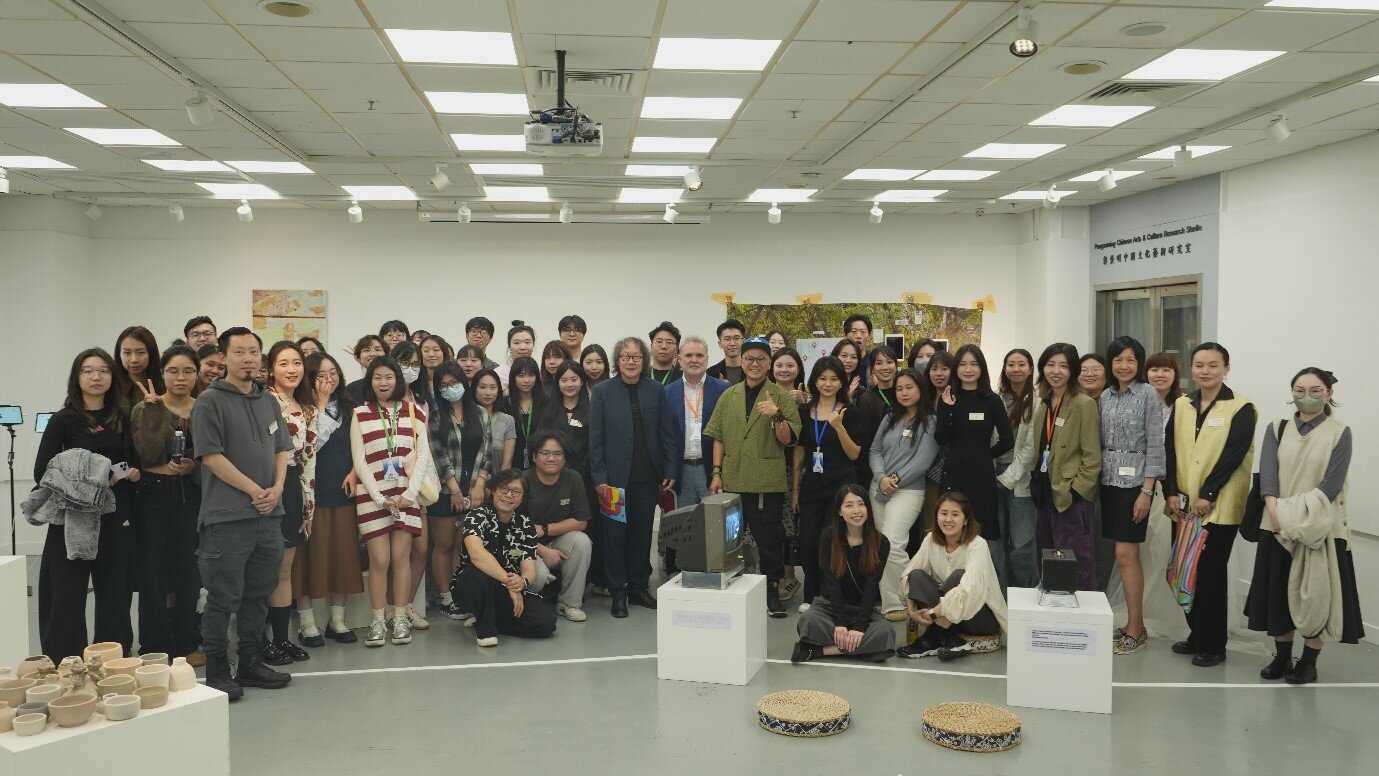
Prof Xu Bing engaging with CCA staff and students at EdUHK in March 2025
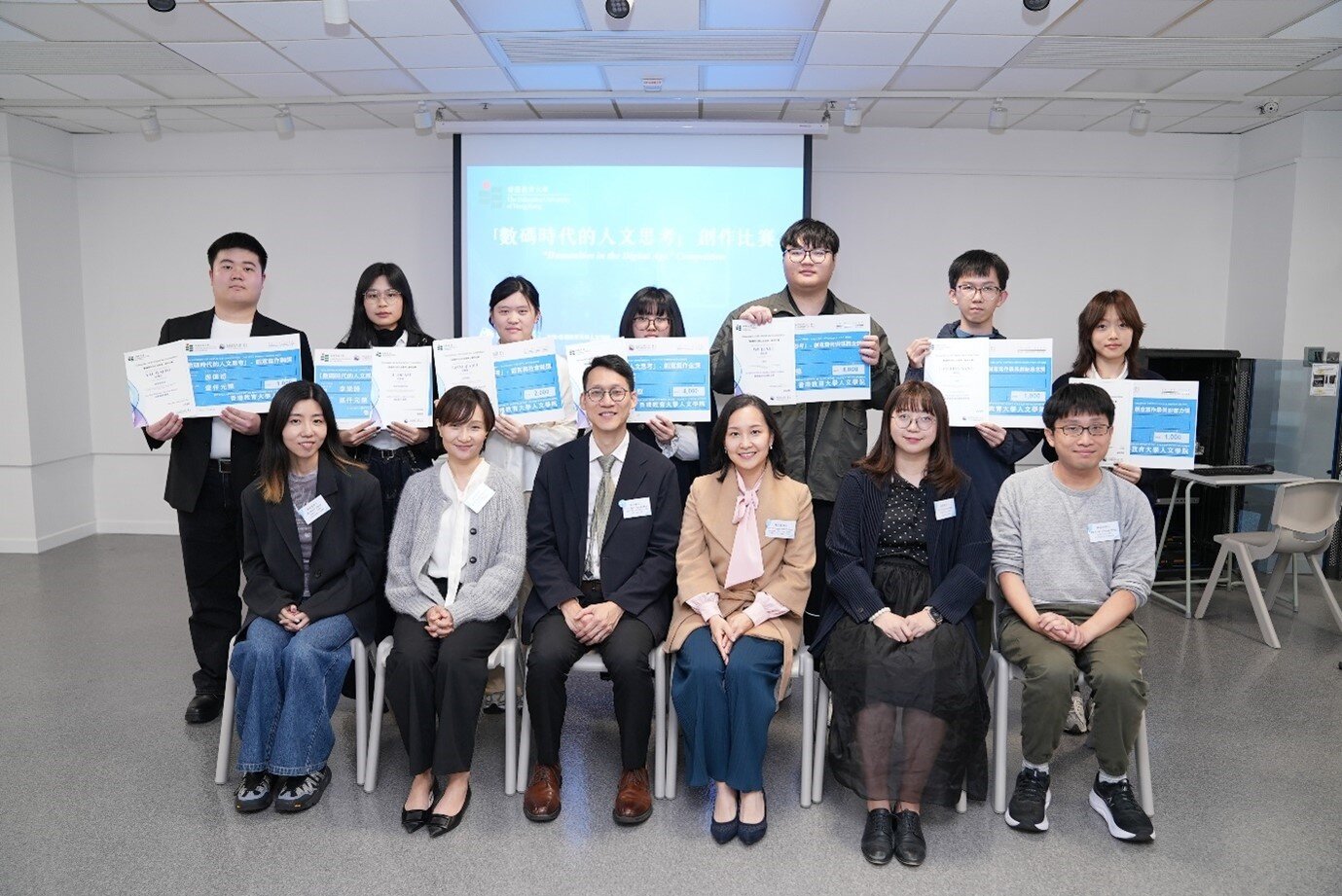
The 'Humanities in the Digital Age' competition award ceremony in February 2026, engaging sub-degree students in Hong Kong and fostering cross-departmental sharing and insights within FHM
The Irreplaceable Human Touch
For young people passionate about the arts yet anxious about their relevance in a tech-dominated world, CCA’s Acting Head offers reassurance grounded in fundamental human needs. "The arts and technology should not be contradictory in the future, but should be working together," she emphasises. "In a world increasingly mediated by AI, emotional intelligence is even more valuable—as do human touch, creativity, and cultural interpretation."
She articulates what she calls the ‘humanistic edge’—the distinctly human capacities that technology cannot replicate. While AI can generate images and music, Dr Lau explains, "it cannot determine which works of art are meaningful to a certain group or community." This requires human sensitivity to appreciate and work with diverse audiences. "Moreover, AI or technology cannot provide the ethical frameworks or empathetic experiences that make art humane. It is our humanistic edge that will enable us to lead the next generations in a tech-dominated world."
Arts as Social Catalyst in Polarised Times
The advocate for humanistic education champions the arts as essential tools for fostering social cohesion in increasingly fragmented societies. "In a polarised society, the greatest gift from art is to co-exist—the ability to balance different visual truths, some perhaps contradictory, without reaching immediate consensus," she reflects.
This philosophy manifests in community-engaged pedagogy that transforms technical skills into social impact. A memorable 2024 project under the Student Empowerment Work Scheme3 exemplifies this approach: visual arts and music students collaborated to research and create a ceramic instrument—Ocarina—using 3D printing, mould casting, and hand-building techniques. The students then developed educational workshops that engaged secondary school students from 16 schools with diverse backgrounds including ethnic minorities.
"Students adapted their creative practice, converting knowledge into accessible teaching materials for artistic and educational workshops," Dr Lau explains. "This project generated memorable and sustainable community impact, transforming art and music expertise into inclusive educational outreach and demonstrating how creative skills can serve diverse youth while expanding community engagement."
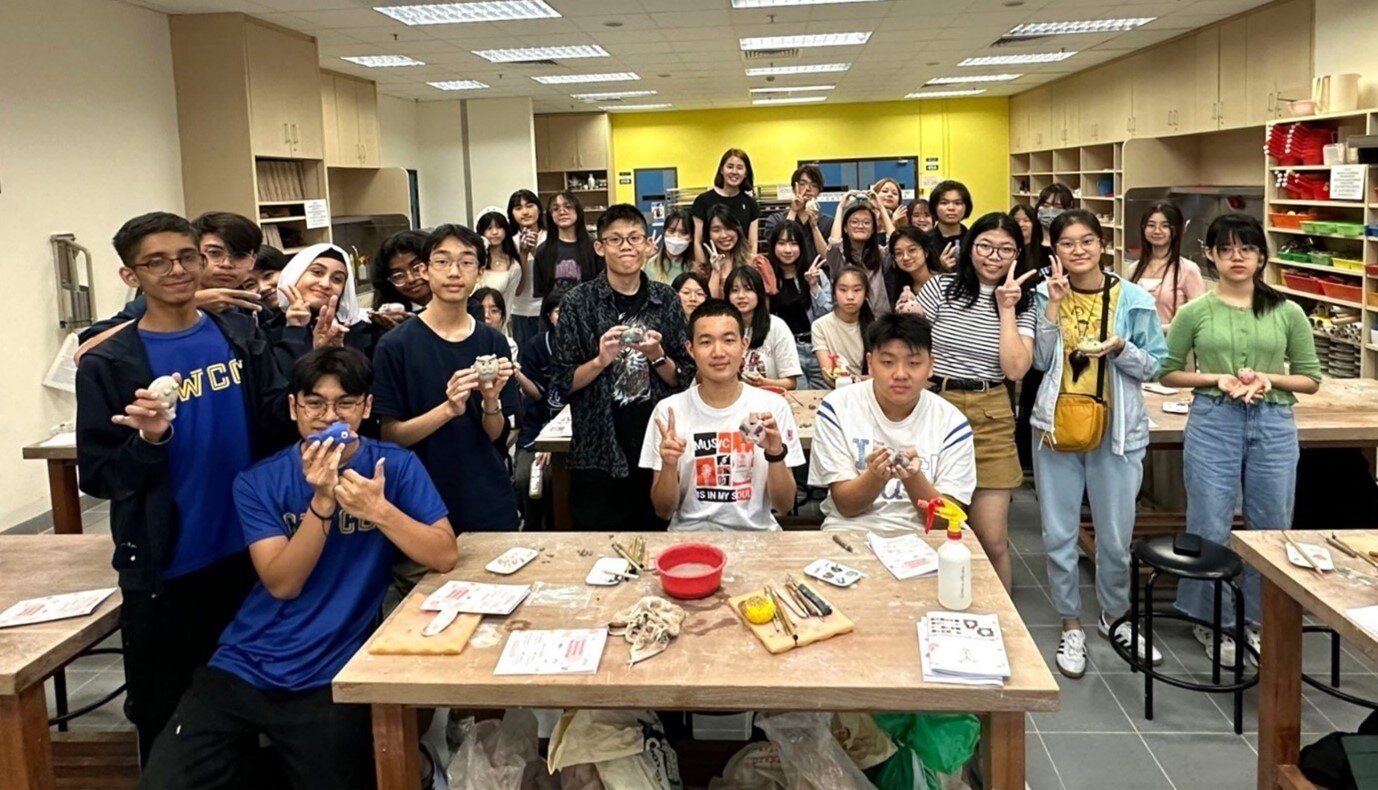
The inclusive and interdisciplinary Ocarina workshop engaging secondary school students from diverse backgrounds
Interdisciplinary Futures
Looking ahead, Dr Lau envisions arts education that is fundamentally interdisciplinary and community-focused. "Future arts education should prioritise collaborative, public-facing projects that address real community needs—similar to the Ocarina workshop model where students designed for diverse, multilingual participants rather than pursuing solely studio-based creations," she observes. "It will be interdisciplinary, like the partnership between visual arts and music fields at CCA, and it will also see a merge between traditional making and digital creation."
This vision encompasses emerging technologies—3D printing ceramics, AI-assisted design, and AR/VR exhibition spaces—while maintaining focus on human-centred outcomes. "These trends will collectively shift arts education from technical training towards adaptive, socially-engaged creative practice—preparing students not just to produce art, but to cultivate cultural experiences and solutions for complex global challenges," she adds.
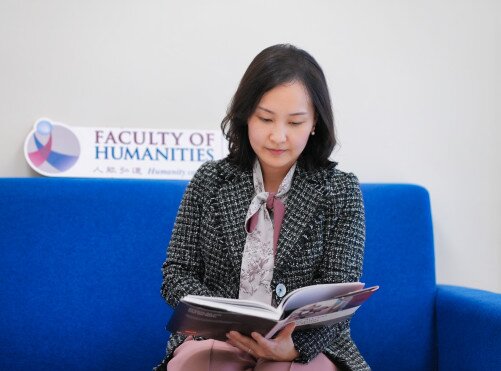
Dr Lau envisions arts education that is fundamentally interdisciplinary and community-focused
As Dr Lau illustrates, creative and visual arts are not relics of a pre-digital age, but vital disciplines for navigating technological transformation with wisdom, empathy, and cultural sensitivity. In cultivating this humanistic edge among students, FHM prepares young people not merely to survive in a tech-dominated world, but to shape it towards more meaningful, inclusive, and flourishing futures.
Footnotes:
1Dr Zoran Poposki (Associate Head, Visual Arts, CCA) and Dr Prudence Lau were respectively Principal Investigator and Co-investigator of the Teaching Development Grant.
2The apps were developed respectively by CCA colleagues Dr Leung Chi-hin and Prof Leung Bo-wah.
3The project was led by CCA colleagues Dr Philbert Li and Ms Joyce Lung.