

EdUHK Honorary Professor Cheung Bing-leung Shares Insights on Integrating Academic Research and Public Governance
The Education University of Hong Kong (EdUHK) held a conferment ceremony in early March to award Professor Cheung Bing-leung the title of Honorary Professor, in recognition of his distinguished achievements in academic research and public governance, and his long-standing contributions to education and society in Hong Kong.
Professor Cheung, a pivotal figure in EdUHK’s development, served as President of the former Hong Kong Institute of Education (HKIEd) from 2008 to 2012. During his tenure, he articulated the visionary concept of “Education-plus”, laying a solid foundation for the Institute’s transformation into a multidisciplinary liberal arts university. At the ceremony, President Professor John Lee Chi-Kin presented the Honorary Professorship to Professor Cheung, paying tribute to his enduring impact on both scholarship and public service.
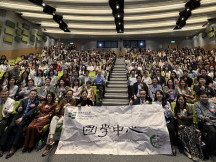
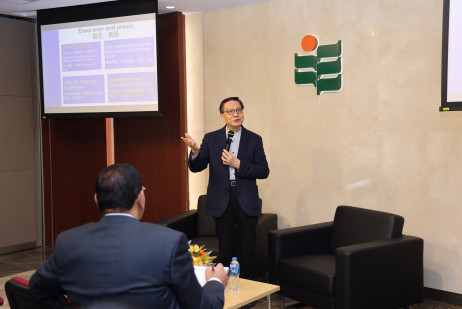
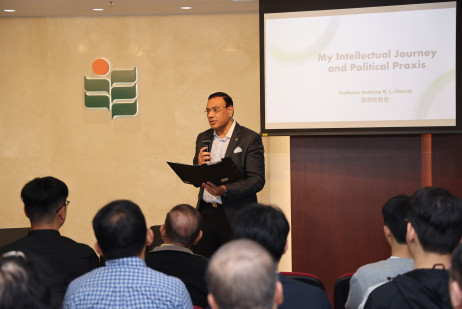
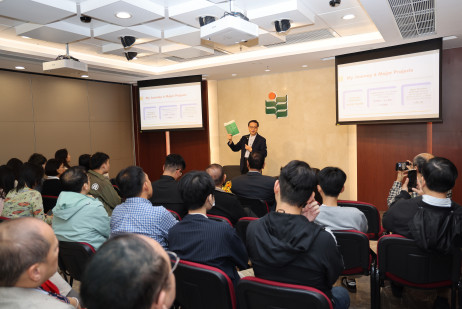
Following the conferment, a dialogue session entitled “Seeking Truth, Gaining Wisdom through Practice” was convened, moderated by Professor Naubahar Sharif, Head of the Department of Social Sciences and Policy Studies. Professor Cheung delivered a keynote address themed “My Intellectual Journey and Political Praxis”, in which he reflected on his decades of scholarly pursuit and public service, and elaborated on his philosophy of integrating academic inquiry with practical governance.
Professor Cheung observed that while the essence of academic research lies in uncovering the internal logic of institutions and society, the essence of political practice is to drive social transformation. He emphasised that the two are inherently complementary. On reform, he underscored the value of incremental change, stressing the importance of carefully weighing up costs and benefits. This pragmatic approach, he noted, resonates with Deng Xiaoping’s reform principles of “allowing some people to prosper first” and “crossing the river by feeling the stones.”
Drawing inspiration from thinkers across cultures—including Italian intellectual Antonio Gramsci, Irish playwright and political commentator George Bernard Shaw, and American politician Tip O’Neill—Professor Cheung distilled the principle of “acting in light of local realities.” He highlighted that public practice must balance idealism with pragmatism, combining courage to innovate with a grounded sense of reality. He further remarked that effective governance depends on a government’s enduring capacity for reflection, learning, innovation, and transformation in response to changing times.
Attendees, including faculty, students, and professionals, remarked that the dialogue not only clarified the underlying logic of integrating scholarship with governance but also provided profound inspiration for those engaged in education and public service. The event was both an intellectual celebration and a bridge between academia and public administration, fostering the convergence of theory and practice, and injecting fresh perspectives into the advancement of higher education and public governance.
From a dedicated scholar to a reform-minded university president and later a practitioner of public governance, Professor Cheung has consistently embodied the principle of “applying knowledge and uniting thought with action.” His lifelong commitment to bridging scholarship and service stands as an enduring example for the EdUHK community, combining intellectual passion with a profound sense of social responsibility.
-Ends-
EdUHK Honorary Professor Cheung Bing-leung Shares Insights on Integrating Academic Research and Public Governance
Download all images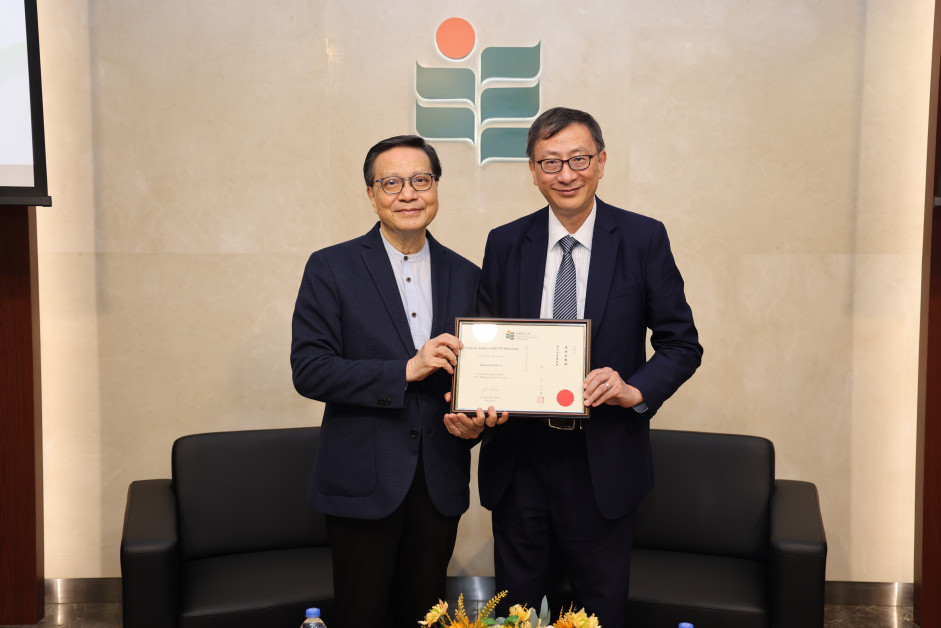
Media Enquiries
Communications Office