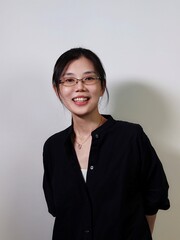



From EdUHK to the 5th Global Peace Summit
- 30 Apr, 2026
- Media
- Faculty of Humanities
From Pain to Peace: Learning from Voices at the 5th Global Peace Summit
I never imagined that a summit could reshape my worldview. During and after the 5th Global Peace Summit, one question remained constantly in my mind: How can I contribute to peacebuilding?
Throughout the three‑day summit held in Bangkok, Thailand, I listened to speakers of diverse backgrounds. We heard from former refugees who had lost their families, a poet fighting for her homeland Sudan, and individuals who continue to stand at the frontline in Ukraine.
Particularly moving were voices from Palestine and Israel who sat side by side before us. Despite enduring profound pain, they chose forgiveness over hatred — their handshake and embrace symbolising hope. We also heard from a child born during war and abandoned at birth. He once said, “Don't let me see her—my hatred blinds me.” Yet as he grew, he chose not resentment but action, founding an organisation to advocate for other children born into war. For many of these speakers, the war had ended, yet peace had not fully arrived.
Although their experiences were different, they shared one powerful commonality. They had all faced life‑threatening trauma, yet none chose to surrender or remain silent. Instead, they stood up for peace in the ways they knew best—through storytelling, poetry, activism, education, and forgiveness. While we cannot change what happened in the past, they reminded us that we can choose a different future, but only if we decide to forgive and to love. What truly matters is not the pain itself, but how one responds to it, overcomes it, and transforms it into a force that can heal the world. As one message echoed throughout the summit: darkness cannot drive out darkness; only light can. Hatred cannot resolve conflict; only love can.
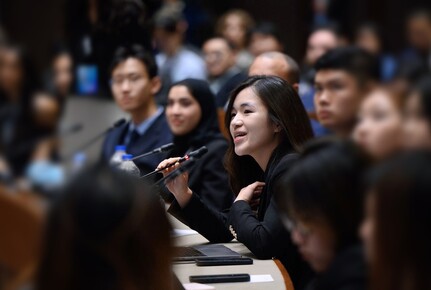
Seeing over 450 delegates from all over the world—regardless of skin colour, religion, or nationality—yet united by a single goal: we all yearned for peace, and in that yearning, we were not alone. We cannot choose where we are born, yet our shared humanity is greater than any identity. This raised a difficult but necessary question: if humanity is shared, why do we continue to hurt one another?
The question ‘How can I contribute to peacebuilding?’ continues to stay with me. The summit taught me that meaningful change takes time, but it must begin with small, intentional actions. Starting from the ‘micro’ level is essential. Compassion must become a verb.
Education plays a critical role in shaping the future, and this is where I can begin. As an education major at The Education University of Hong Kong, I aspire to become a future educator who nurtures young people’s critical thinking, empathy, and ability to understand diverse perspectives—because the youth are the light of our future, and peace begins with how we teach them to see the world.
Chen Hsiu Lin Leila
Year 5, Bachelor of Arts (Honours) in Language Studies and Bachelor of Education (Honours) (English Language)
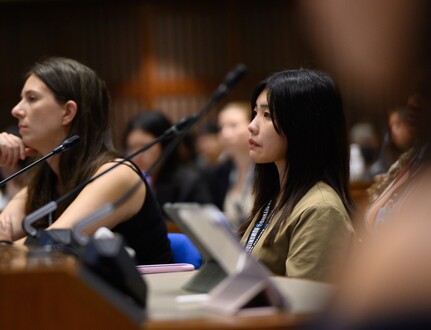
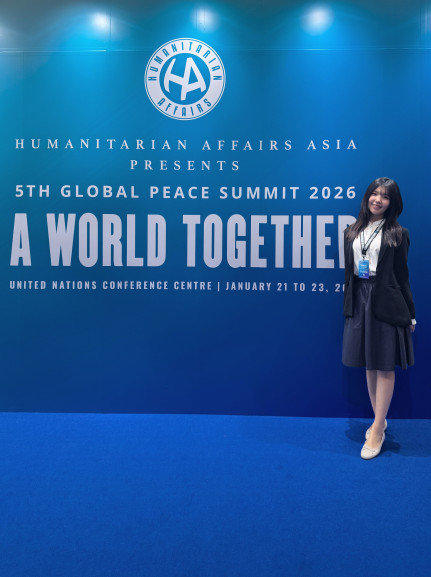
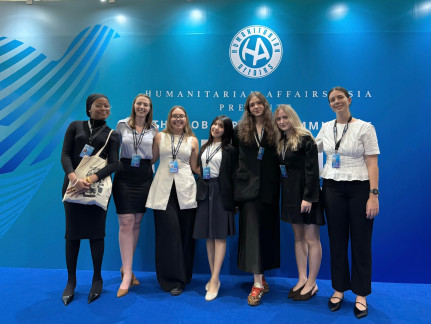
Listening as an Act of Love: My Journey to the 5th Global Peace Summit
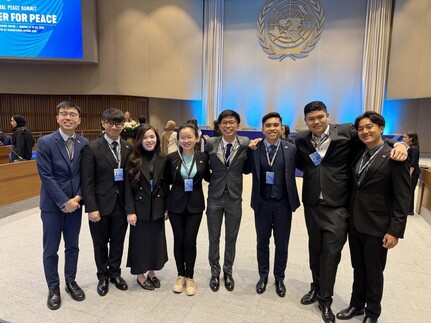
Listening is an act of love. This was the core of my answer when asked what being a delegate representing The Education University of Hong Kong at the 5th Global Peace Summit meant to me. This wasn't just my belief when I began this journey—it became a conviction I hold even more strongly after returning home.
In conversations with 450 young people from more than 60 countries, witnessed first-hand the diverse forms that peace can take: it can be the West's structural institutional frameworks, Africa's communal Ubuntu philosophy, and East Asia's pursuit of social harmony. But the most profound lesson I learned is this: True peace cannot be confined by a single definition. It starts with authentic connection. It starts when we choose to let go of our assumptions and truly listen to one another's stories.
As a Literature student, I have always believed in the power of language. My conversation with poet Emtithal Mahmoud revealed how language can transform personal suffering into bridges that unite us. We discussed how poetry translates into action. When we hugged, the theory of ‘peacebuilding’ dissolved into something human and tangible.
I also came to realise that peace needs more than gentle dialogue—it requires courageous action. Getting to know Ruben Mawick, who took part in civilian rescue operations in Ukraine, opened my eyes to the extraordinary courage and sacrifice that peace demands. Through his experiences, distant news stories became real lives with faces and warmth.
What moved me most deeply, though, was the story of a young woman named Leija Damon. She was born into the shadows of war and sexual violence— completely different from the world I grew up in. Her story struck me with a different kind of truth. It laid bare how peace is not merely the absence of conflict, but the arduous, lifelong process of healing its deepest, most intimate wounds — a journey that calls on each of us to begin from where we stand—to care, to understand, and to take action.
Between sessions, in hallways and over meals, I exchanged stories with delegates from across the globe. We shared not just perspectives, but the lived experiences behind them. It was in these exchanges that theory gave way to genuine understanding and human connection.
I came home not with all the answers, but with something far more important: deeper questions, wider horizons, and an unwavering belief—that peace is born when we genuinely listen, nurtured by the empathy we develop as we engage with different lives, and realised through the small, courageous choices we make to reach out to one another.
My heartfelt thanks to EdUHK for offering this precious opportunity, through which I could learn, reflect, and grow. This journey has left me with a profound reminder: in a world full of noise, patient listening might just be our most tender yet transformative first step towards each other—and towards peace.
Xie Chui Yan
Year 4, Bachelor of Education (Honours) (English Language) – Primary