




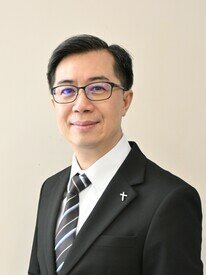
李貴生教授
- 2948 6011
- B3-1/F-18
- kslee@eduhk.hk
Professor LEE Kwai Sang is a full Professor in the Department of Literature and Cultural Studies at The Education University of Hong Kong, while also serving as the Acting Director of the Global Affairs Office. Prior to joining the university, he taught at the Office of General Education and the Department of Chinese Language and Literature at The Chinese University of Hong Kong. His primary research area centres on the ‘two ends’ of Chinese intellectual history: the classical traditions of the pre-Qin and Han dynasties at one pole, and their paradigm shifts into modern scholarship at the other. He has conducted in-depth case studies of emblematic scholars from the Qing dynasty to the early Republic of China. His current research revolves around the Analects and Master Lü’s Spring and Autumn Annals (Lüshi Chunqiu), the two pivotal texts widely acknowledged as the inaugural and culminating monuments of pre-Qin philosophical thought. His research blends the strengths of Eastern and Western scholarly approaches. Alongside traditional Chinese philology and close textual reading, he leverages contemporary methodologies from analytical philosophy, hermeneutics, and artificial intelligence to explore the profound meanings of ancient Chinese texts through both qualitative and quantitative lenses. He has successfully secured multiple competitive research grants in Chinese studies and Chinese education, including the General Research Fund (GRF) from the Hong Kong Research Grants Council. His publication includes several single-authored academic monographs and dozens of peer-reviewed articles in leading academic journals in the field. Furthermore, he possesses a rich administrative portfolio spanning academic governance and institutional management, with broad leadership across global exchange initiatives, student affairs, general education, and the design and management of both undergraduate and postgraduate programmes. He also leverages his experience as an academic textbook reviewer and featured columnist to bridge classical Chinese culture with modern education. Through multi-tiered outreach initiatives, he translates traditional wisdom into pedagogical resources and accessible intellectual discourse for secondary educators, students, and the broader public across the region and beyond.