|
 |
 |
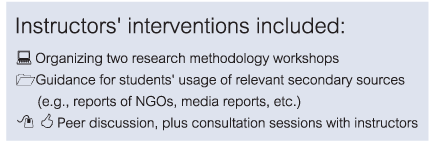
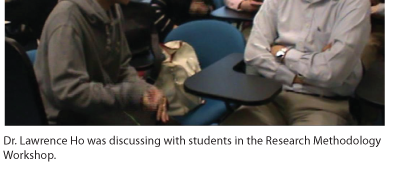
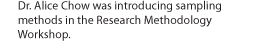
Having set their research topics, students needed to determine how they could collect reliable and valid data, and how they should analyze the data collected.
|
|
 |
 |
 |
|
 |
 |
 |
 |
 |
|
 |
The above helped students design survey questionnaires,
construct the interview schedule, etc. |
|
|
 |
|
 |
|
 |
 |
 |
 |
|
 |
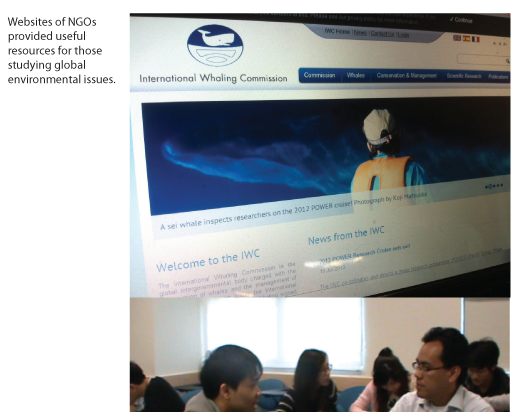
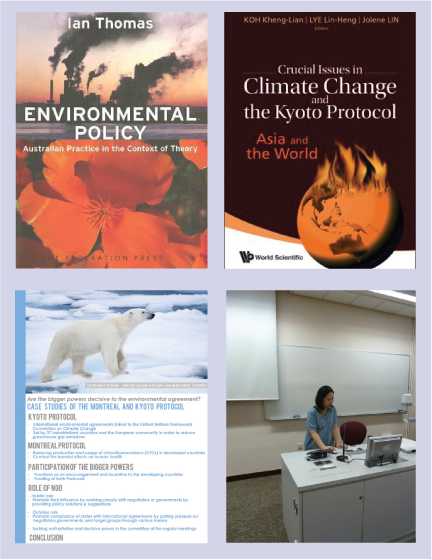
Students studying the course 'Global Environmental Governance' needed to scrutinize and evaluate existing policy measures and practices. They then put forward proposals for change. Conventional social sciences research methods, such as survey questionnaires and in-depth interviews, were less applicable. Thus, students relied on the literature and secondary sources to conduct their enquiry.
' "Climate refugees" is an issue relatively unknown to the public and invisible in the agenda of the international community. Having synthesized what they gathered from the literature and other secondary sources, this group succeeded in illuminating the reasons why we should consider this issue as a problem that awaits urgent response from the international community.'
|
|
|
 |
|
 |
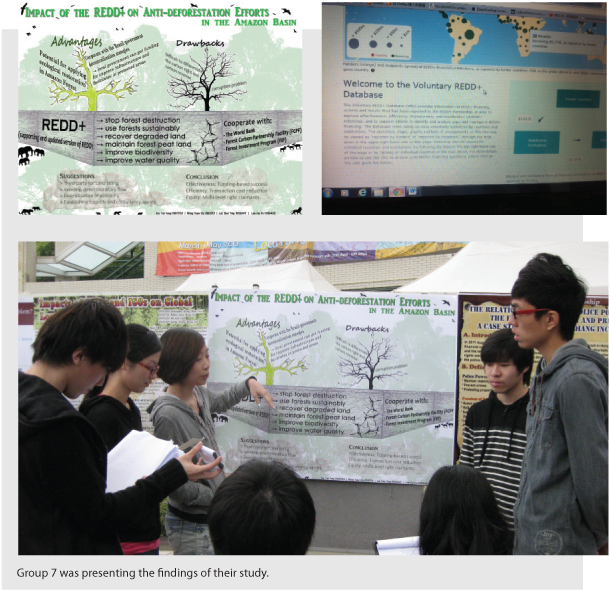 |
'This group is able to analyze the pros and cons of anti- deforestation practices and to make proposals with reference to the REDD+ (Reducing Emission from Deforestation and Forest Degradation (in both developed and developing countries)) mechanism.' |
|
 |
|
 |
|
 |
|
 |
 |
 |
 |
 |
|
 |
|
 |
|
|
Students studying the course 'Self and Society' needed to make use of secondary sources (media reports) to critically examine and rethink social phenomena. In doing so, they needed to locate personal experiences and identities in specific socio-cultural contexts, and think beyond discourses of dichotomies (such as 'black and white' or 'moral vs. immoral' discourses).
|
|
|
 |
 |
 |
|
 |
|
 |
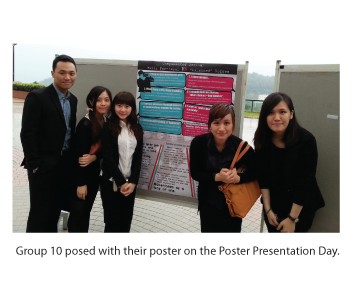
Group 10:
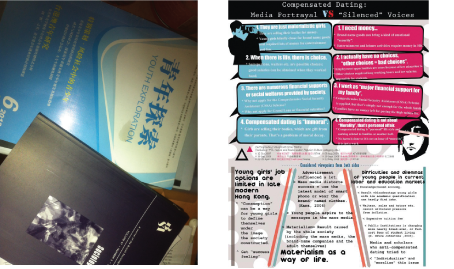
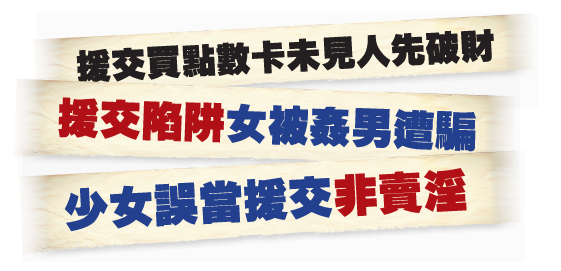
'In our enquiry process, we first made some presuppositions. We then closely examined newspaper headlines and police statistics. We analyzed how the media exaggerated the victimization of young people involved in compensated dating and reinforced biased images of those girls as simply naive and ignorant. Based upon academic references, we explored the complicated factors underlying young people's involvement in compensated dating.' |
|
 |
|
 |
|
 |
|
 |
|
 |
|
 |
 |
|
 |
 |
|
|
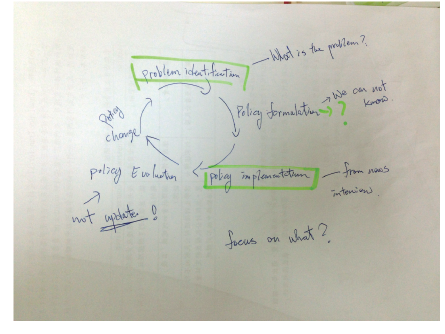
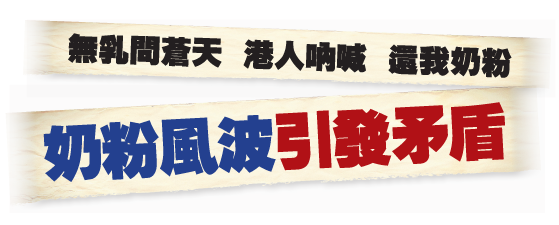
Group 4, who studied the course 'Perspectives on Citizenship', also highlighted how the exigencies of the issues in concern shaped the enquiry and data analysis process. They attested to the crucial role played by the use of secondary sources:
'The shortage of powdered milk in Hong Kong came out of nowhere and struck the society in no time. The measures the government implemented in response was unprecedented. There was very little supporting literature for our reference. We could only rely on scholars' commentaries in newspapers and the documents of the Legislative Council to gather a better picture of the issue. Afterwards we decided that we should go beyond the level of analysis of the pros and cons of the government policy. We proceeded to apply the theories of policy cycle in constructing our arguments.' |
|
 |
|
 |
 |
|
 |
|
 |
 |
 |
 |
|
 |
|
|
Students studying the course 'Perspectives on Citizenship' needed to consider the kind of research subjects they should focus on:
Group 1:
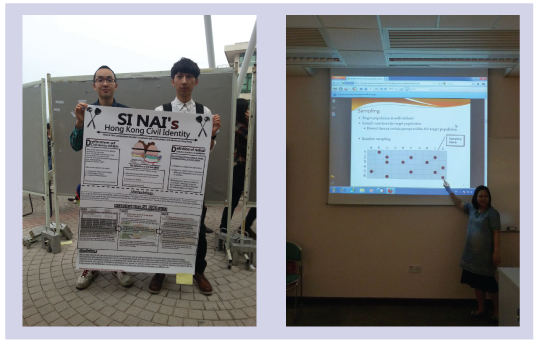
'We initially decided to have the mothers of our group members as our research subjects. Having consulted the instructor, we realized that we needed to ensure that we could collect impartial data when doing interviews. To preclude our pre-assumptions about our research subjects, we not only invited the friends of our mothers to be our interviewees. We also had none of our group-mates interviewing his own mother.'
|
|
|
 |
 |
|
'We see mothers as housewives or "si-nais". Their identity as citizens tends to be overlooked and under-researched. Probing how they view social movements will shed light on their unique "si-nai" perspectives on citizenship.' |
|
 |
|
 |
 |
 |
 |
|
 |
|
 |
 |
 |
 |
|
|
Students also needed to determine how they could collect relevant data effectively.
Group 3:
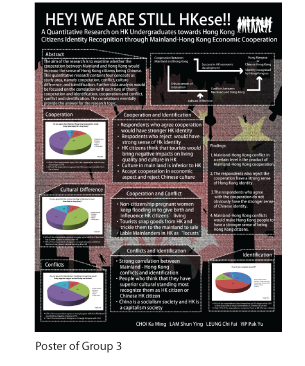
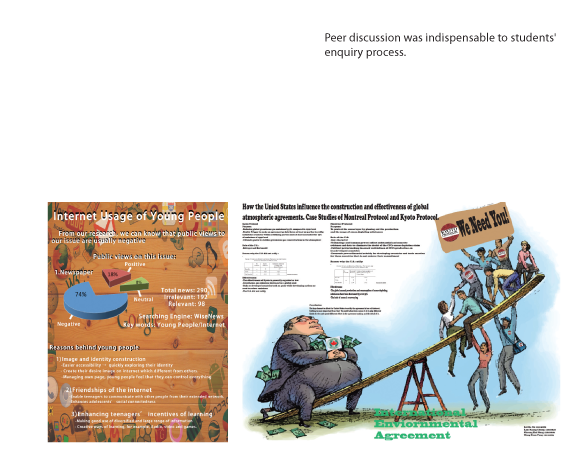
'We adopted a quantitative research approach and conducted a hundred survey questionnaires with a random sample in The Chinese University of Hong Kong, The City University of Hong Kong and The Hong Kong Institute of Education. We needed to analyze the relationship between China-Hong Kong cooperation, cultural difference and conflicts, and Hong Kong identity.'
|
|
|
 |
 |
 |
|
 |
 |
|
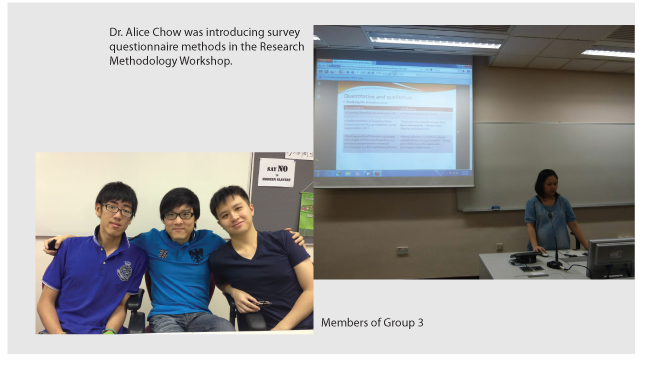
'Some draft questionnaire questions were actually research questions ("how China- Hong Kong integration shapes the identity of Hongkongers"). I pointed out that the students should ask more indirect yet "concrete" questions in layperson language in order to access interviewees' perceptions. It should be their task as researchers to deduce from the data gathered the answer to their research questions.' |
|
 |
|
 |
|
 |
 |
|
 |
 |
 |
|
|
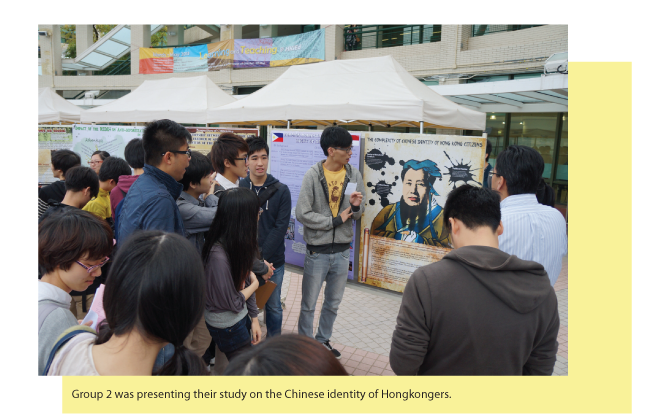
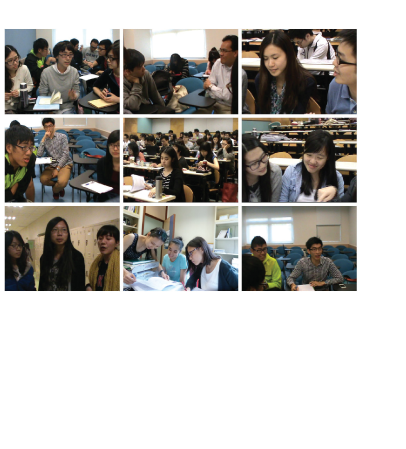
Instructors aside, classmates also helped one another with the design of research instruments.
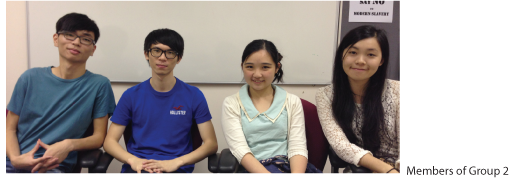
Group 2:
'We decided to explore university students' perspectives of identity through focus group interviews. Before we carried out our study, we first tried out our interview questions with our classmates to make sure that we came up with a set of valid questions. We eventually succeeded in interviewing students from nine universities.' |
|
|
 |
 |
|
 |
|
 |
 |
|
 |
 |
 |
 |
 |
|
|
Dialogue with group-mates was essential when students needed to adjust their research directions in the midst of their enquiry.
Group 2:
'When listening to our interview records, we realized that we were not skilful enough in probing interviewees for further information. Some of the interview conversation was not useful for answering our initial research questions. The relatively limited useful data collected led us to adopt a different perspective, such that we could modify the arguments. The discrepancies in our points of views were usually what made it most difficult for us when tidying up and synthesizing the data collected.' |
|
|
|
|
|
|
|
|
|
|
|
|
|
|
|
|
|
|
|
|
|
|
|
|
|
|
|
|
|
|
|
|
|
|
|