







The EdUHK’s Department of MIT Hosts 2025 Hong Kong Undergraduate Study Visit Program for Nanjing Normal University’s School of Education Science
A delegation of faculty and students from the School of Education Science at Nanjing Normal University (NNU) engaged in a seven-day academic exchange in Hong Kong from 17 to 23 November 2025 as part of the 2025 Undergraduate Study Programme in Hong Kong. The visit featured thematic tours, academic dialogues, and cultural experiences aimed at deepening educational collaboration and talent development between the two regions.
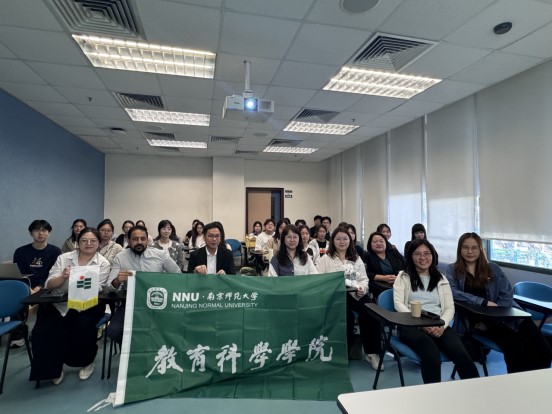
Group Photo: Delegation of faculty and students from NNU with Representatives from EdUHK
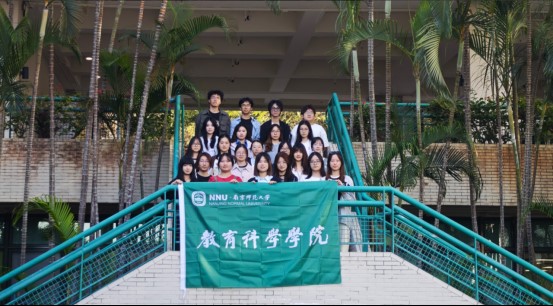
Group Photo: Delegation of students from the School of Education Science at NNU
Welcome Ceremony
On the afternoon of 17 November, the delegation arrived at The Education University of Hong Kong (EdUHK) and attended a welcome ceremony hosted by Acting Head of Department MIT, Dr Ling Man Ho Alpha and Dr SUN Daner, Associate Professor, Associate Head of the Department of Mathematics and Information Technology, and Associate Co-Director of the Global Institute for Emerging Technologies (GIET). Dr Ling gave a welcome remark, warmly welcoming the faculty and students of Nanjing Normal University and wishing the exchange activities to be successful. Dr SUN provided an insightful overview of the university’s educational technology platforms and research resources, establishing a foundation for the visit.
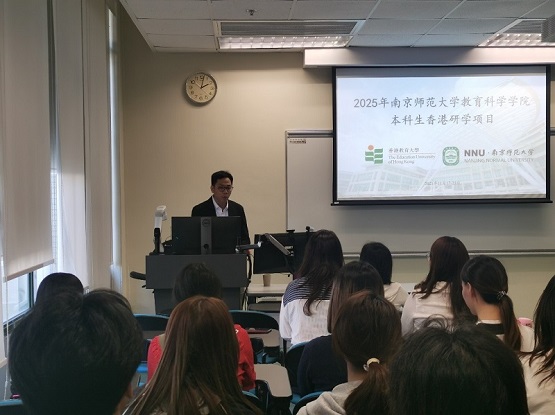
Dr Ling delivering the welcome remark
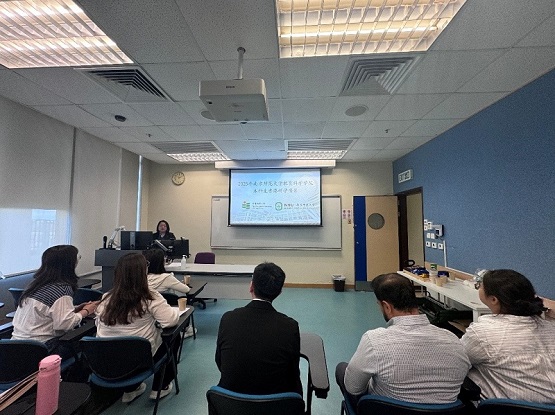
Dr SUN introduced the program overview
Campus Technology Experience
Following the ceremony, the delegation, guided by student ambassadors, toured the campus and experienced the VR CAVE, one of the largest CAVEs in Hong Kong school settings. The VR CAVE features 360-degree interactive projections on four sides and the floor, complemented by a surround sound system. Using 360 virtual tours in teaching provides a unique and engaging way to inspire students, offering an immersive learning experience where they can feel and practice what the environment has to offer.
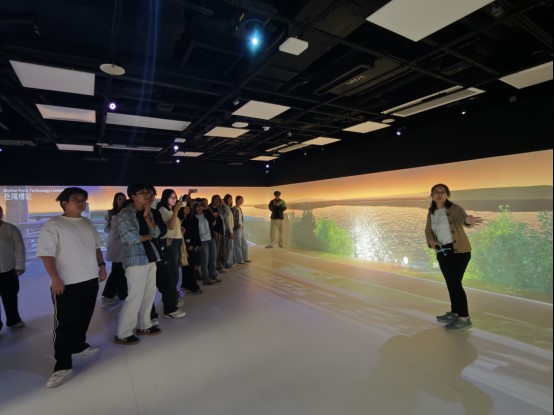
Representative from EdUHK introducing the VR CAVE to NNU students
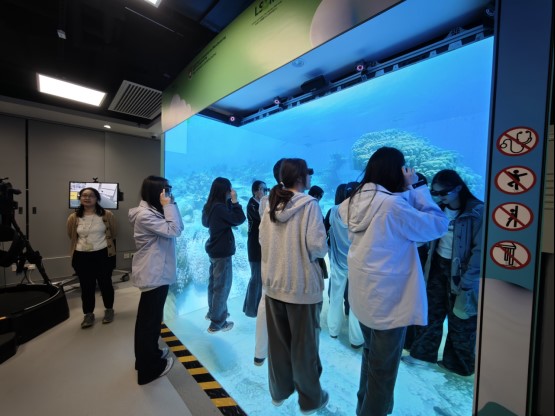
NNU students experiencing the VR CAVE
The tour also included a demonstration of the Robot Dog with Agentic AI, an initiative that integrates Agentic AI with a quadruped Robot Dog to create a hands-on STEM learning experience. This setup allows students to engage with abstract concepts in a physical environment. It utilises the Unitree Go2 Edu quadruped hardware, equipped with sensors and controllers, for autonomous decision-making using LLM-based planning. The software stack includes Python and ROS for simulation and deployment, processing sensor data for navigation and obstacle avoidance, showcasing EdUHK’s pioneering advancements in technology-enhanced education.
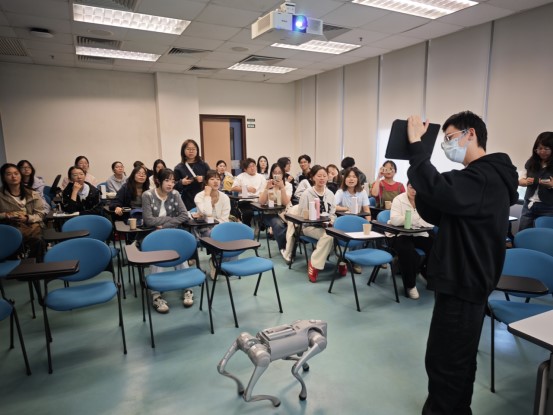
Demonstration of the Robot Dog with Agentic AI guided by EdUHK student ambassador
EdUHK Thematic Day: Multidisciplinary Approaches and Curriculum Innovation
The EdUHK Thematic Day served as an insightful platform aimed specifically at NNU students considering further studies. The event showcased selected advanced master's programmes, each introduced by distinguished faculty members who highlighted the unique features and relevance of these programs to current educational trends:
Master of Science in Artificial Intelligence for Executive Professionals (MSc(AIEP)) presented by Professor KONG Siu Cheung, Chair Professor of the Department of Mathematics and Information Technology and Director of the Artificial Intelligence and Digital Competency Education Centre. This program emphasises leadership for innovation, equipping participants with the knowledge and skills to effectively integrate artificial intelligence into organisational decision-making and business strategies.
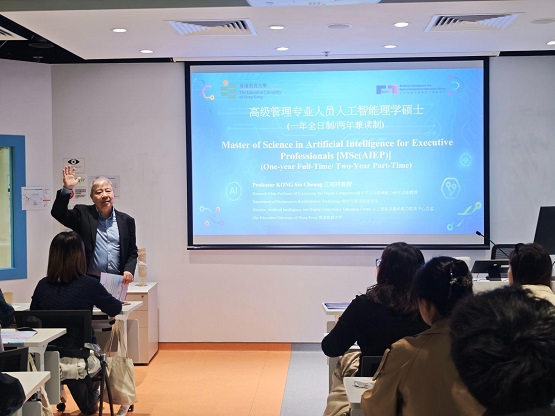
Prof KONG Siu Cheung engaging with NNU students during his presentation on Artificial Intelligence
Master of Arts in Emerging Technology for Future Workforce (MA(ETFW)) presented by Dr SUN Daner, Associate Professor and Associate Head of the Department of Mathematics and Information Technology, and Associate Co-Director of the Global Institute for Emerging Technologies (GIET). This programme aims to cultivate forward-thinking professionals who are equipped to navigate and shape emerging technological landscapes, responding to the evolving needs of the future workforce.
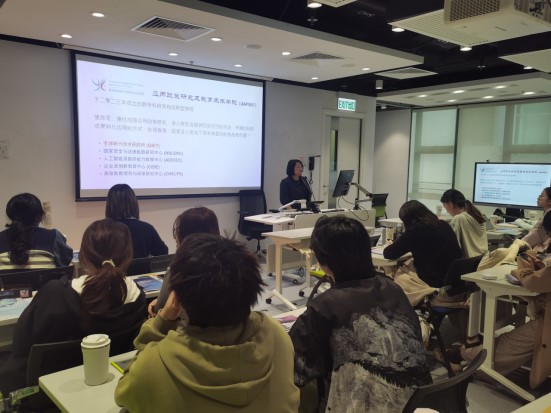
Dr SUN presenting to NNU students about Emerging Technology and its implications
Master of Teaching (MTeach) was introduced by Dr ZHANG Yuefeng Ellen, Assistant Professor of the Department of Curriculum and Instruction. This innovative program focuses on advanced pedagogical practices, fostering teacher leaders through evidence-based methodologies that cater to diverse student needs and encourage reflective practice to improve educational outcomes.
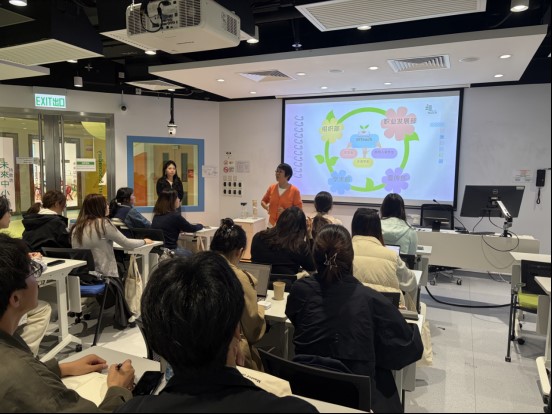
Dr ZHANG discussing advancements in teaching methodologies with NNU students
Master of Arts in Inclusive Early Childhood Education (MAIECE) and Master of Arts in Child and Family Education (MACFE) presented by Dr LI Jianbin, Associate Head (Community Engagement) and Associate Professor of the Department of Early Childhood Education. These programmes address global trends in inclusive education, equipping graduates with the specialised knowledge required to support children with diverse needs and their families, while also fostering positive development through innovative curricula and pedagogical strategies.
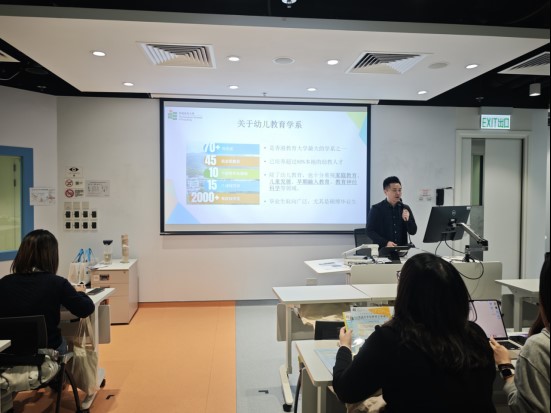
Dr LI introducing the background of the Department of Early Childhood Education
Master of Science in Artificial Intelligence and Educational Technology (MSc(AI&EdTech)) introduced by Dr WANG Yue, Associate Professor in the Department of Mathematics and Information Technology and Programme Leader of the MSc(AI&EdTech). This programme provides foundational knowledge in AI and educational technology, equipping participants with ethical frameworks and practical skills to apply these technologies in innovative curricular designs and real-world problem-solving.
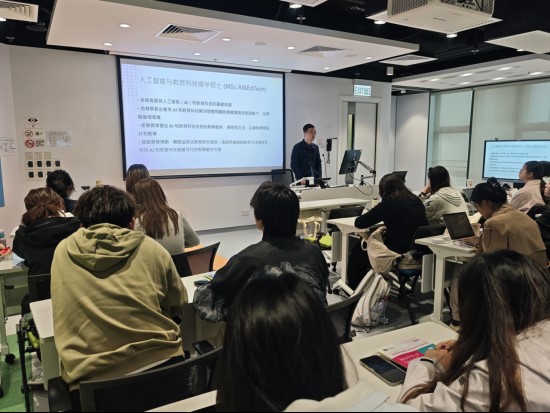
Dr WANG presenting the Artificial Intelligence and Educational Technology program to students
Master of Arts in Science and Robotics Education (MA(SRE)), presented by a representative from the Academy for Educational Development and Innovation, aims to equip educators, curriculum designers, and STEM professionals with advanced interdisciplinary expertise in science and robotics education, enhancing student engagement and learning outcomes.
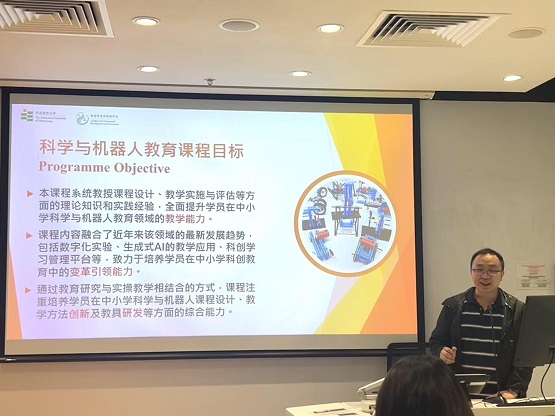
Representative presenting the programme objectives
The day's events sparked engaging discussions among the NNU students, illustrating EdUHK's commitment to providing programmes that prepare educators for modern challenges. By targeting NNU students for further study opportunities, this initiative reinforced the collaborative bonds between both institutions, paving the way for future partnerships in research and curriculum development.
PhD Student Sharing Session: Integration and Innovation in EdTech
The Department of Mathematics and Information Technology at EdUHK hosted a PhD student sharing session titled “EdTech & Humanistic Care: Integration and Innovation from Interdisciplinary Perspectives”. This event featured four PhD students: Mr YEUNG Chung Yiu, Miss GU Jiahe, Miss XU Yu, and Mr LIU Jingxi. The presenters leveraged generative AI as a foundational technological framework to investigate a variety of topics, including STEM curriculum simulation design, self-assessment strategies in higher education, the evaluation of early educators' socio-emotional competence, and the creation of AI-powered tutoring systems for primary mathematics. Collectively, their research illuminated the harmonious connection between technological advancement and humanistic growth in education. This event highlighted innovative research at the intersection of technology and humanistic care, reinforcing the academic partnership between NNU and EdUHK while paving the way for future collaborative initiatives.
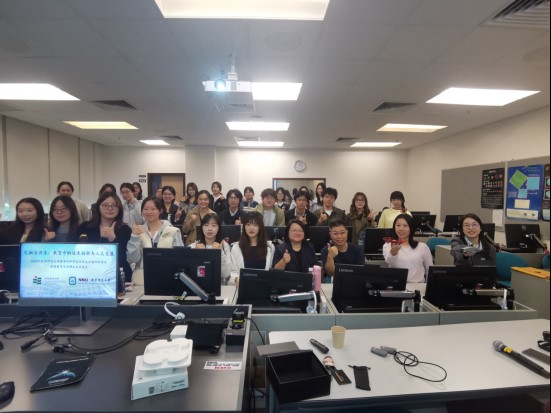
Group Photo: Delegation of faculty and students from NNU with PhD students from EdUHK
Inter-University Exchange and Disciplinary Dialogue
In subsequent days, the delegation visited The Hong Kong Polytechnic University, The Chinese University of Hong Kong, and The University of Hong Kong. Scholars, including Professor YU Lu, Associate Head & Associate Professor in the Department of Applied Social Science at The Hong Kong Polytechnic University, Professor DOU Diya, Assistant Professor, Department of Applied Social Sciences at The Hong Kong Polytechnic University, Professor QIAN Haiyan, Associate Professor in the Department of Educational Administration and Policy at The Chinese University of Hong Kong, and Professor CHEN Gaowei, Unit Head & Associate Professor, Academic Unit of Mathematics, Science, and Technology, The Faculty of Education at The University of Hong Kong, engaged in discussions on educational policy, social science applications, and technology-enhanced teaching methodologies. Guided tours of educational technology laboratories and campus facilities underscored the diverse approaches to educational research and practice among Hong Kong universities, thereby establishing a network for future inter-institutional collaboration.
School Visits and Cultural Immersion
The itinerary included visits to educational institutions, highlighting the cultural and educational landscape of Hong Kong. A notable visit was to the Hong Kong Education University Jockey Club Primary School, where NNU students were guided by a school representative.
During the tour, students observed the school's innovative teaching methodologies and vibrant environment. They engaged with the school's approach to integrating technology in the classroom and its emphasis on student-centered learning. Additionally, students participated in a presentation from a school representative that focused on promoting critical thinking and community involvement. These experiences significantly enhanced the delegation's understanding of Hong Kong's educational practices and cultural context.
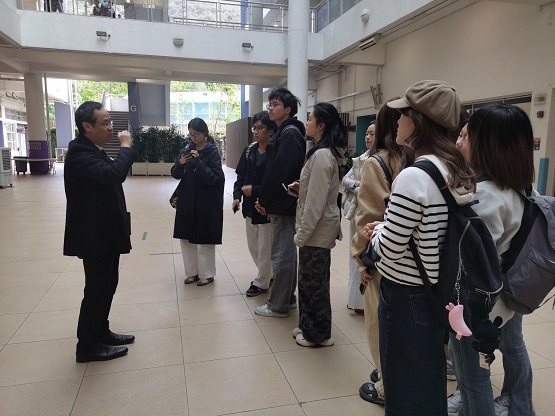
Representative leading NNU students around the Hong Kong Education University Jockey Club Primary School
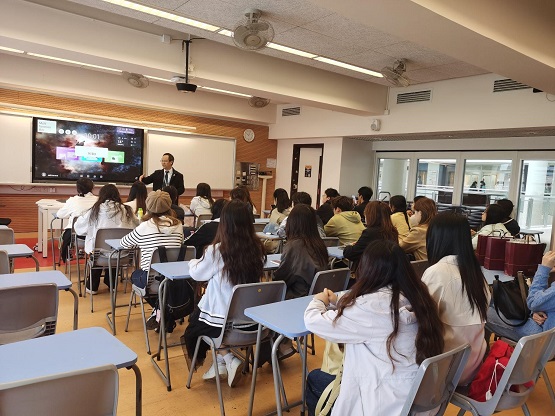
NNU students listening to a presentation from the school representative in the classroom
In addition to school visits, the delegation engaged in cultural immersion activities that provided a deeper understanding of Hong Kong’s rich heritage. They explored significant cultural landmarks, including Golden Bauhinia Square, the Hong Kong Museum of Art, and the Hong Kong Zoological and Botanical Gardens, which highlighted the region's history and cultural diversity. A visit to the Hong Kong Museum of History further enriched their appreciation of local community development and the contributions of various ethnic groups. These experiences, along with engagement with the Tin Ka Ping Foundation, facilitated meaningful exchanges on educational innovation and cultural diversity. Overall, the delegation’s activities fostered a profound appreciation for Hong Kong's unique cultural landscape and societal context.
Conclusion
This visit, guided by a well-structured programme, systematically highlighted Hong Kong's achievements in educational technology, teacher development, academic research, and cultural integration. The activities not only reinforced the partnership between NNU and EdUHK but also created sustainable avenues for future cooperation in curriculum development, joint research initiatives, and faculty-student exchanges.
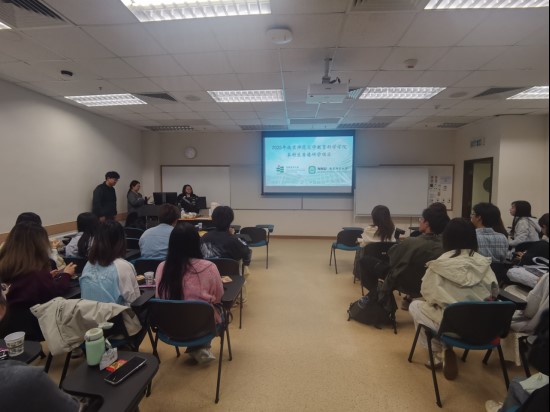
Dr. SUN delivering closing remarks to NNU Students, wrapping up the program and encouraging future collaboration

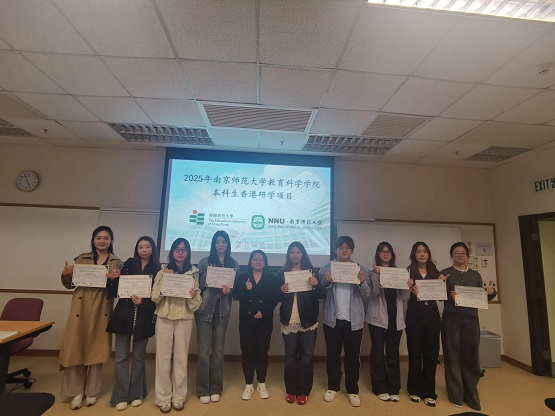
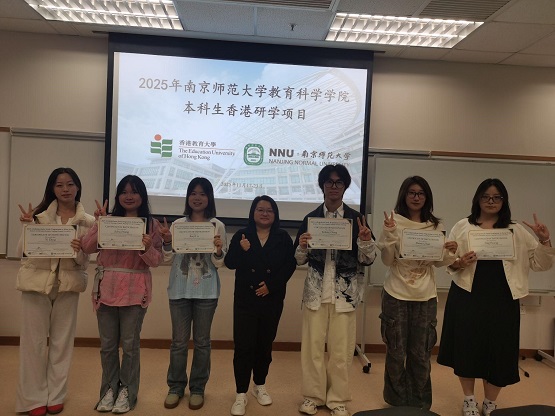
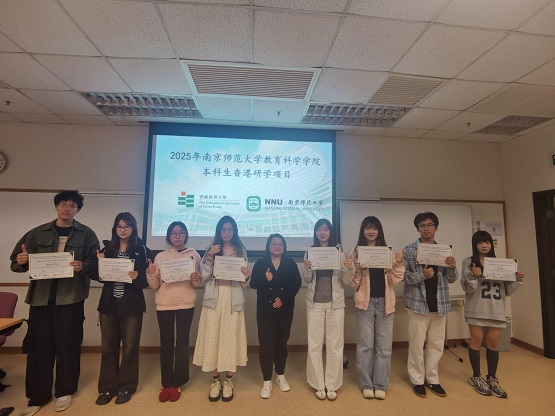
Dr. SUN presenting certificate of participation to delegation of faculty and students from NNU in recognition of their engagement and achievement


