




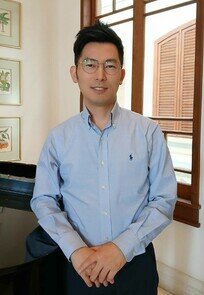
李主圣博士
- +852 2948 7391
- B4-1/F-06
- jslee@eduhk.hk
- https://scholar.google.com/citations?user=bTlRySMAAAAJ&hl=en
Ju Seong Lee (李主聖), Ph.D. (University of Illinois at Urbana-Champaign)
I believe that the time, talents, and resources entrusted to us are best used in service of those who face real need and limited opportunities. While research can generate knowledge, I hope it can also create pathways for people to grow, connect, and flourish.
Since 2000, I have been involved in volunteer and educational initiatives across more than ten regions, including Cambodia, Mongolia, and Thailand. These experiences profoundly shaped my understanding of learning. I came to see that meaningful growth often begins outside formal institutions—in everyday spaces where people feel safe to explore, encouraged to take risks, and inspired to imagine new possibilities for themselves and their communities. This perspective gradually led me toward lifelong, lifewide, and informal learning, particularly among learners in under-resourced contexts.
In 2018, I introduced the concept of Informal Digital Learning of English (IDLE), building on my long-standing interest in how people learn beyond the boundaries of formal education. Many IDLE learners embody what I describe as aideul (아이들), the Korean word for “children”—not in age, but in spirit: curious, open to discovery, resilient in the face of challenges, and willing to continue growing. Research conducted across diverse contexts has suggested that such engagement is associated with greater enjoyment of learning, a stronger sense of purpose, increased willingness to communicate, and sustained language development.
Since 2020, I have worked alongside colleagues, educators, communities, industry partners, NGOs, and government organisations to translate these ideas into practice. In Indonesia alone, our collaborative initiatives have reached more than 2,800 learners. These partnerships reflect a shared belief that meaningful learning is not created by any single institution or individual, but through ecosystems that support learners over time. Together, we seek to build environments where people can continue learning long after formal instruction ends.
As I move into the next stage of my academic journey, I find myself increasingly focused on how this work might continue to benefit others. I hope to further refine the IDLE framework, build a stronger evidence base for its impact, and develop practical tools that are accessible to educators and learners, especially those with fewer opportunities. In doing so, I aim to contribute, in small but lasting ways, to learners’ language development, personal growth, and the wellbeing of their communities. Above all, I hope that this work will continue to support learners, educators, and communities in meaningful ways long after my own role in the journey has ended.