President's Overview
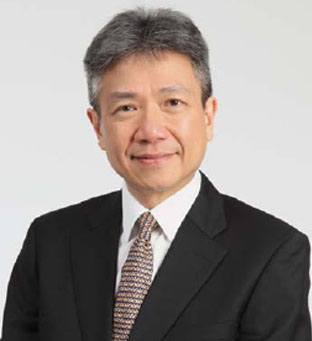
I am honoured and pleased to present my first overview of the Institute since my assumption of office in September 2013. I feel very grateful for the unfailing support of the Institute’s Council, staff, students, alumni and friends, without which the Institute would not have made such significant progress in the past twelve months. In the years ahead, I look forward to continuing to work closely with them.
Teacher Education Matters
As the Institute continues to diversify its portfolio of programmes into multidisciplinary areas, teacher education, or the nurturing of teachers who can best serve Hong Kong’s education community, remains our core mission. To this end, the Institute conducted a large-scale Survey of Core Competencies of Future Teachers in the first quarter of 2014, involving approximately 1,000 principals of local and international secondary and primary schools and kindergartens.
The survey results are clear. The most important and sought-after attributes of a future teacher are a positive personality, positive work attitude, cooperation and teamwork, interpersonal skills, and professional knowledge and skills. Premised on these results, the Institute will review its current curriculum and seek to identify and implement changes for improvement in the coming year.
Grooming of Well-rounded Students
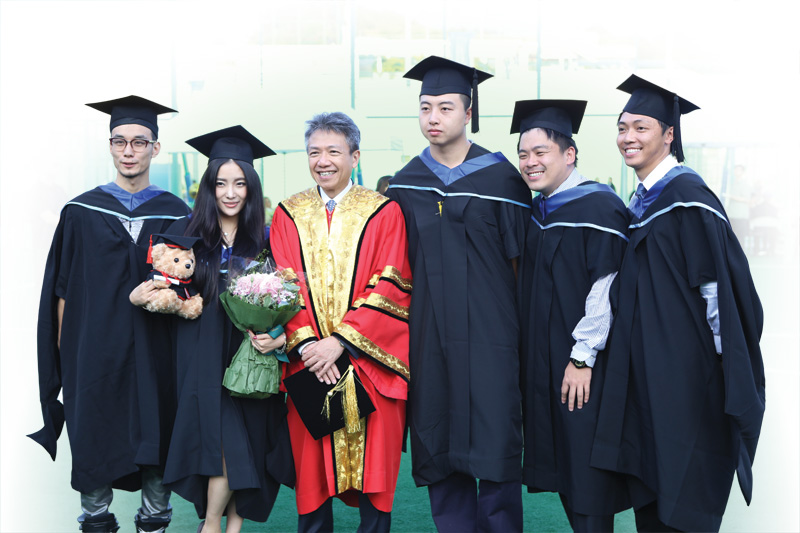
The globalised 21st century demands teachers who can communicate and work in a cross- and multi-cultural setting. Under its newly adopted Language Policy, the Institute aims to groom its graduates to be caring and competent professionals who are bi-literate (Chinese and English) and tri-lingual (English, Cantonese and Putonghua), made possible by a multi-pronged and progressive approach.
Our students are required to take Putonghua and English proficiency tests upon entry, join mandatory language enhancement programmes during their studies, and meet exit requirements for Putonghua and English proficiency before graduation. The recruitment of native English speaking tutors under the International Tutors Scheme is an example of the Institute’s latest initiatives in creating an English-rich learning environment.
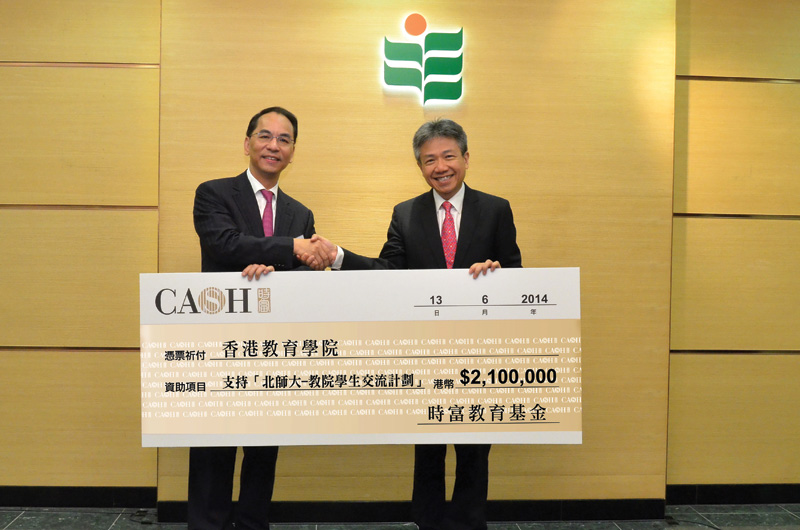
Another booster is a newly sealed agreement with the Beijing Normal University (BNU) which will enable our students to take tailor-made core courses offered by scholars at BNU and gain field experience in a Putonghuaimmersion environment.
Committed to supporting students to join language immersion and community service programmes in the Greater China region and overseas, the Institute’s International and Regional Learning Enhancement Fund will offer every fulltime University Grants Committee-funded undergraduate the opportunity of at least one overseas learning exchange experience during their studies at the Institute.
Empathy is an important quality for teachers. To groom our students as caring professionals, the Institute has expanded its special needs training, with selected students to aid special needs pupils in some local secondary schools.
Impressive Research Performance
The Institute performed impressively in the 2014-15 research funding cycle administered by the Research Grants Council (RGC). Thirty-four new projects received HK$19.2 million in grants from the RGC’s General Research Fund (GRF), Early Career Scheme (ECS) and the Humanities and Social Sciences Prestigious Fellowship Scheme.
The Institute garnered 16 GRF grants, topping the eight publicly funded tertiary institutions under the “Education” discipline. Its young scholars performed equally well, securing 17 ECS grants.
Launched in 2012-13, the Humanities and Social Sciences Prestigious Fellowship Scheme grants extended time off and support funding to outstanding researchers. Of the 17 proposals submitted in the 2014-15 cycle by the eight UGC-funded tertiary institutions, only six were selected for funding by the RGC. The Institute’s old age poverty project was one of the six, a remarkable success for a second consecutive year in this highly competitive Scheme.
Partnership for Education Excellence
As the leader in teacher education, the Institute seeks to expand its partnership with the education community. During the year, eight major school sponsoring bodies* (SSBs) joined forces with the Institute, bolstering a network that covers around 33 per cent of the schools in Hong Kong. The Institute can now provide unparalleled professional development programmes to train in-service teachers and attract the aspiring students of SSB-run schools to pursue teaching careers.
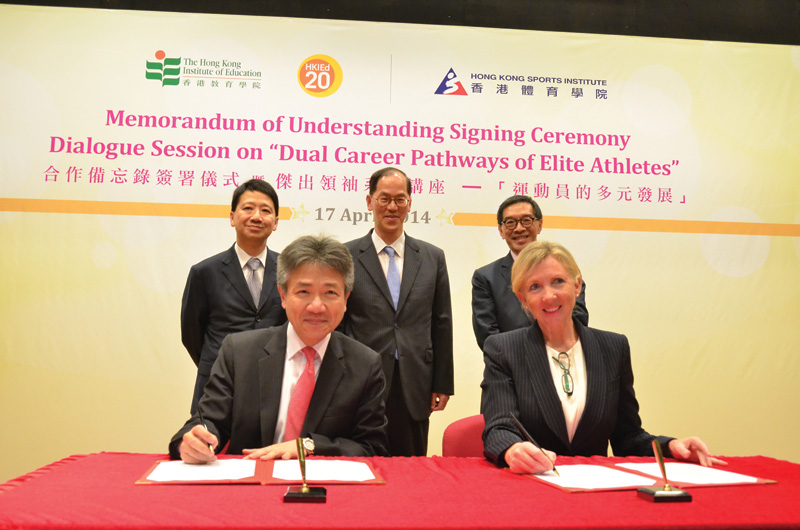
Local elite athletes are facing great challenges in pursuing higher education. To help overcome these challenges, the Institute has signed a collaborative agreement with the Hong Kong Sports Institute to provide a flexible learning mode for sports elites and coaches, thus offering them a dual pathway of professional competition and education. As a result, the Institute has enrolled a number of outstanding athletes, including the London Olympic Bronze Medallist, Ms Sarah Lee Wai-sze.
The Institute’s efforts in building extensive collaborative networks go beyond Hong Kong. On 9 October 2014, the Institute will host the Third Forum for Presidents of Normal Universities in the Greater China Region, at which the presidents of close to 30 key normal universities in mainland China, Taiwan and beyond will engage in institution-level exchanges under the theme of “Educators for the 21st Century”.
Philanthropic Support through Donations
The Institute has received generous and continuous support from philanthropic foundations, large corporations and the wider community, mirroring their recognition of our contributions to education. I am deeply grateful for their support and pleased to report the Institute has raised a record HK$60 million in donations that will be matched dollar-for-dollar under the Matching Grant Scheme. This additional funding will enable the Institute to further its mission.
Quality Assurance and Governance
The Institute has developed and implemented Key Performance Indicators (KPIs) and Performance Indicators (PIs) to monitor and evaluate its progress towards institutional goals. These KPIs and PIs will be applied to Learning and Teaching, Research, Research Training, Knowledge Transfer, Internationalisation, and Administration. Moreover, Faculty Deans, supported by Heads of Departments, have been strengthened in their roles as academic leaders of programmes and related operations. Finally, committees under the Academic Board, the Institute’s highest academic body, have been streamlined to ensure clarity and consistency in the application of Institutelevel policies.
People Our Most Valuable Asset
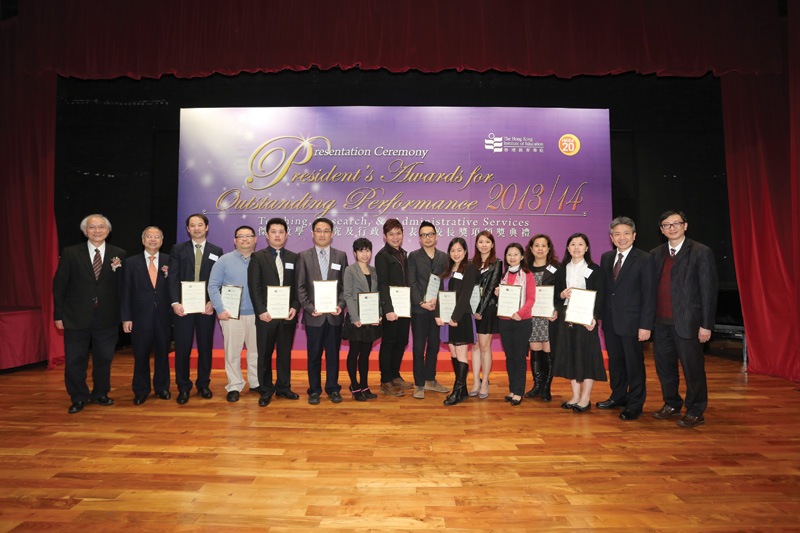
People are the Institute’s most valuable asset. Thus, the Institute fosters a culture in which staff members can pursue continuous excellence and improvement in their respective areas. I am proud of our staff and most delighted in acknowledging their contributions through the President’s Awards for Outstanding Performance in Teaching, Research, and Administrative Services 2013/14**. At the Presentation Ceremony held on 1 April 2014, I shared the joy of the award recipients who were cheered by their family members, friends and colleagues.
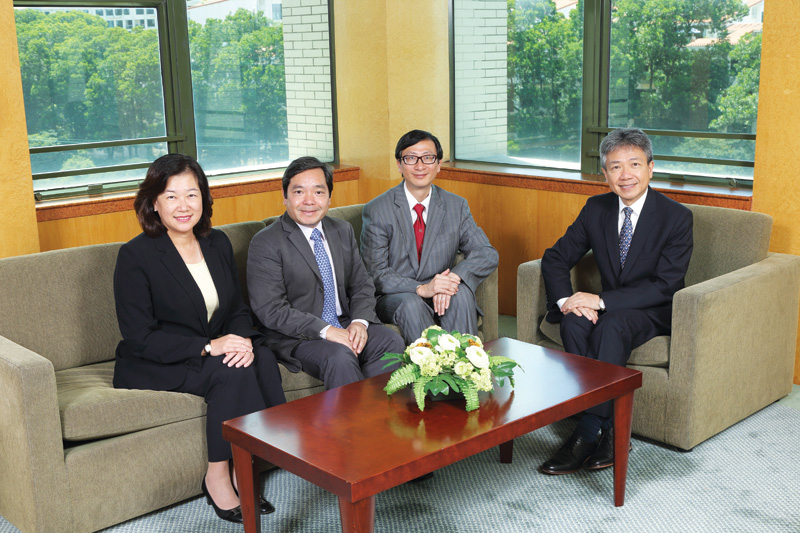
I would like to register the Institute’s special thanks to Professor Cheng Yin-cheong and Mr Chris Mong, who retired as Vice Presidents in July 2014. Meanwhile, I am pleased to report that Professor Joshua Mok and Ms Sarah Wong have been appointed Vice President (Research and Development) and Vice President (Administration), respectively. Along with Professor John Lee, Vice President (Academic), they will be the key members of the Institute’s senior management team that will further our mission in the years to come.
Progress on University Title
The Institute has successfully taken two crucial steps: (a) revalidation of two non-education programmes, namely, the Bachelor of Arts (Honours) in Language Studies and the Bachelor of Social Sciences (Honours) in Global and Environmental Studies; and (b) Programme Area Accreditation for Chinese Studies, English Studies and Environmental Studies. Following these positive outcomes, the Institute submitted its application for university title to the Education Bureau in July 2014, which will lead to a review by the University Grants Committee, commencing in 2015.
I must emphasise that being awarded a university title is not an end. Rather, it will highlight the Institute’s transformation into an education-focused, multidisciplinary and research-strong university that excels in teaching and research. In closing, I look forward to working with all stakeholders to expand our continuous contributions in meeting the education needs of Hong Kong and beyond.
* The eight major school sponsoring bodies include the Catholic Diocese of Hong Kong, the Hong Kong Sheng Kung Hui, the Hong Kong Council of the Church of Christ in China, the Tung Wah Group of Hospitals, Po Leung Kuk, the Hong Kong Buddhist Association, the Methodist Church, Hong Kong, and Yan Oi Tong.
** Individual Awards for Outstanding Performance in Teaching – Dr Law Kam-yee and Dr Wang Lixun; Early Career Research Excellence Awards for Outstanding Performance in Research – Dr He Jingwei and Dr Liu Duo; Team Awards for Outstanding Performance in Administrative Services – Marketing and Branding Team at the Faculty of Liberal Arts and Social Sciences, and Administrative Support Team of the Office of the Chief Information Officer.

Professor Stephen Y.L. Cheung, BBS, JP
President