





Hong Kong's political unrest since 2019 has led to the imposition of a national security law last year and the recent revamping of its electoral system by the central government. International sentiments have turned gloomy about the city's future, with the US ending the special treatment previously accorded to it as different from the rest of China under the 1992 Hong Kong Policy Act, claiming it is on a path towards 'One Country One System'.
Apart from Western scepticism and boycotts, and Beijing's distrust, Hong Kong has also found itself in uncertain waters in national integration (in particular Greater Bay Area integration). With Shenzhen fast catching up with the city economically, some wonder if the once much-acclaimed metropolis will now come to see its demise. Can Hong Kong still thrive as a global city within a growingly volatile geopolitical environment defined by US-China conflict, or will it have to be resigned to becoming just another city of China?
Despite overall economic affluence, steady increase in wealth and wages, ample educational and training opportunities, high life expectancy and an efficient healthcare system, social disparity in Hong Kong has been worsening in recent years. Deteriorating housing affordability and social mobility are driving discontent. Infrastructure and public transport capacities have been stretched to their limit (until Covid-19 ended, temporarily, the large influx of visitors). Urban planning and land use fall behind social and economic needs. Innovation capability lags behind other big cities in the region. Hong Kong has become a 'constraint city'. There is real concern about its long-term sustainability in growth, quality of living and competitiveness.
The Programme Team is proud to present the BALSE Memory Book 2021 which celebrates the achievements of the BA(LSE) programme over all these years. We hope the pictures and words of sharing would evoke students, alumni and staff members' fond memories and a sense of pride for the path that we have treaded together!
Congratulations to Professor CK Woo, who has won a Gold Medal for his teaching development grant project’s invention, “Online Assessment System for Individual Scores (OASIS)” at the 2021 International Exhibition of Inventions of Geneva.
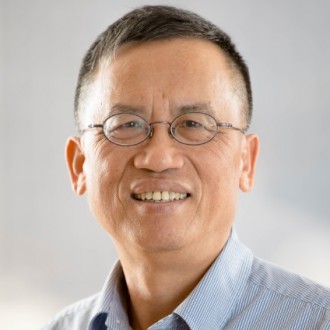
Co-developed by Dr Henry So of MIT and researchers at Hong Kong Polytechnic University, OASIS is a fair and transparent assessment method that ex ante discourages free-riding before a team project’s commencement and ex post punishes free-riders when such behavior is found to exist upon the project’s completion. It has been implemented by 28 teachers and ~1,800 students across nine universities in the US, Hong Kong, mainland China, and India. Empirics to date comprises the following findings.
First, OASIS encourages student participation in a team project through its contractual commitment and performance-based scoring method. Second, it readily detects free riders in a team project. Third, OASIS uses peer assessment data to fairly score individual contributions by a team project’s members. Finally, it is user-friendly and benefits students, teachers, and university management.
Based on the current users’ positive feedback, Prof Woo expects more OASIS users in the coming academic years. Separately, OASIS has been adapted for commercial application. A case in point is a large US toy company with two production plants in Guangdong. This company’s management used a modified version of OASIS in 2020 to determine individual year-end bonuses for members in team projects related to toy design, production and marketing, thus underscoring OASIS’s knowledge transfer to the business sector.
The International Exhibition of Inventions of Geneva is one of the most important knowledge and technology transfer events in the world devoted exclusively to inventions. EdUHK was awarded 7 international prizes from the event, and it is a first-ever gold award from the Exhibition to EdUHK. Earlier, Prof Woo has been awarded a Gold Medal with this project at the 2020 IIC International Innovation Competition.
Hong Kong has been ranked by the annual Demographia International Housing Affordability Study as the world's least affordable housing market for 2019 - for the 10th consecutive year. A household would need to save up for 20.8 years to afford a home. Inadequate housing has led to the proliferation of subdivided units and soaring demand for public housing which is in short supply due to the lack of developable land. This dialogue looks at the curx of the housing, land and planning issues and explores policy and institutional possibilities on the way forward. Lessons will be drawn from the experience of Singapore which is world-renowned for its successful national housing policy.
Hong Kong is a city that is no stranger to protests. However, what began as peaceful rallies in May-June 2019 against the extradition amendment bill had quickly turned into incessant political confrontations that brought the city to the verge of violent polarization and breakdown never seen before, triggering the central government's imposition of national security law in July 2020. Hong Kong's future is now changed forever. A key player turning Hong Kong into a 'rebel city' is the young generation who feel politically discontented and socially dispossessed. This dialogue seeks to understand their fury by exploring their aspirations, frustrations, mobility anxieties and identity politics.