





SSC 2358 Overseas Field-based Learning: Exploring Cultural Heritage and Global Citizenship: 11-Day, 10-Night Study Tour to the United Kingdom – funded by Common Core Curricula Committee (CCCC)
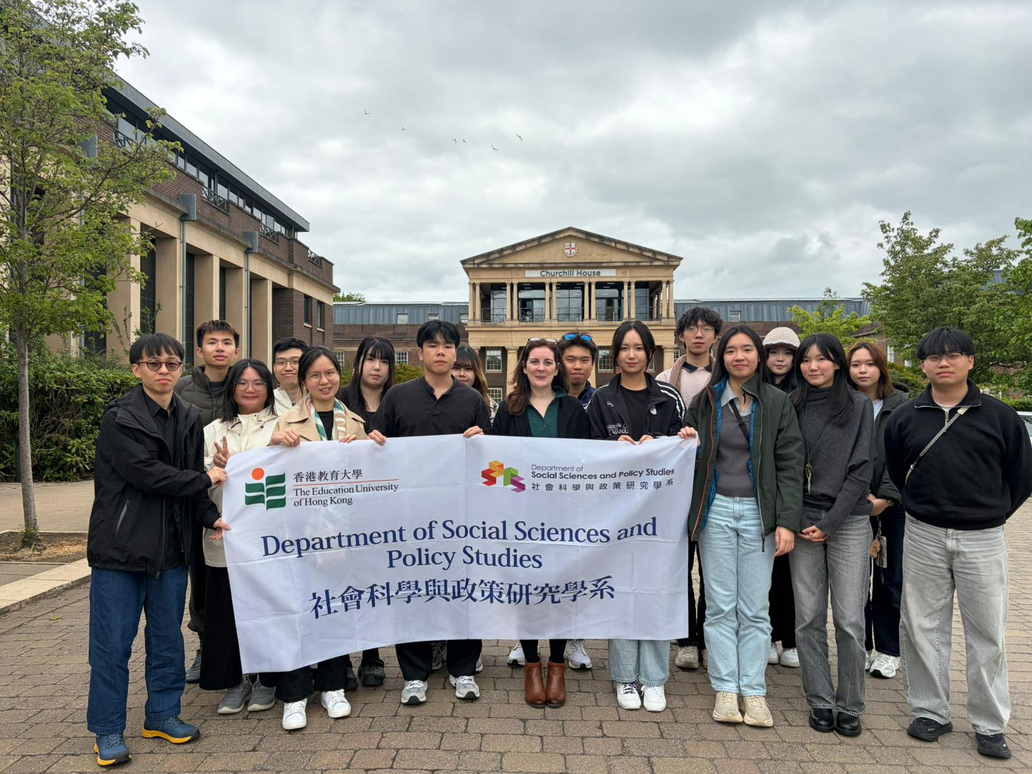
Students enrolled in SSC 2358 joined an 11-day, 10-night overseas study tour that aimed to help them understand cultural heritage and develop a strong sense of global citizenship through hands-on learning.
A key part of the programme was a five-day intensive workshop at the University of Chester. During the workshop, students took part in lectures, group discussions, and interactive activities with five academic staff of university. These sessions helped students build academic knowledge and connect theory with real-world issues.
Outside the classroom, students carried out fieldwork in Chester, including street interviews. They talked to local people to learn different views about cultural heritage, identity, and community life. This helped students improve their communication skills and learn how to collect and analyze data.
The group also visited important heritage sites. These included the Pontcysyllte Aqueduct and Jodrell Bank Observatory, both UNESCO World Heritage Sites. Students also visited the Maritime Mercantile City in Liverpool, which is a de-listed UNESCO site. Through these visits, students learned that heritage is not only about history, but also about modern challenges like urban development and conservation.
An important focus of the course was global citizenship. Students were encouraged to think about their role in a global society. By learning about heritage in another country, they were able to compare it with their own culture and reflect on questions such as:
• How should we protect cultural heritage?
• What responsibilities do we have as global citizens?
• How can we respect cultural differences while promoting sustainability?
These experiences helped students become more open-minded, responsible, and aware of global issues. They learned that being a global citizen means understanding different cultures, respecting diversity, and thinking about how our actions affect the world.
Since most students are from a BEd programme, the study tour also used Kolb’s Experiential Learning Theory, the 5E Instructional Model, and the AEIOU framework to design the learning activities. Students not only learned from the tour but also reflected on how to design similar learning experiences for their future students.
Through reflection and discussion, students gained ideas on how to plan meaningful study tours and experiential lessons. They learned how to guide students to observe, explore, and think critically. Overall, students shared very positive feedback. They found the study tour meaningful, engaging, and helpful for both their academic study and future teaching career.
Chester Business School hosts international study tour from Hong Kong