|
Talent Development in Strategic Management and Organisational Effectiveness
|
Session Host
|
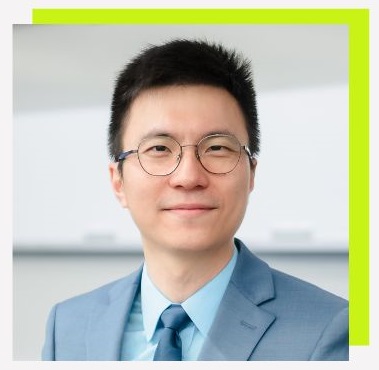 |
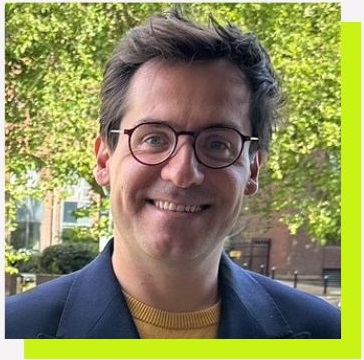
Professor Lam Chak Fu
Professor, Academy for Educational Development and Innovation,
The Education University of Hong Kong
Biography
Professor Lam’s research focuses on creativity, leadership, organisational citizenship behaviours, and wellbeing at work. He has secured multiple grants, including the General Research Fund, the National Natural Science Foundation of China, and the Hong Kong Jockey Club Equine Welfare Research Foundation Pump-prime Funding. Professor Lam’s research has been published in prestigious journals including Academy of Management Annals, Academy of Management Review, Journal of Applied Psychology, Journal of Management, Journal of Organizational Behavior, Personnel Psychology, and Organizational Behavior and Human Decision Processes. He is currently an Associate Editor for the Academy of Management Review and is a member of the editorial boards for the Journal of Applied Psychology and the Journal of Organizational Behavior. In 2021, Professor Lam was recognised as one of the five Best Editorial Reviewers by the Journal of Applied Psychology.
In the classroom, Professor Lam teaches across all academic levels, including undergraduate courses such as Introduction to Management, Master of Business Administration (MBA) courses in Leadership and Negotiation, and Executive Education programmes on Leadership, Managing Change, and Strategic Organisation. He also mentors Doctor of Business Administration students on topics related to family business and animal welfare, and provides guidance to PhD students on various organisational behaviour topics. In 2023, Professor Lam received the Poets&Quants 40-under-40 MBA Professor Award, an internationally recognised accolade that honours professors for their significant impact in the classroom, prolific research contributions, and influence on business and policy.
Beyond research and teaching, Professor Lam has served as Programme Director for the Undergraduate Global Business Programme, the Master of Arts in Global Business Management programme, and most recently, the MBA programme before his tenure at The Education University of Hong Kong. In this role, he has implemented numerous initiatives, such as personalised one-on-one coaching, a “Meet the Professor” series, a behind-closed-doors banking series, speaker sessions with CEOs, masterclasses with MBA professors, and corporate mentorship events. Students have visited institutions like Berkeley to learn about entrepreneurship, Imperial College for active learning in digital marketing, and companies like Alibaba and Esquel to explore cutting-edge technology related to environmental, social and governance issues. In the QS International Trade ranking published in October 2025, he led the MBA programme to achieve first place among Hong Kong universities.
|
Session Title: Talent Development During Organisational Change
|
Speakers
|
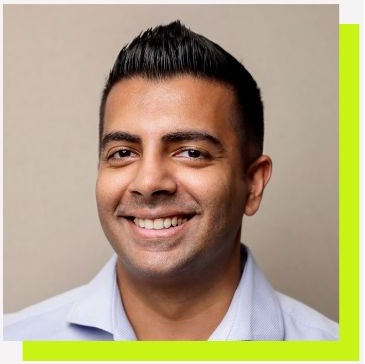 |
Mr Nazim Ali
Chief Revenue Officer, Xendit
Biography
Abstract
From my experience leading teams through major consolidation and growth, talent development is not a separate HR initiative—it's how you execute change successfully. First, stretch your future leaders early. During uncertainty, give emerging talent meaningful ownership of a workstream or new process. Putting people slightly beyond their comfort zone builds the bench strength you'll need for the next phase. My own career has often been about stepping into the unknown, and that's exactly the muscle teams need. Second, treat change as a new race, not a finish line. I tell my teams: 'We're at the green flag, not the checkered flag.' This means building a culture of continuous adaptation where it's safe to ask questions and experiment. Simple team moments—a lunch, a celebration—aren't just nice gestures; they signal we're building energy during the race, not waiting for things to settle. Finally, connect daily work to the bigger ambition. People develop fastest when they see the point. My job is to help everyone understand how their growth contributes to the broader mission. When personal growth aligns with company direction, they will start pulling you for opportunities.
|
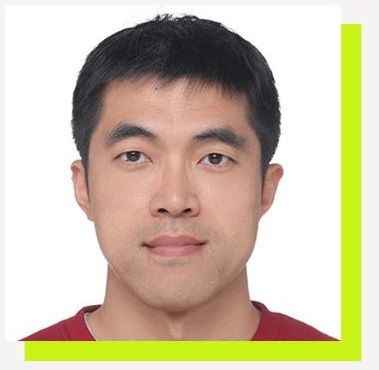 |
Professor Jiang Kaifeng
University Chair Professor,
Peking University
Biography
Professor Jiang is the Peking University Chair Professor of Organisation and Strategic Management at the Guanghua School of Management, Peking University. He previously served on the faculty at The Ohio State University and the University of Notre Dame. His research focuses on strategic human resource management, organisational climate, and work teams. He has published around 50 articles in leading management journals and has received several scholarly honors, including the HR Division Early Career Achievement Award. Kaifeng currently serves as the Past Chair of the Human Resources Division of the Academy of Management and is an incoming Deputy Editor of Management and Organisation Review (2026–2029). He is also a Fellow of the Association for Psychological Science and the Society for Industrial and Organisational Psychology.
Abstract
Artificial intelligence (AI), particularly generative AI, is rapidly transforming how organisations operate, make decisions, and create value. Although much of the public discussion focuses on technological disruption, AI adoption can also be understood as a profound form of organisational change—one that reshapes job designs, decision processes, and the skills required for effective performance. From this perspective, the AI revolution represents not only a technological shift but also a major talent development challenge for organisations undergoing transformation. In this discussion, I frame AI transformation as a particular type of organisational change that requires firms to rethink how they develop, deploy, and evaluate talent. Drawing on emerging research and empirical evidence from labour markets and organisational studies, I first discuss which types of skills are most susceptible to automation or augmentation by AI. Routine cognitive tasks, standardised information processing, and repetitive analytical work are increasingly performed by AI systems, suggesting that the relative value of some traditional skills may decline. At the same time, AI adoption appears to increase the importance of capabilities that complement intelligent systems. These include deep domain expertise, the ability to frame complex problems, critical evaluation of AI-generated outputs, and the capacity to integrate human judgement with algorithmic insights. Social and collaborative skills may also become more important as work becomes increasingly interdisciplinary and technologically mediated. Viewing AI transformation through the lens of organisational change highlights important implications for talent development. Organisations must redesign training systems, career pathways, and performance evaluation mechanisms to support effective human–AI collaboration. This perspective also raises new questions about how firms and individuals can adapt talent development strategies during periods of rapid technological change.
|
 |
Professor Aliana Leong Man Wai
Associate Vice President (International Affairs);
Dean, School of Liberal Arts,
Macau University of Science and Technology
Biography
Professor Leong is Associate Vice President (International Affairs), Dean, Professor and Doctoral Supervisor at the School of Liberal Arts, Macau University of Science and Technology (MUST), and Member of the Advisory Committee of the M.U.S.T. Foundation. Previously, she served as Founding Vice President, Vice Chairperson of the University Council, Chair Professor and Doctoral Supervisor at City University of Macau (2011–2019), where she established three faculties (International Tourism and Management, Education, Continuing Studies) and two research institutes. Earlier, she was Founding Dean, Professor and Doctoral Supervisor at MUST's Faculty of International Tourism and Director of Continuing Studies (2003–2011). A certified gemologist, she holds the Graduate Gemologist (GG) credential from the Gemological Institute of America (GIA), Fellowship (FGA) from Gem-A, Colour Gemstone Professional Level III from Gübelin Academy, and specialized certifications in jadeite gemology. Her research spans tourism management, leisure studies, hospitality management, and gemology education.
Abstract
Title: Reimagining Your Future: Join a Transformative Journey in Hospitality and Tourium Management
The global tourism industry faces sustainability challenges, and traditional education models urgently need reform. The Guangdong-Hong Kong-Macao Greater Bay Area, as a center of economic vitality, provides a unique practical platform for developing a new generation of talent on tourism leaders. Organisational leaders must learn to leverage the region's "one country, two systems" framework to cultivate leaders who advance industrial development, health equity, and cultural preservation through ethical tourism practices. Eventually, talent development in the tourism industry is all about developing interdisciplinary leaders who excel in social entrepreneurship, sustainability directorship, and policy advisory.
|
|
|
Professor Yasin Rofcanin
Full Professor, School of Management,
University of Bath
Biography
Professor Rofcanin works as a professor of human resource management and organisational psychology at the University of Bath School of Management. He earned his PhD from the University of Warwick, Warwick Business School and his BA from Bogazici University, Istanbul, Turkey. His research focuses on the intersection of work- and nonwork life, with implications for employees, employers and organisations. The overall theme of his research adopts a critical lens to the bright and the dark side of various HR practices and proactive work behaviours. Some of the current projects focus on leisure crafting, playful work design, idiosyncratic deals, proactivity, well-being, exhaustion, burnout, and flexible work practices. He has published across a wide range of prestigious journals including Journal of Applied Psychology, Journal of Management Studies, Human Relations, Human Resource Management (USA), Human Resource Management Journal, Journal of Occupational Health Psychology and Journal of Vocational Behaviour. He has edited three books on a) idiosyncratic work deals, b) human flourishing and c) healthy relations at work. He sits on the editorial boards of the major peer-reviewed journals. Y.Rofcanin@bath.ac.uk
Abstract
The future of work is being fundamentally reshaped by the convergence of digital transformation, evolving career models, and changing expectations around meaningful and sustainable employment. In this talk, I examine how organisations can rethink talent development in the context of these shifts, with a particular focus on the intersection of education, work design, and employee proactivity. Drawing on my research on job crafting, work–family dynamics, and proactive work behaviour, I argue that talent development can no longer be understood as a top-down, organisation-driven process. Instead, it increasingly emerges through dynamic, bottom-up processes whereby individuals actively shape their roles, relationships, and career trajectories in response to changing work demands. This perspective highlights the importance of equipping individuals not only with technical skills, but also with self-regulatory capabilities, adaptability, and the capacity to navigate uncertainty across work and non-work domains. I further discuss how educational institutions and organisations can better align to support these evolving forms of talent development. This includes fostering lifelong learning mindsets, integrating experiential and reflective learning practices, and designing systems that enable employees to proactively craft their work and careers. At the same time, I address the role of organisational context—such as leadership, HR practices, and digital infrastructures—in enabling or constraining these proactive processes. Overall, this talk aims to offer a more integrative perspective on talent development, bridging education and organisational practice, and advancing our understanding of how individuals and institutions can jointly shape the future of work in an era of continuous transformation.
|
|