|
Talent Development in Innovation and New Pathways
|
Session Host
|
 |
Dr Wu Biying
Assistant Professor, Academy for Educational Development and Innovation (AEDI),
The Education University of Hong Kong
Biography
Dr Wu is a tenure-track assistant professor at The Education University of Hong Kong under the strategic area of new media and social media. She is the Programme Leader of Master of Arts in Digital Marketing and E-commerce, Associate Programme Leader of Master of Arts in New Media and Social Media, Co-ordinator of Centre of New Media and Social Media, Assistant Co-Director of Global Centre for Women, Development and Education. She is also the Chair of Teaching Committee (2025-2027) in Mass Communication Society division, AEJMC.
Dr Wu’s research expertise lies in the interaction among algorithm and AI research, new media technologies, media psychology, digital journalism, and comparative politics. She is particularly interested at the underlying mechanism (affective, social, and political) of people’s digital consumptions (mobile media, social media, AI) and how these media use impact affective, social, and political environments.
Dr Wu’s work has been published in peer-reviewed journals, including Communication theory, New Media Society, Digital Journalism, Journalism Mass Communication Quarterly, Mobile Media Communication, New Media Society, Telematics& Informatics. Journal of Media Psychology
She was awarded several Top paper awards from ICA and AEJMC. In 2025, She has received Best Dissertation award from MCS AEJMC and Top faculty paper award from NOND, and JMCQ Outstanding Article Award of 2024 (runner-up).
Dr Wu acquired her PhD&MPhil (Comm) at The Chinese University of Hong Kong and was a visiting scholar at The Pennsylvania State University.
|
|
Speakers
|
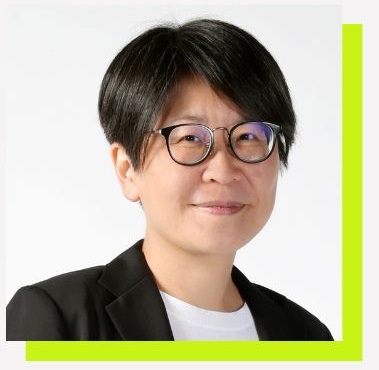 |
Professor Donna Chu
Associate Professor, School of Journalism and Communication,
The Chinese University of Hong Kong
Biography
Professor Chu is an Associate Professor at the School of Journalism and Communication, The Chinese University of Hong Kong. Her research and teaching focus on youth media culture, media literacy, and creative media education. An advocate for student-centered pedagogy, she explores how emerging technologies reshape media production and consumption.
Abstract
Title: Creative Challenges: Educating Media Professionals in the Age of AI
Artificial Intelligence has rapidly shifted from a peripheral tool to an integral backbone of modern media production, disrupting traditional workflows across textual, auditory, and visual domains. While these emerging technologies significantly lower production costs and democratise entry into the field, they simultaneously introduce profound creative and ethical challenges. As the line between human intuition and algorithmic generation blurs, questions of originality and human-centred value have intensified anxieties regarding professional obsolescence. This presentation explores the essential components of a robust communication education within this high-stakes environment. We begin with a survey of the shifting media landscape, analysing how AI integration is reshaping the functional roles and creative identities of industry professionals. Following this, we offer a critical review of existing pedagogical frameworks, arguing that traditional curricula may no longer suffice in a world of automated content. Finally, we address the fundamental questions of creative agency: How do we redefine "originality" in a prompt-driven world? And how can educators foster a resilient, innovative mindset that positions AI as a collaborative partner rather than a replacement? We conclude by arguing that as technical barriers fall, critical media literacy and aesthetic education will become the definitive markers of the future media professional.
|
 |
Professor Zhou Baohua
Professor and Dean, School of Journalism,
Fudan University
Biography
Professor Zhou is a professor and dean of the School of Journalism, Fudan University. He is also director of Computational and AI Communication Research Center, and PI of MOE Laboratory for National Development and Intelligent Governance at Fudan University, China. His research focuses on new media and society, computational social science, AI and communication, and public opinion. His work has been published in the peer-reviewed journals including New Media & Society, Computers in Human Behavior, Information Processing and Management, and other leading journals in China. He serves as co-editor-in-chief of English journal Communication and Change.
Abstract
Artificial intelligence has brought numerous conveniences and new possibilities to communication and social life, while also giving rise to new risks and challenges (e.g., disinformation and low-quality content). This has imposed requirements for citizens' AI literacy. This presentation focuses on the development of prompt-based AI literacy. It argues that compared with more complex and technology-dependent strategies (e.g., model fine-tuning), prompt engineering is a more feasible approach for ordinary citizens to cultivate AI literacy. Specifically, we focus on three dimensions of AI literacy under the prompt framework (all differing to varying degrees from traditional media literacy): 1)Cognition dimension: from perceiving the world through information exposure to simulation through prompts; 2)Action dimension: from emphasising critical and deliberative thinking to prompt-based intervention actions (e.g., fact-checking and debiasing); 3)Creation dimension: from unilaterally encouraging content creation to restrained and rational intelligent content production. In conclusion, cultivating AI literacy is an indispensable and vital component of civic education in the present and future.
|
 |
Professor Jonathan Zhu
ICA Fellow;
Chair Professor, Computational Social Science;
Director, Centre for Communication Research,
City University of Hong Kong
Biography
Professor Zhu is a Chair Professor of Computational Social Science and Director of Centre for Communication Research at City University of Hong Kong with a joint appointment between Department of Media and Communication and Department of Data Science. His current research focuses on developing, using, and evaluating AI technologies for social science research. He has published in leading journals in various fields, including communication, political science, sociology, computer science, information science, and medical informatics. He is an elected Fellow of the international Communication Association (ICA).
Abstract
Title: What 100 Years of Communication Research Has Taught Us about the Future of AIGC
AIGC stands for AI-generated communication, which is likely to be the hottest topic among scholars and practitioners of communication and media. Enthusiastic and pessimistic views abound. Similar debates have repeatedly occurred throughout the past 100 years of communication research. It’s relevant and informative to review some of the polarised arguments, such as adoption versus adaptation, growing- versus declining- knowledge gap, anti-technological determinism versus third-person effects. Although the emerging AI technology significantly differ from previous generations of communication-information technology, what we have learned from the diffusion-use-impact of the past technologies do offer valuable insights when looking into the current and future of AIGC.
|
|