|
Talent Development in Artificial Intelligence
|
Session Host
|
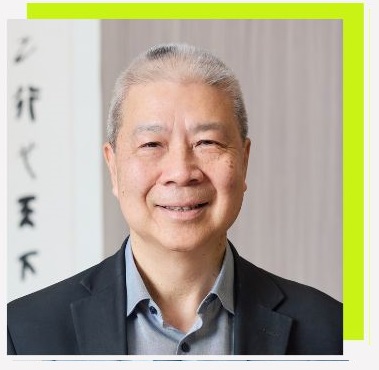 |
Professor Kong Siu Cheung
Chair Professor, Department of Mathematics and Information Technology;
Director, Artificial Intelligence and Digital Competency Education Centre,
The Education University of Hong Kong
Biography
Professor Kong is Chair Professor at the Department of Mathematics and Information Technology and Director of the Artificial Intelligence and Digital Competency Education Centre at The Education University of Hong Kong (EdUHK).
Professor Kong serves as Editor-in-Chief of international journals Research and Practice in Technology Enhanced Learning and Journal of Computers in Education. He was President of the Asia-Pacific Society for Computers in Education from 2014 to 2015 and the Global Chinese Society for Computers in Education from July 2023 to June 2025.
Professor Kong has been named on the Stanford list of the world’s Top 2% Scientists in Education since 2019. His accolades include the 2019–2020 HKSAR University Grants Council Teaching Award (Team Award); the EdUHK President’s Awards for Outstanding Performance in Knowledge Transfer (Team Award) in 2020 and for Outstanding Performance in Administration (Team Award) in 2021 and 2024; and the National Teaching Achievement Award 2022 (Higher Education – Undergraduate, Tier-Two Team Award) of the People’s Republic of China. Currently, he is a member of the 7th Academic Committee of the China Association for Educational Technology and the National Expert Committee on Science Education for Primary and Secondary Schools.
Since 2016, Professor Kong has been leading an international project to promote coding education and the development of computational thinking. He is also leading several projects running from 2020 to 2028 on AI in education and AI literacy for a wide range of participants in Hong Kong and France, including primary and secondary school pupils, university students, teachers, parents, and administrative staff in the workplace.
At EdUHK, he is the programme leader for the Master of Science in Artificial Intelligence for Executive Professionals and the five-week Certificate in Professional Development on Artificial Intelligence in Primary Education. His research interests include AI in education; AI and metaverse literacy; computational thinking, STEM, and mathematics education; pedagogy in digital classrooms; teacher development; and policy in digital education.
|
Session Title: A Pedagogical Dialogue: Preparing Young Learners for Leadership in an AI World
|
Speakers
|
 |
Professor Chen Wenli
Professor;
Associate Dean, Office for Research;
Professor, Learning Sciences and Assessment Academic Department,
National Institute of Education, Nanyang Technological University
Biography
Professor Chen Wenli is the Associate Dean of Office for Research at National Institute of Education (NIE), Nanyang Technological University (NTU) Singapore. She is co-chairing NIE’s Emerging Technologies Strategic Growth Area, and AIED@NIE. She served as the Head of Learning Sciences and Assessment Department from 2021 to 2025. She specialises in computer-support collaborative learning (CSCL), multi-modal leanring analytics (MMLA), and human-centred AI for education (AIED). She has been invited as the keynote speaker for many international conferences. She has won a dozen Best Paper Awards from international conferences. In 2020, the Asia-Pacific Society for Computers in Education presented her with the Distinguished Researcher Award. She received the "Excellence in Research Commendation" "Excellence in Teaching Commendation", and the "Nanyang Education Award" from NIE/NTU.
Professor Chen serves as the Editor-in-Chief for both the Journal of Computers in Education, and Learning: Research and Practice. She also serves as an Associate Editor for Instructional Science, and Research and Practice in Technology Enhanced Learning. Moreover, she is an editorial board member for the International Journal of Computer-Supported Collaborative Learning.
Professor Chen serves on the Board of Directors of the International Society of the Learning Sciences (ISLS). She also served as co-chair of the CSCL Community Committee of the International Society of the Learning Sciences from 2016 to 2021. She is the executive committee member of the Asia Pacific Society of Computers in Education (APSCE) and the Global Chinese Society of Computers in Education (GCSCE).
Abstract
Title:
Empowering Future Leaders through Human-Centered AI for IA (Intelligence Augmentation)
Abstract:
As artificial intelligence (AI) becomes increasingly integrated into education, it presents both opportunities and challenges to future leaders. In this talk, Professor Chen Wenli explores the transformative potential of human-centred AI for intelligence augmentation (IA), emphasising the enhancement of human capabilities rather than the replacement in preparing future leaders. This talk advocates for a shift from traditional AI, which often prioritises automation and efficiency, to IA (intelligence augmentation) that fosters human agency through meaningful human-AI collaboration and synergy. Professor Chen Wenli discusses how human-centred AI in education empowers leaders to take ownership of their learning journeys through personalised and adaptive strategies, addressing the risks of their over-reliance of AI and cognitive laziness while enhancing their critical thinking and problem-solving skills.
|
 |
Professor Hsu Ting-Chia
Professor
Taiwan Normal University
Biography
Ting-Chia Hsu is a Distinguished Professor at Taiwan Normal University specialising in computational thinking education and technology-enhanced learning. With over 50 SSCI publications, she has significant international academic impact and has received numerous awards since 2013. She has been a visiting scholar at NIE Singapore and visiting faculty at MIT and Vilnius University. Dr Hsu has organised international conferences, served as editor for international journals, and led several SIGs on technology-enhanced language learning and computational thinking in STEM. She is an editor of secondary IT textbooks in Taiwan, China, ranks among the world’s top 2% scholars (Stanford list), led the MOE educational big data micro-programme (2023–2025), and serves as editor-in-chief of Taipei City’s AI Education White Book (2026).
Abstract
Artificial intelligence (AI) is rapidly transforming society and education, making AI literacy an essential competency for K–12 students. This talk explores how schools can cultivate AI literacy by integrating computational thinking, AI concepts, ethics, and practical applications into the curriculum. Drawing on recent research and educational initiatives in Taiwan, China, the presentation introduces a framework for AI literacy that emphasises three progressive levels of learning: understanding, applying, and creating. The framework encourages students to develop foundational knowledge of AI technologies, apply AI tools to solve real-world problems, and ultimately design innovative AI-based solutions. The talk also presents several instructional approaches for AI literacy education, including AI-STEAM integrated learning, educational board games, and AI-supported learning platforms. These approaches help students engage in hands-on activities such as designing AI-enabled games, programming simple AI systems, and analysing learning data. In addition, learning analytics and AI-powered learning companions can support personalised learning and provide teachers with insights into students’ learning behaviours. Through real classroom examples and large-scale educational projects, the presentation demonstrates how AI literacy education can foster students’ computational thinking, creativity, and ethical awareness in the age of AI. The talk concludes with policy and curriculum recommendations for building sustainable AI literacy education in K–12 systems.
|
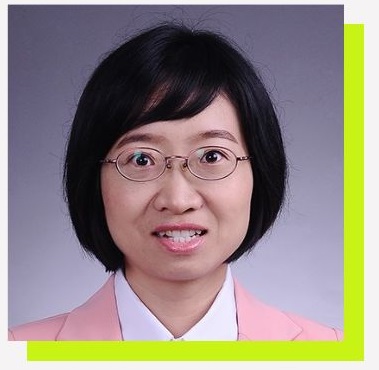 |
Professor Zheng Lanqin
Associate Dean, School of Educational Technology, Faculty of Education,
Beijing Normal University
Biography
Professor Zheng serves as Associate Dean of School of Educational Technology and Deputy Director of the Journal Center at the Faculty of Education. Her research interests include CSCL, AIED and learning analytics. She has been consecutively named to the World's Top 2% Most-Cited Scientists list annually since 2022. As of March 2026, she has achieved 185 academic publications and has led 28 projects. She holds editorial roles as an Associate Editor for the SSCI journal JCAL and the ESCI journal JCE, an Editorial Board Member for the Scopus-indexed journal IJMLO, and the Assistant Editor-in-Chief for the ESCI journal SLE.
Abstract
The rapid advancement of Generative Artificial Intelligence (GenAI) is shifting education from technology-assisted instruction to human-AI collaboration. In this context, future innovative talents must not only master cutting-edge technologies but also develop capabilities for collaborative problem-solving with AI and socially shared regulation in dynamic environments. Drawing on empirical studies, we propose a pedagogical framework grounded in multimodal data and human-AI symbiosis. This framework addresses common educational challenges—such as shallow interaction, delayed feedback, and cognitive overload—through targeted technological interventions. First, GenAI-driven multi-agent systems empower learners by reducing low-level cognitive demands, allowing them to focus on complex problem-solving. Empirical results show such systems enhance collaborative skills and solution quality, as demonstrated in a five-step method used in teacher education. Second, knowledge graphs support deep learning by structuring semantic content. An automatic knowledge graph construction method was validated to improve collaborative knowledge building, with high-performing groups showing stronger knowledge node activation and connectivity. Third, intelligent feedback fosters socially shared regulation. In university experiments, knowledge graph-based feedback—especially suggestive guidance—promoted co-regulation, goal setting, and adaptive strategies, leading to more complete regulatory cycles. Finally, a closed-loop system integrating diagnosis, intervention, and iteration was developed to enhance performance. AI-based cognitive diagnosis and learning analytics enabled real-time adaptive feedback and triadic collaboration among teachers, analytics, and AI agents. Together, these findings offer a robust foundation for designing next-generation learning environments that prepare learners to thrive as reflective, adaptive agents in an increasingly intelligent world.
|
|