|
UHBN Research Scheme
To further develop state-of-the-art research methods and data analyses for the equipment at UHBN, UHBN has established the research scheme, supporting projects with a total funding of 1,400,000 HKD.
1. How Short-form Video Addiction Influence the Sustained Attention of Young Adults: A Behavioral and fNIRS Study
Short-form video (SV) platforms have become ubiquitous among young adults, raising significant public health concerns regarding digital addiction and its cognitive consequences. While behavioral studies suggest a link between SV overuse and attention deficits, the underlying neural mechanisms remain largely unexplored. This project aims to investigate the impact of SV addiction on sustained attention—a critical cognitive function for learning, academic achievement, and career development—by comparing young adults with high versus low levels of SV addiction.
Forty young adult participants (20 per group) will be recruited based on their scores on the Short-form Video Addiction Scale, with attention-deficit/hyperactivity symptoms and daily routine sustainability measured as control variables. Participants will complete the Sustained Attention to Response Task (SART) while undergoing functional near-infrared spectroscopy (fNIRS) at the UHBN lab to measure prefrontal cortex activation patterns. Behavioral performance (commission errors, omission errors, and reaction time variability) will be correlated with hemodynamic responses to delineate the neural correlates of addiction-related attentional impairment.
Building on preliminary findings from a pilot study with preschoolers, this investigation will provide essential comparative data to understand how SV addiction affects sustained attention across developmental stages. The project's outcomes are expected to advance theoretical understanding, inform evidence-based interventions to mitigate the adverse effects of digital overuse, and lay a robust foundation for competitive external grant applications (e.g., GRF, HMRF, ITF).
2. Effects of different exergames on executive function among paired adults: an fNIRS hyperscanning study
This randomized crossover study investigates how competitive, cooperative, and solitary exergames differentially affect executive function and brain activity in young adults. Using fNIRS hyperscanning, we will simultaneously measure prefrontal cortex activation in 60 participants (30 dyads of male-male, male-female, and female-female pairs) during Stroop, N-back, and task-switching tasks, alongside blood biomarkers (BDNF and irisin). By comparing acute cognitive and neurophysiological responses across exergame types and gender pairings, this project aims to elucidate the neural mechanisms underlying exergaming's social and cognitive benefits, inform tailored interventions, and generate robust preliminary data for future GRF/HMRF applications.
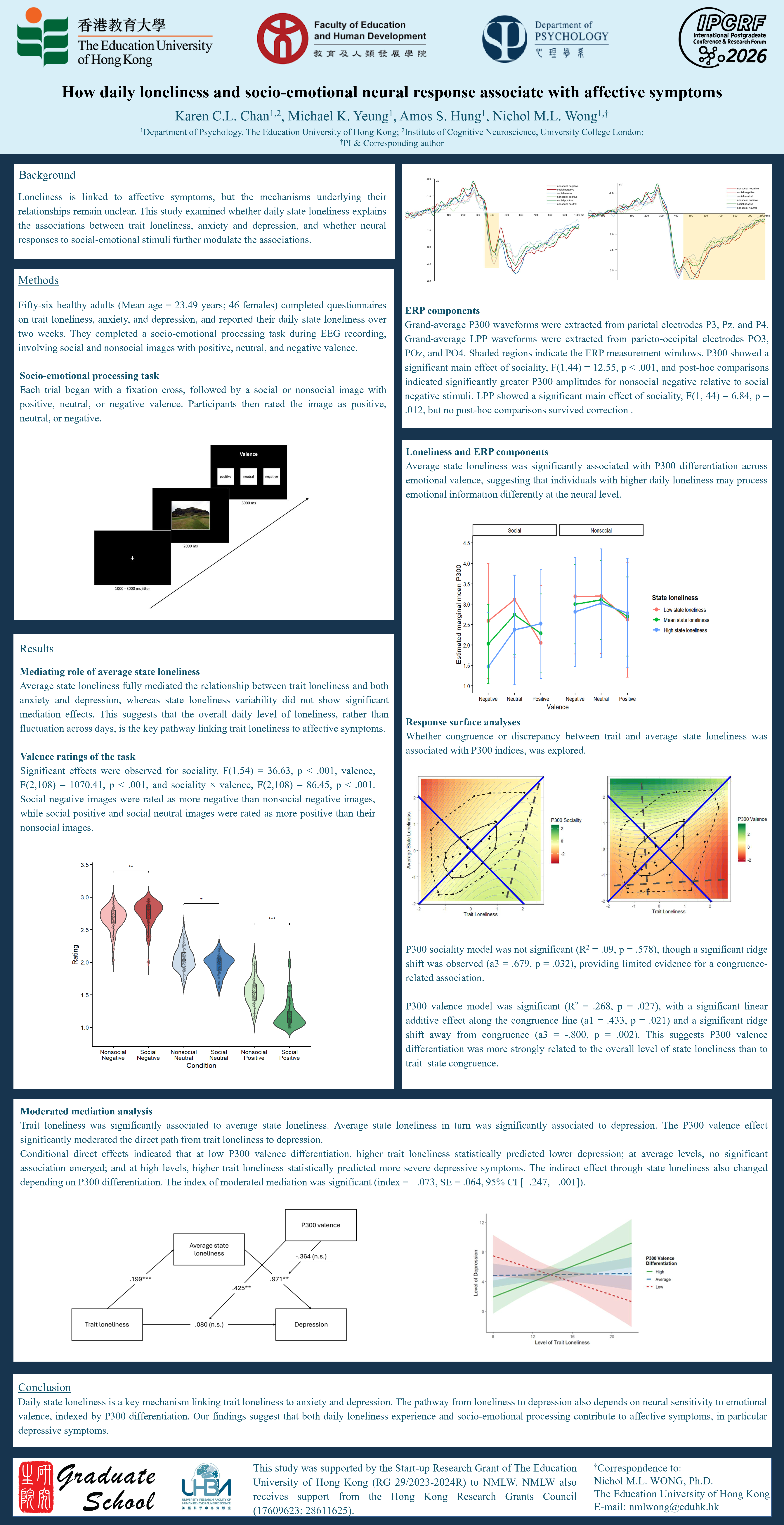
3. Implication of loneliness on cerebellum versus dorsolateral prefrontal cortex in socio-affective processing
This randomized sham-controlled study uses transcranial magnetic stimulation (tMS) to establish causal evidence for the roles of the cerebellum and dorsolateral prefrontal cortex (dlPFC) in socio-affective processing and their modulation by loneliness. Sixty-two participants with varying loneliness levels will receive active tMS over either the cerebellum or dlPFC, alongside a sham session, followed by validated socio-affective tasks (emotional Stroop and picture processing). By comparing neural modulation effects and their association with perceived social isolation, this project aims to elucidate the neuropsychological mechanisms of loneliness, laying the groundwork for non-pharmaceutical interventions and future ECS/GRF applications.
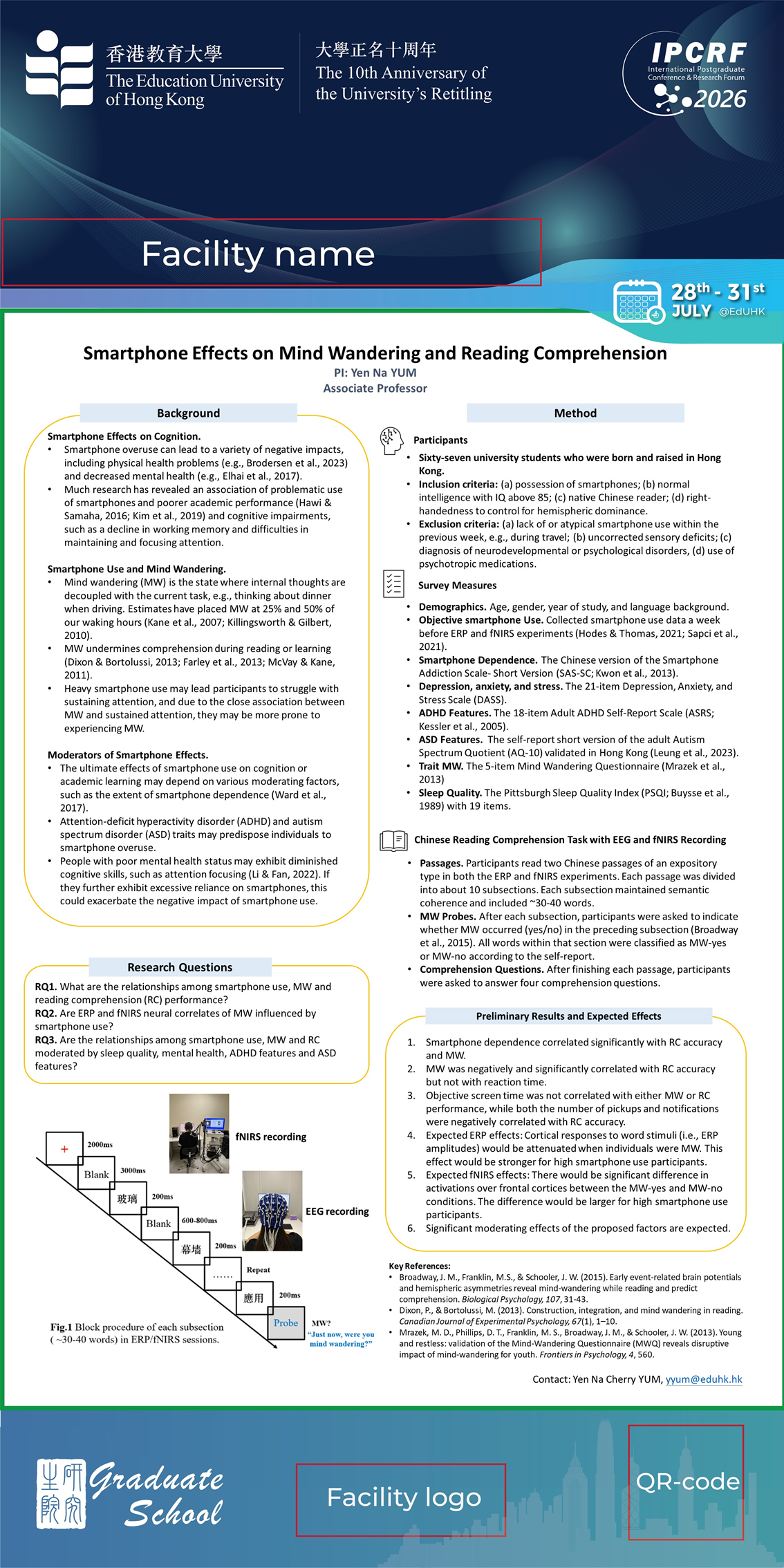
4. Smartphone Effects on Mind Wandering and Reading Comprehension: An ERP and fNIRS Study
This ERP and fNIRS study investigates how smartphone use and smartphone salience influence mind wandering (MW) and reading comprehension (RC) in 40 Hong Kong university students. Using an experimental design with smartphone salient versus non-salient conditions, we will compare behavioral performance (MW probe responses and RC accuracy) and neural correlates (P1, N1, and N400 components; prefrontal and temporal HbO activation) between high and low smartphone usage groups. We will also examine potential moderators including smartphone dependence, trait MW, reading habits, sleep quality, mental health, and ADHD/ASD features. Findings will advance understanding of the cognitive and neural mechanisms of smartphone distraction during academic tasks and inform evidence-based guidelines for healthy smartphone use, with pilot data supporting future GRF applications.
5. Flourishing Online and Offline: A Neurobehavioral Perspective of Sleep-wake Behaviors and Social Network Use in Driving Personal and Interpersonal Wellbeing in the Cyberage
This continuation project expands an ongoing capacity-building study to investigate the neurobehavioral mechanisms linking sleep-wake behaviors, social network use, and flourishing outcomes in young adults. Comprehensive data from 140 participants (18–29 years) across two time-points, including panel surveys, 7-day actigraphy and ecological momentary assessments, and fNIRS-based neurobehavioral tasks will be collected for measuring executive functions and emotion regulation. By examining bidirectional relationships, mediating pathways, and moderating social cognitive factors, this study aims to develop a novel neurobehavioral model of flourishing in the digital age. Findings will inform evidence-based recommendations for prudent social media use and healthy sleep habits and provide pilot data for a future CRF/GRF application.
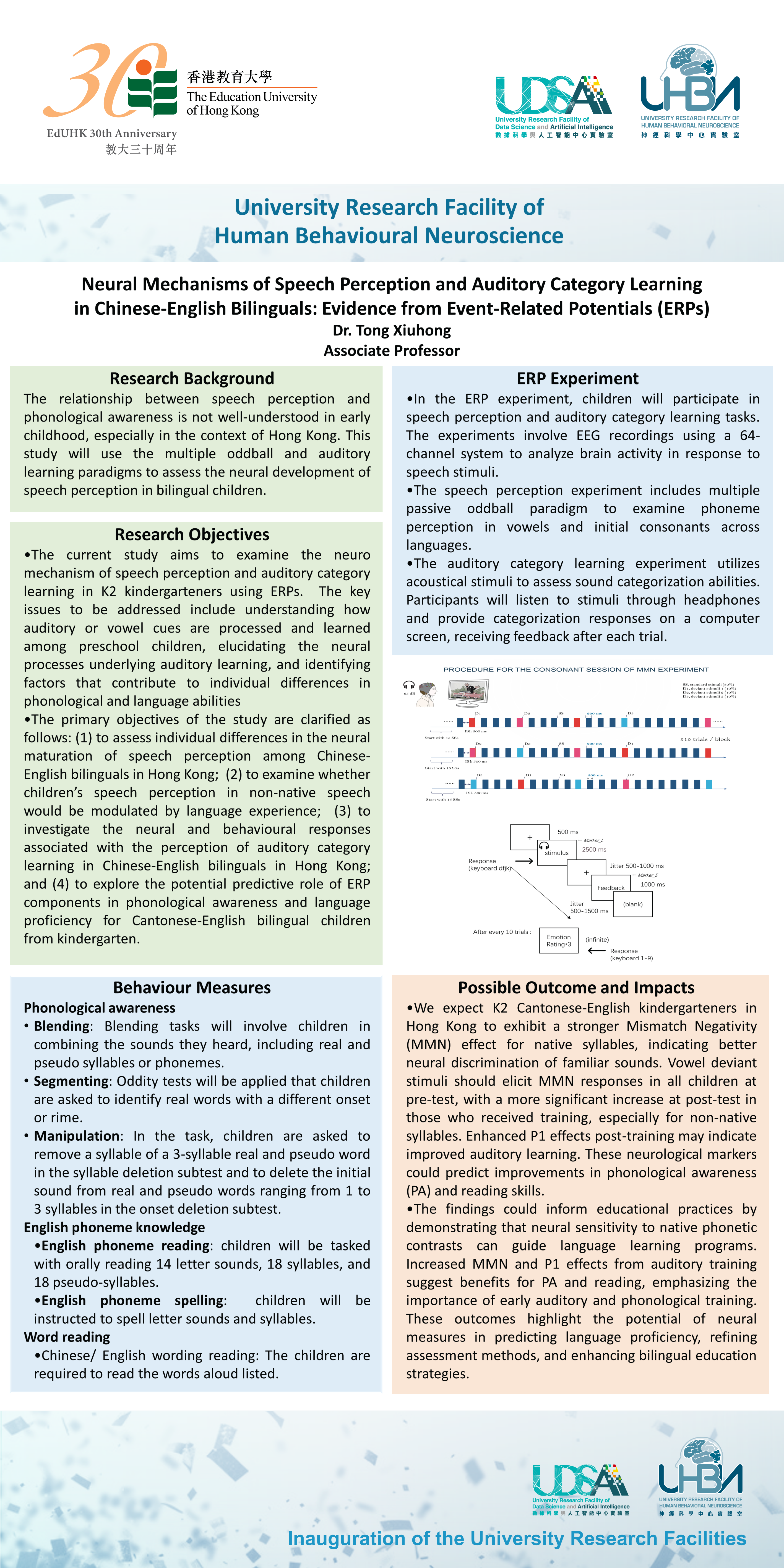
6. Neural Mechanisms of Speech Perception and Auditory Category Learning in Chinese-English Bilinguals: Evidence from Event-Related Potentials (ERPs)
This ERP study investigates the neural mechanisms of speech perception and auditory category learning in 20 Cantonese-English bilingual kindergarteners (K2, aged 5–6). Using multiple oddball paradigms to elicit mismatch negativity (MMN) and positive mismatch responses (p-MMR), we will examine individual differences in neural maturation of native versus non-native speech perception and the effects of language experience. An auditory category learning experiment will explore neural and behavioral responses during novel sound categorization. Behavioral assessments of phonological awareness and word reading in both languages will be conducted to determine whether ERP components predict language proficiency. Findings will inform educational practices for bilingual language acquisition and provide pilot data for future GRF or Quality Education Fund applications.
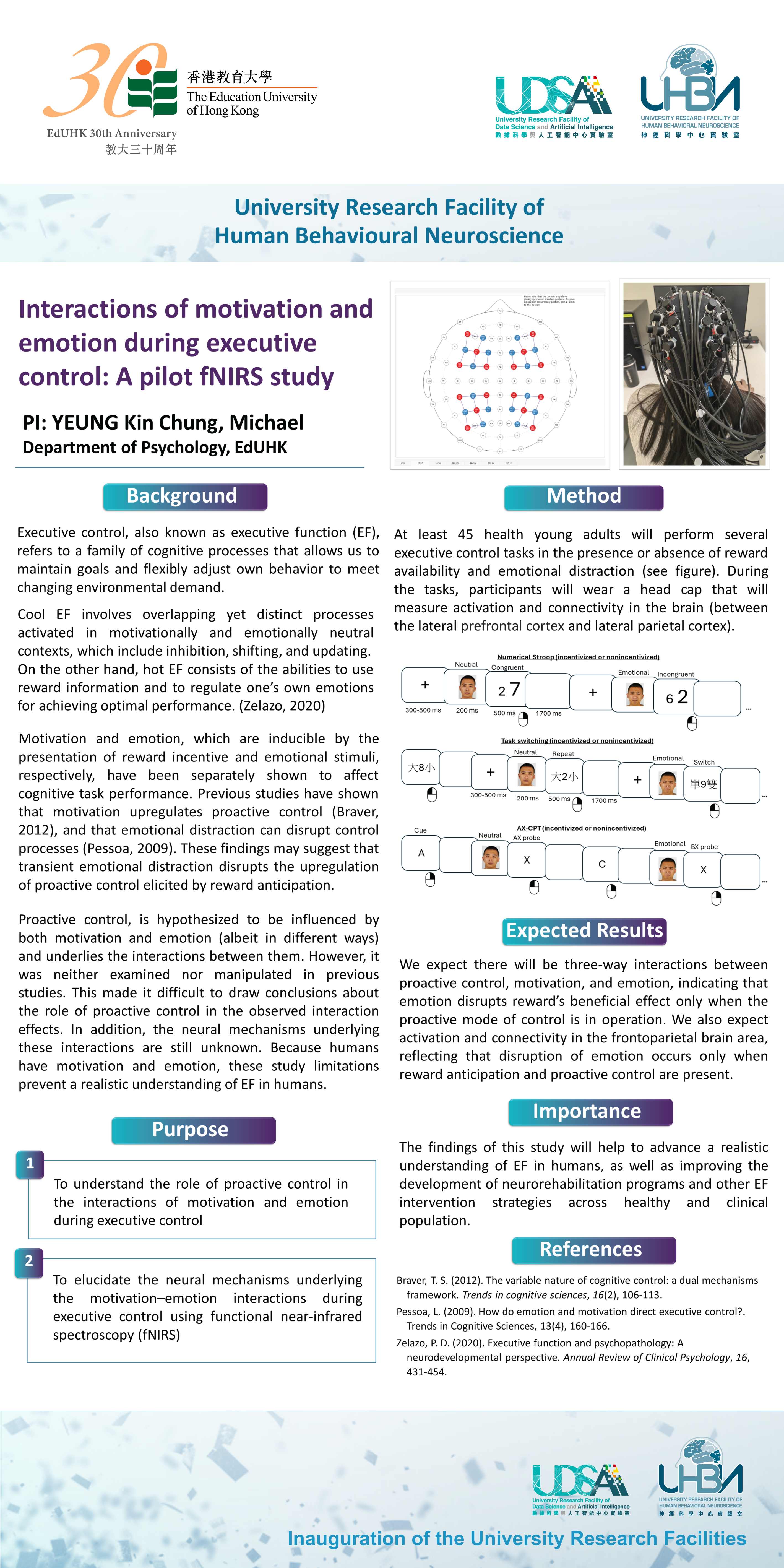
7. Interactions of motivation and emotion during executive control: A pilot fNIRS study
This fNIRS pilot study investigates the psychological and neural mechanisms underlying the interactions of motivation and emotion during executive control in 45–50 healthy young adults. Using monetary reward to manipulate motivation and threatening facial distractors to induce emotion, participants will perform numerical Stroop and task-switching tasks under varying proactive control demands. We will examine behavioral performance and frontoparietal activation and connectivity to determine whether emotion disrupts reward-related upregulation of proactive control and whether this disruption is mediated by altered neural dynamics in the frontoparietal network. Findings will advance understanding of cool-hot EF interactions and provide pilot data for future ECS/GRF applications.
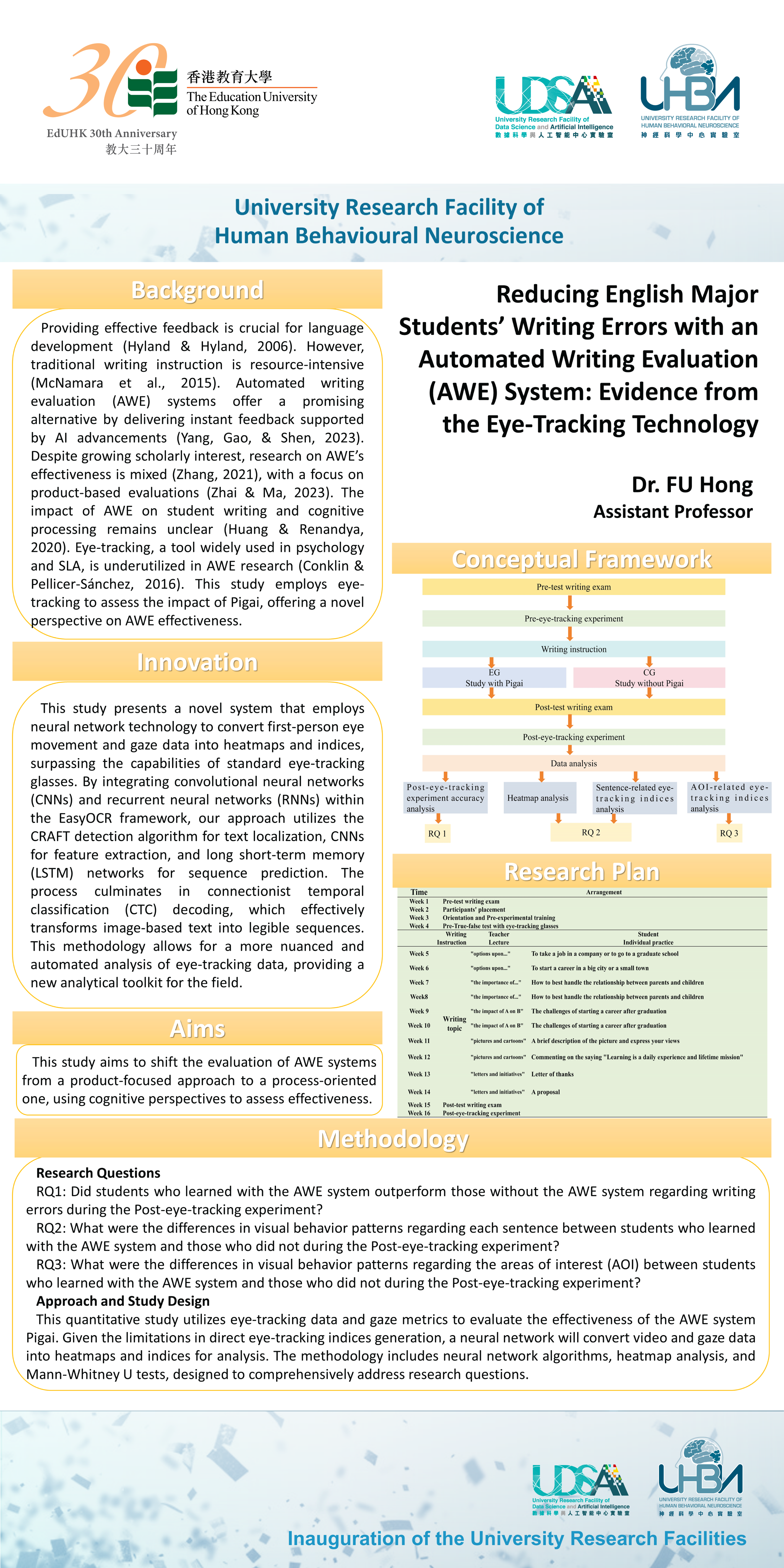
8. Reducing English major students’ writing errors with an Automated Writing Evaluation (AWE) system: Evidence from eye-tracking technology
This study employs eye-tracking technology to validate the effectiveness of an Automated Writing Evaluation (AWE) system (Pigai) in reducing writing errors among English major students in mainland China. Approximately 150 participants will be randomly assigned to either an experimental group (learning with AWE feedback plus teacher feedback) or a control group (teacher feedback only). After writing instruction on five CET-4 themes, both groups will complete a Post-True-false test while wearing eye-tracking glasses to capture visual behavior patterns. Using neural network algorithms to convert eye movement data into heatmaps and eye-tracking indices, we will compare group differences in test accuracy and visual attention patterns (question-level and AOI-level). Findings will shift the focus from product-oriented to process-oriented evaluation of AWE effectiveness, offering insights for instructional design and providing pilot data for future GRF applications.
|