







Event Highlights: EdUHK Research Team Forges Strategic AI Education Partnerships During US Knowledge Transfer Mission
FLASS Visionary Team Visits Scheme (FVTVS) 2025/26 supports nine-day delegation to Stanford, UC Berkeley, UCI, Google, and Meta
HONG KONG, 12 July 2026 – A research team from The Education University of Hong Kong (EdUHK) has successfully concluded a nine-day strategic knowledge-transfer mission to the United States, funded by the FLASS Visionary Team Visits Scheme (FVTVS) 2025/26. The delegation established international research collaborations and strengthened EdUHK's position as a regional leader in human-centred AI research in education.
Led by Dr Sun Daner, Associate Professor and Associate Head of the Department of Mathematics and Information Technology (MIT), the delegation comprising Dr Yang Yin Nicole and Dr Manpreet Singh visited the United States from 9 to 17 June 2026. The mission encompassed academic exchanges at Stanford University, the University of California, Berkeley, and the University of California, Irvine (UCI), alongside industry visits to Google and Meta, and active participation in the International Society of the Learning Sciences (ISLS) 2026 Conference in Santa Ana, California.
Stanford University: Seminar and AI Tinkery Exploration
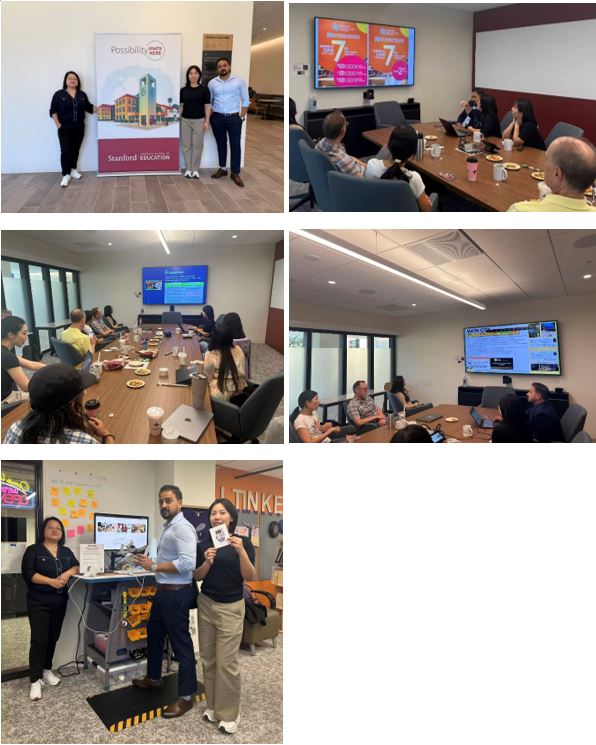
On 10 June, the team visited Stanford University, where they co-organised and delivered a research seminar titled "AI in STEM: Innovations and Future Directions" in collaboration with Prof. John Mitchell and Prof. Josh Weiss, Director of Technology and Innovation. The seminar attracted 15 faculty members, research staff, and PhD candidates.
The EdUHK team shared their ongoing research on AI-powered personalised learning, the integration of generative AI into STEM education, and the design of AI-enhanced learning environments for fostering computational thinking and scientific inquiry. Following the seminar, the team engaged in an in-depth follow-up discussion with Prof. Mitchell, Prof. Weiss, PhD Candidate Ms Shuman Wang, and PhD Candidate Ms Liu Huaiya, during which both sides exchanged perspectives on the opportunities and challenges of AI in education and identified concrete next steps for future collaboration, including joint research publications and international funding applications.
The delegation also visited Stanford's AI Tinkery, a dedicated space for hands-on experimentation with AI technologies and rapid prototyping of AI-enhanced educational tools, where they explored the integration of AI into design and learning experiences.
Google Visit: Industry-Leading AI Research
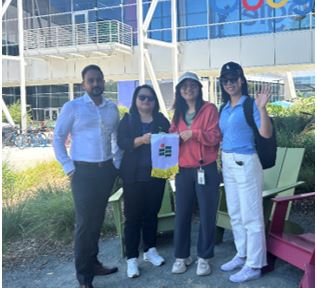
On 11 June, the team visited Google to observe industry-leading practices in AI research, learning technologies, and data-informed product development. The team met with AI Data Scientist Dr Xiong Yao and engaged in in-depth discussions on the latest advances in AI applications in education, including generative AI for personalised learning, large language models for educational content generation, and data analytics for learner behaviour prediction.
UC Berkeley and Computer History Museum
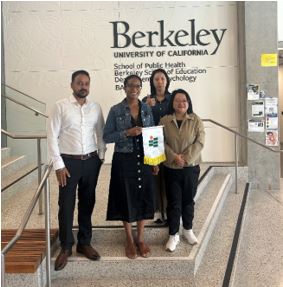
On 12 June, the team visited UC Berkeley, meeting with Prof. Dana Miller-Cotto to discuss research synergies in AI literacy, STEM education, and teacher professional development. The team also explored potential collaboration with Prof. Marcia C. Linn. In the afternoon, the delegation visited the Computer History Museum to trace the historical development of computing and AI technologies, gaining insights into the evolution of human-computer interaction.
Meta Visit: AI-Driven Platforms and Educational Innovation
On 13 June, the team visited Meta to explore synergies between AI-driven platforms and educational innovation, discussing potential applications of AI technologies in learning environments.
ISLS 2026 Workshop at UC Irvine
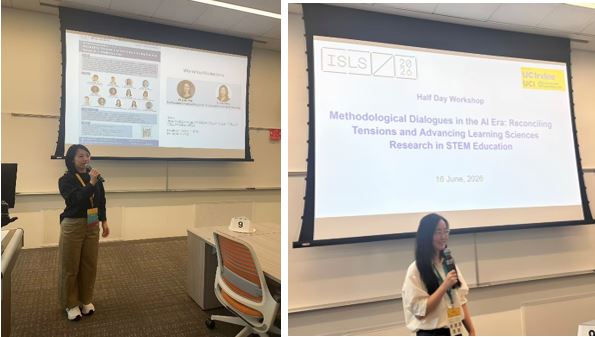
On 16 June, Dr Sun Daner served as the lead organiser of the ISLS 2026 Workshop titled "Methodological Dialogues in the AI Era: Reconciling Tensions and Advancing Learning Sciences Research in STEM Education," held at the UCI Anteater Learning Pavilion (ALP) in California. As lead organiser, Dr Sun was responsible for conceptualising the workshop theme, developing the call for participation, coordinating the review and selection of submissions, structuring the half-day interactive programme, and facilitating the synthesis session that consolidated insights from all discussion groups.
The workshop was co-organised with an esteemed panel of international scholars, including Prof. Morris Siu Yung Jong (The Chinese University of Hong Kong), Dr Gaowei Chen (The University of Hong Kong), Prof. Wenli Chen (Nanyang Technological University), Prof. Yuqin Yang (Central China Normal University), Prof. Li Zhao (Nanjing Normal University), Prof. Hongli Li (Georgia State University), Dr Ying Zhan (EdUHK), Dr Qiwei He (Georgetown University), Dr Leisi Pei (EdUHK), Dr Yin Yang (EdUHK), Dr Gaoxia Zhu (Nanyang Technological University), and Dr Wangda Zhu (The Hong Kong Polytechnic University).
Dr Yang Yin Nicole also played a key role at the workshop, working alongside Dr Pei Leisi from the Department of Curriculum and Instruction to serve as co-chairs, facilitating the half-day interactive programme and guiding discussions among the participating scholars.
The half-day interactive forum, attended by learning scientists, STEM education researchers, educational technology scholars, and methodologists, addressed four critical methodological dimensions through deep-dive dialogue sessions:
- Data vs Theory: Navigating the tension between data-driven AI analytics and theory-driven interpretative qualitative research
- Neuro-Cognitive vs Socio-Cultural: Reconciling cognitive-neuroscientific and socio-cultural frameworks for understanding STEM learning
- Automated vs Human: Balancing automated analysis with human interpretation in educational research
- Tech-Centric vs Pedagogy-First: Mediating technological possibilities with pedagogical principles
The workshop also included framing and synthesis sessions on methodological reconciliation, culminating in an application session where participants designed methodologically integrated studies. The workshop brought together 20 early-career and established scholars from around the world, facilitating deep-dive dialogues on the future of research methods, design approaches, and theoretical perspectives in the AI era.
Strategic Outcomes
Throughout the visit, the team engaged in research discussions, workshop organisation, seminar presentations, and curriculum benchmarking activities, and explored joint international funding opportunities. The visit is expected to establish strategic research partnerships, enrich MIT's programme development with global best practices, and enhance EdUHK's international visibility as a regional leader in human-centred AI research in education.


