







Event Highlights: EdUHK and Nanjing Normal University Forge Deeper Educational Ties with Four-Week AI Immersion Initiative
EdUHK and Nanjing Normal University Forge Deeper Educational Ties with Four-Week AI Immersion Initiative
AI in Education: EdUHK Elite Immersion & Exchange Programme
Jointly organised by the Department of Mathematics and Information Technology (MIT) of The Education University of Hong Kong (EdUHK) and the School of Education Science of Nanjing Normal University (NNU), the four-week programme brought together nearly 30 students and faculty from both institutions for an intensive interdisciplinary exploration of artificial intelligence applications in education
The "AI in Education: EdUHK Elite Immersion & Exchange Programme," which opened on 7 July and successfully concluded on 3 Aug 2026 at Nanjing Normal University, marks a significant milestone in cross-institutional collaboration between Hong Kong SAR and Chinese Mainland in the field of AI-enhanced education. The four-week programme, hosted by NNU's School of Education Science and co-organised with EdUHK's Department of Mathematics and Information Technology, provided participating students with a comprehensive curriculum spanning five core modules, hands-on workshops, school visits, and collaborative project development.
Opening Ceremony
The programme commenced on 7 July with an opening ceremony held at Tianjiabing North Building, attended by nearly 30 students and faculty members from both universities. During the ceremony, Professor Wang Lingyan, Associate Dean of NNU's School of Education Science, extended a warm welcome and highlighted the programme's strategic importance in deepening educational collaboration and advancing digital education innovation between the two institutions. Programme Leader Professor Zhao Li provided a detailed overview of the curriculum structure, while Dr Sun Daner, Associate Professor and Associate Head of MIT at EdUHK, delivered remarks as the lead faculty representative, expressing expectations for deep collaborative engagement and contextualised exploration of AI integration in diverse educational settings. Following the ceremony, participants toured the Heqin Memorial Hall and the School's academic achievement exhibition, reflecting on the intersection of traditional educational philosophies and modern intelligent education innovations.
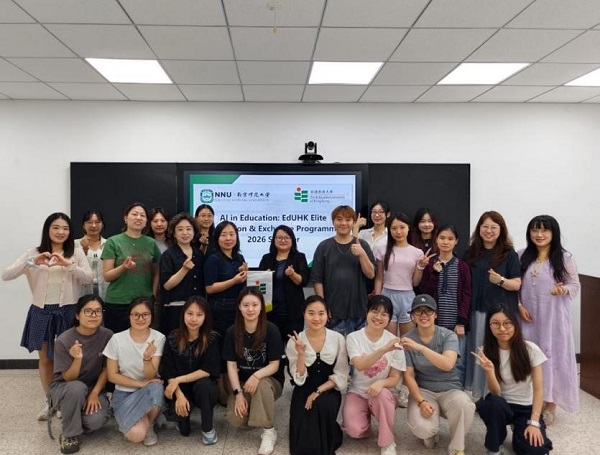
Professor Wang Lingyan, Professor Zhao Li, Dr Sun Daner with Students
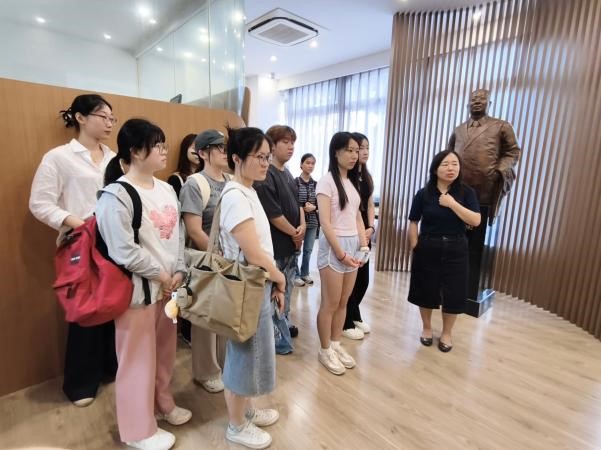
Group Photo
Core Curriculum: Five Integrative Learning Modules
The programme featured a rigorous academic curriculum designed to equip students with both theoretical foundations and practical competencies in AI-powered education, delivered through five specialised modules.
Module 1: Foundations of Intelligent Education and Technology Infrastructure
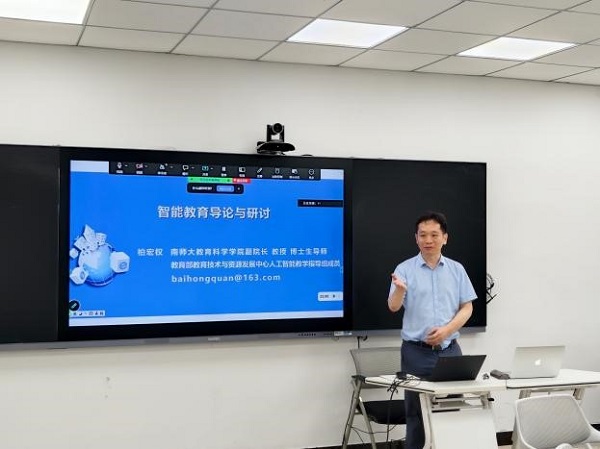
Professor Bai Hongquan from Nanjing Normal University opened the academic programme with a comprehensive lecture titled "The Technological Infrastructure of Intelligent Education: A Cognitive Framework from Theory to Application." He traced the historical trajectory of AI development from the Turing Test to contemporary large language models represented by DeepSeek, systematically analysing key technologies including computer vision, intelligent speech processing, and natural language processing. His session examined the opportunities and challenges presented by AI as a "golden key to educational reform," providing students with a robust conceptual foundation.
 '
'
Professor Bai Hongquan
Professor Cao Mei complemented this foundation with two thought-provoking sessions. In her lecture "GAI for Learning Support: Innovative Connotations and Human-AI Collaborative Pathways," she introduced the SAMR model to guide students in distinguishing between technological substitution, augmentation, modification, and redefinition in instructional contexts. She critically examined the risks of "subject dehumanisation" potentially arising from AI applications and articulated principles for human-centred human-AI collaborative learning that prioritises student agency. In her subsequent session "How Can AI Realise the Ideal of Individualised Instruction?" Professor Cao analysed both the affordances and limitations of AI-enabled precision teaching frameworks, introducing generative AI as a promising pathway toward personalised tutoring, and envisaging an expanded educational horizon from "knowledge-based instruction" to "competency-based instruction."
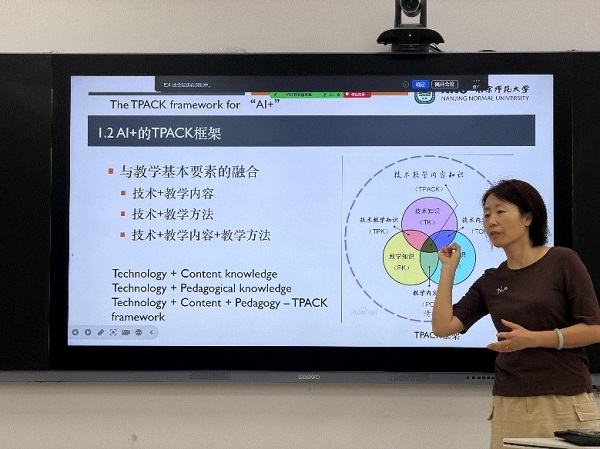
Professor Cao Mei
Module 2: Robotics, Maker Education, and STEAM Integration
Dr Wang Yang delivered an immersive course on "STEAM Robotics and Maker Education," blending theoretical instruction with hands-on practice. She elucidated the conceptual foundations, characteristics, and interconnections among maker education, STEAM education, and robotics education, before guiding students into a practical workshop. Participants gained proficiency in Mind+ programming software and open-source hardware including the ESP32-based control board, constructing interactive projects through hands-on creation. The workshop enabled students to appreciate the educational value of interdisciplinary integration, authentic problem-solving, and engineering thinking development.
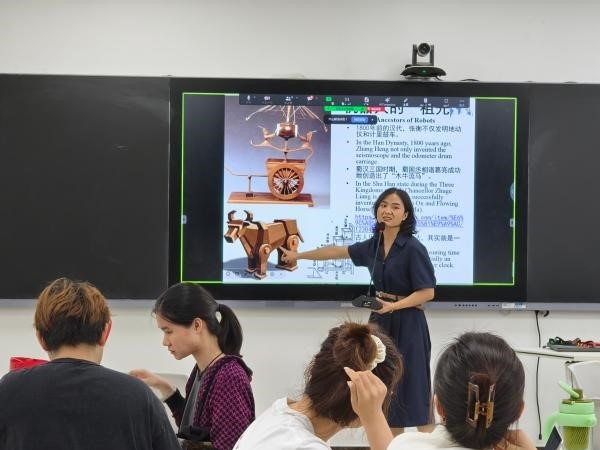
Dr Wang Yang
Module 3: 3D Virtual Scene Development and Immersive Experiences
Dr You Haining led a highly engaging and practical module in which students designed their own character figurines and utilised AI tools to generate personalised 3D models, subsequently completing 3D printing to obtain unique physical replicas. The session also featured experiential learning with cutting-edge technologies including virtual reality headsets, intelligent robotic dogs, and drones. Additionally, Mr You introduced low-code and no-code AI tools such as TRAE, enabling students to rapidly generate teaching resources and demonstration web pages without extensive programming expertise, significantly expanding their capacity for instructional resource development.
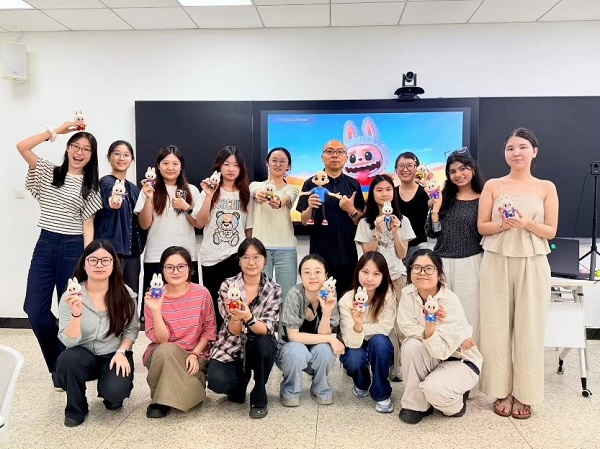
Dr You Haining with students
Module 4: Construction and Application of Educational Intelligent Agents
Dr Hao Xiangjun delivered an accessible yet rigorous course on "AI Intelligent Agents," demystifying the concepts, developmental stages, and core operational principles underlying agent-based systems. The module emphasised practical application, guiding students through a step-by-step process to construct functional agents for speech transcription, meeting summarisation, and essay assessment using domestic mainstream platforms such as Coze (Kouzi). Students engaged in concurrent learning and practice, gaining hands-on experience in designing, debugging, and deploying intelligent agents as "digital assistants" for educational contexts.
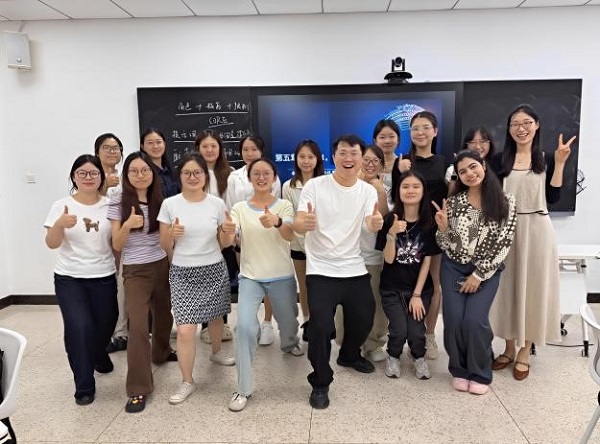
Dr Hao Xiangjun with students
Module 5: AI-Enhanced Instructional Design Theory and Practice
Dr Zhao Xiaowei bridged classical instructional design theories with AI-enabled applications, drawing upon the frameworks of Gagné, Bloom, and others to examine innovative implementations of scaffolding instruction, anchored instruction, and inquiry-based learning within AI-enhanced environments. Students were trained to utilise AI tools for generating interactive instructional web pages and designing learning scaffolds, effectively translating theoretical principles into actionable instructional design solutions that achieve seamless integration of "pedagogical principles, technological tools, and classroom application."
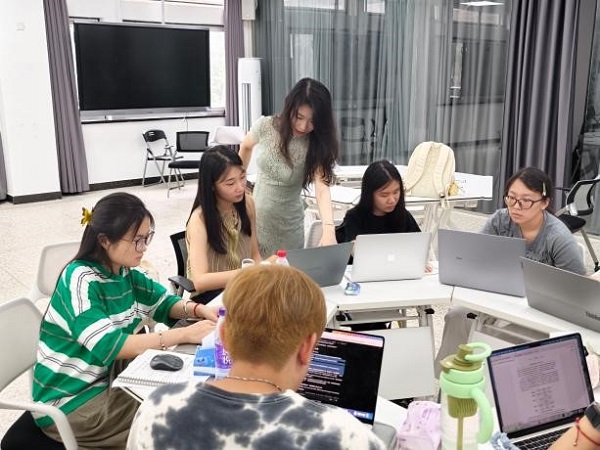
Dr Zhao Xiaowei with students
School Visit: Observing AI Integration in Practice
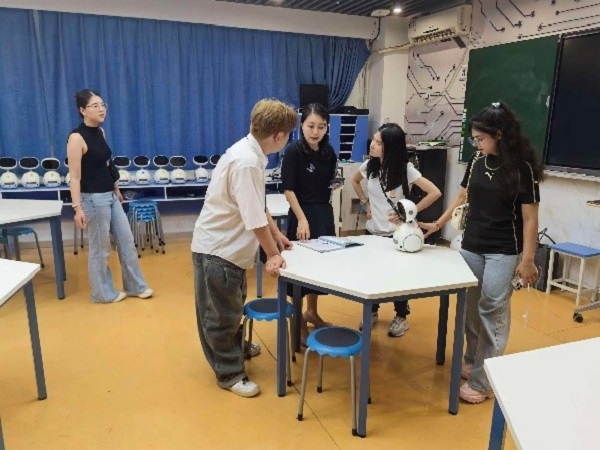
During the programme, participants undertook a study visit to Nanjing Keli Hua Middle School, where they experienced first-hand the implementation of intelligent technologies in frontline basic education. The visit included a tour of the school's specialised technology education facilities and a robotics workshop, during which students operated robots and engaged in programming exercises. The immersive observation enabled participants to comprehend the authentic operational realities of "smart campuses" and appreciate the tangible impact of technology-enhanced basic education, effectively bridging theoretical learning with real-world pedagogical practice.
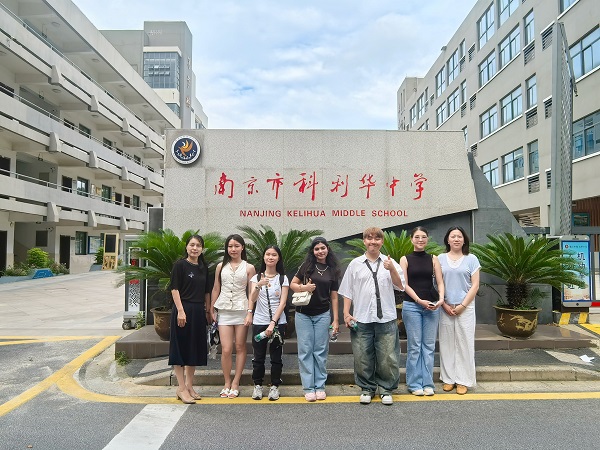
Group Photo
Group Project Presentations: Demonstrating Innovation and Application
On the morning of 31 July, student groups delivered their final project presentations, which served as the culmination of the four‑week immersion programme and clearly demonstrated how they had applied their newly acquired knowledge and skills in creating practical AIGC‑enhanced teaching resources. Their proposals spanned diverse subjects and grade levels: an interactive AI Model United Nations for senior secondary English, fostering critical thinking and active participation through web‑based diplomatic debates; a human‑AI co‑creation art curriculum for primary schools, reinterpreting traditional pattern designs with generative tools to cultivate creativity and cultural awareness; a Chinese language arts lesson on the classical text The General and the Chancellor, using character dialogue and evidence‑based reasoning to deepen literary comprehension and analytical skills; and a 3D virtual exploration platform with intelligent Q&A for primary science, enabling immersive study of the solar system and sparking curiosity about astronomy. Each group clearly articulated the project rationale, technical implementation pathway, and expected learning outcomes, effectively demonstrating their competence in translating theoretical concepts into innovative, classroom‑ready educational solutions.
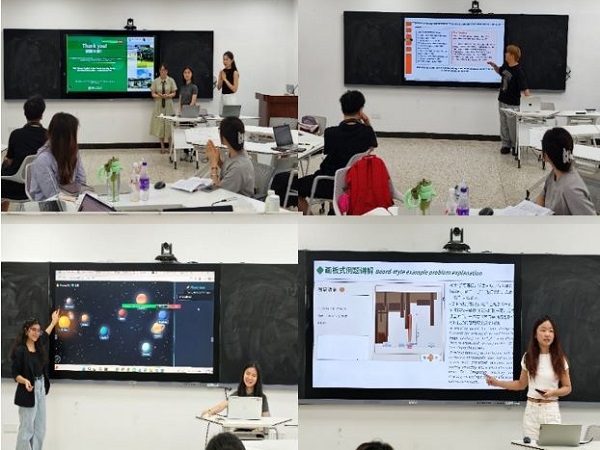
Group Project Presentations Photo
Closing Ceremony: Reflection and Future Pathways
The closing ceremony held on the afternoon of 31 July featured concluding remarks from Programme Leader Professor Zhao Li and Dr Yang Yin from EdUHK, who reflected on the programme's achievements and its contribution to cross-institutional academic exchange. Participating students shared their learning experiences, expressing that the programme had not only equipped them with cutting-edge AI educational tools and skills but had also prompted profound reflection on their evolving roles as educators. Many emphasised their commitment to cultivating future teachers equipped with both digital literacy and humanistic values in the intelligent age. The ceremony concluded with a group photograph, formally commemorating the successful completion of this cross-regional, cross-institutional academic endeavour.
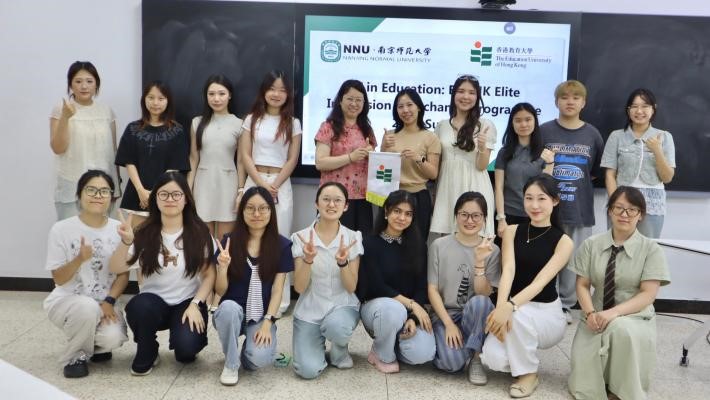
The successful execution of this programme represents a significant practical achievement in the ongoing educational collaboration between Nanjing Normal University and The Education University of Hong Kong. Beyond the transfer of knowledge, the programme fostered intellectual exchange, cultural interaction, and the strengthening of cross-student networks between Hong Kong and Chinese Mainland. The teaching resources, design frameworks, and reflective insights generated throughout the programme are expected to contribute to the ongoing development of digital education synergy across the region, reinforcing the shared commitment of both institutions to advancing AI-integrated teacher education and educational innovation.


