
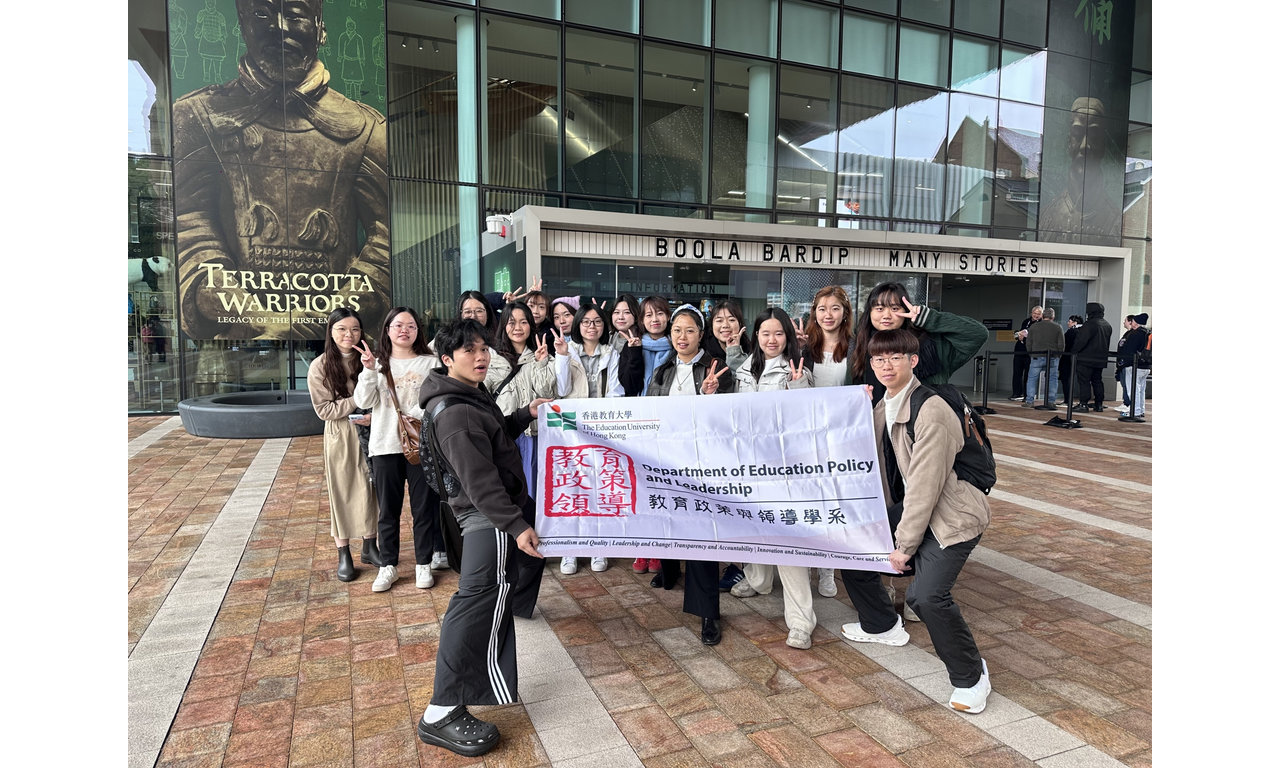
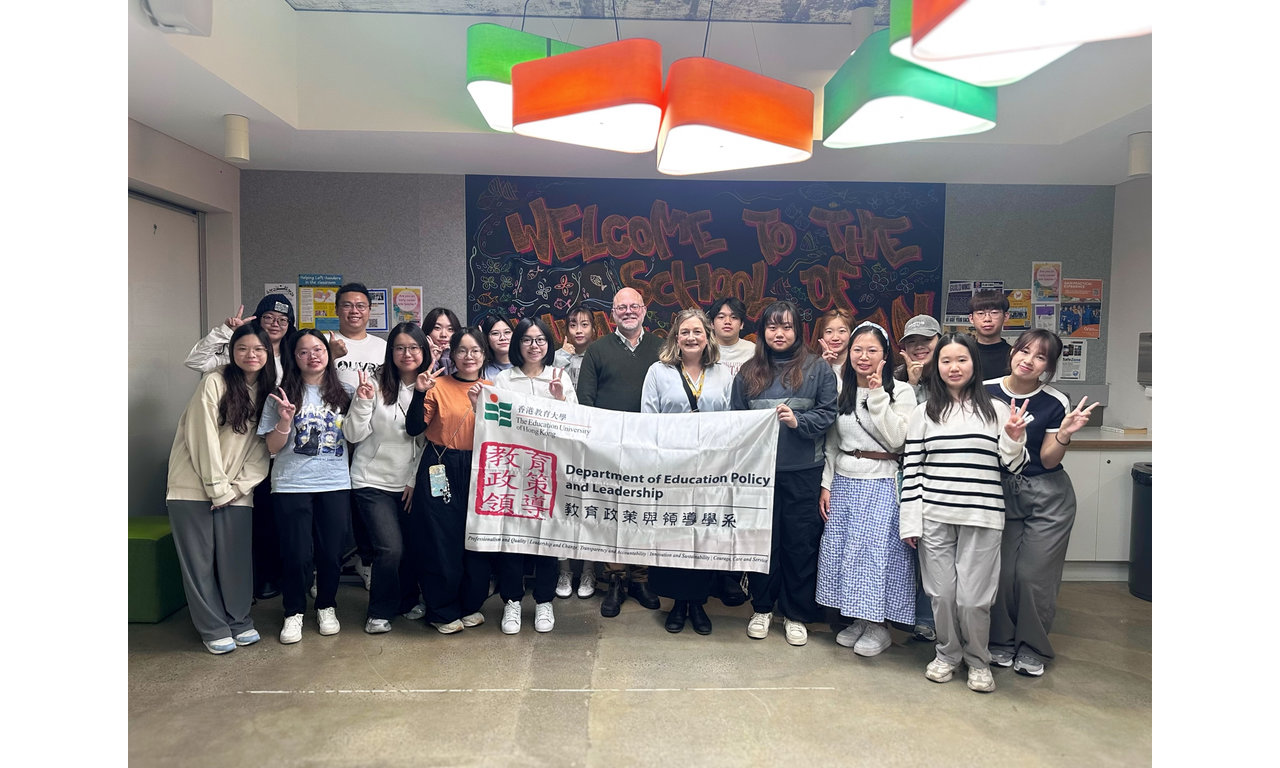
A group of 18 students and teachers embarked on a two-week educational journey to Western Australia as part of the course “Learning beyond Classroom: Being a Proactive Leader in the Globe.” In Collaboration with Curtin University, the programme aimed to develop students’ critical thinking and intercultural skills through immersive learning experiences both inside and outside classrooms. The tour focused on providing students with opportunities to practice leadership and entrepreneurial skills by engaging directly with local communities and addressing real social issues.
Upon arrival in Perth, the group received a warm welcome from Curtin University staff and participated in academic exchanges and workshops with the School of Education. Lectures covered Western Australia’s social, economic, and cultural landscape, highlighted the importance of community engagement in education through university-community collaborations, and introduced strategies for teacher training and internship support. These activities encouraged students to critically compare educational challenges in Western Australia with those in Hong Kong and to brainstorm potential solutions.
Beyond academic activities, students visited key sites such as Fremantle Prison, Perth Zoo, Pinnacles Desert, and Rottnest Island, gaining insights into human rights, environmental conservation, and sustainability. A visit to Scitech introduced the concept of “Science Capital,” demonstrating science’s role in community empowerment. Interactions with local residents, Curtin University students, and museum staff prompted reflection on indigenous cultures and social diversity.
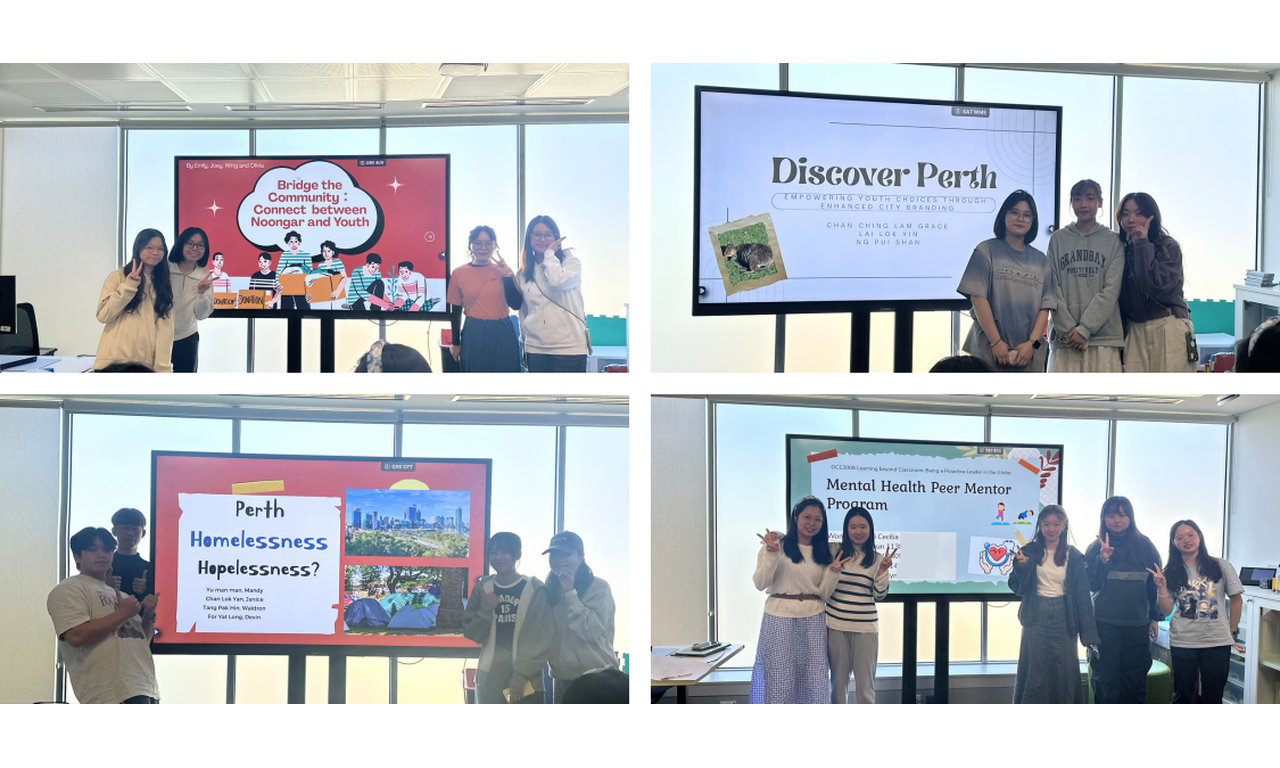
The highlight of this tour was a group presentation by students on social issues such as mental health, discrimination, homelessness, and city branding. They proposed innovative solutions based on their experiences, embodying leadership and entrepreneurial spirit while fostering a global outlook and sense of responsibility. Overall, the tour was a transformative experience that broadened students’ perspectives and inspired them to proactively contribute to the communities in Hong Kong.
Students' Sharing
The Perth, Australia study tour was an unforgettable experience that seamlessly integrated academic learning with real-world applications. The tour focused on recognising opportunities, design thinking, creating shared value, and community engagement. Through visits to Curtin University, Fremantle Prison, Perth Zoo, Pinnacles Desert, SciTech, and Rottnest Island, I gained a deeper understanding of how these concepts drive sustainable initiatives.
Challenges
One significant challenge during the study tour was that our group consisted of only three members instead of the standard four, which increased pressure on task allocation and workload distribution. Additionally, when we decided to focus our project on “Empowering Perth’s Youth through Strengthening City Branding,” we encountered obstacles in data collection. Perth lacks readily available data linking its city branding to youth development, leaving our initial direction unclear. Fortunately, our instructor guided us to compile our own data when primary sources were scarce. This provided a flexible solution, enabling us to design a preliminary framework for data collection based on social media platforms.
Another challenge arose during visits to the Perth Zoo, SciTech, and the WA Museum Boola Bardip, where my intermediate English proficiency made it challenging to fully comprehend the guides’ explanations due to their accents and specialised terminology. Their content was closely tied to our academic knowledge and group project theme, so missing this information could impact the quality of our proposal. To address this, I recorded what I could understand, used a translator to clarify some terms, and conducted further online research to deepen my understanding and refine our project.
Personal Insights
The Australian education system places a strong emphasis on community integration, encouraging students to actively participate in community activities and incorporate community resources into teaching practices. During the tour, I observed that both Perth Zoo and Hong Kong Ocean Park provided educational activities tailored to various age groups. However, their approaches differ significantly. Perth Zoo’s “Bio Buddies” program, an eight-week initiative, engages young children in hands-on activities to explore the world of animals and plants, fostering curiosity, creativity, and critical thinking while deepening their understanding of biodiversity and cultivating lifelong conservation values. The programme encourages children to keep observation diaries and provides optional homework to further explore nature at home or in their local environment, strengthening their connection to the natural world.
In contrast, Hong Kong Ocean Park’s educational activities are typically short-term and entertainment-focused — engaging but offering less depth of participation for young children compared to Perth Zoo. I believe Hong Kong could draw inspiration from Perth Zoo’s long-term educational model. For instance, Hong Kong Ocean Park could introduce a long-term programme similar to “Bio Buddies,” featuring extended nature exploration courses on animal conservation. These could incorporate workshops, crafts, and observation logs to foster environmental awareness. Additionally, family engagement components, such as simple indoor or outdoor observation tasks, could encourage parents and children to document local wildlife together, enhancing learning continuity. Leveraging Hong Kong’s technological advantages, existing online platforms could support course progress, allowing parents and teachers to track children’s learning outcomes and share experiences, further promoting collaboration between communities and schools. This approach would enrich Hong Kong’s conservation education and pass down sustainable values through intergenerational participation. Moreover, such programmes, in collaboration with the zoo, could attract more school and family visitors, achieving both economic benefits and social value, thus creating shared value.
Conclusion
Overall, this study tour let me realise that this so-called “lonely city” offers rich opportunities for learning and exploration. The local culture, hospitality, and stunning natural beauty of Perth are unforgettable.
Connecting Experiences and Youth City Branding
As a student of EdUHK, participating in the Perth Exchange Tour from July 27 to August 8, 2025, allowed me to transition from the hustle and bustle of Hong Kong to the serene natural and academic environment of Perth. The trip was not only an exploration of new places but also an opportunity to reflect deeply on education, culture, and personal growth. Through lectures, site visits, and free exploration, I was able to connect these experiences with my studies and broaden my thinking on how can Perth attract young Asians through city branding.
Academic Integration and the Development of Reflective Habits
We engaged in small group sessions where we discussed our presentations in the comfortable setting of the university. These sessions were not just records of our work but also opportunities to cultivate critical thinking. Lectures from Curtin University, including Dr Luke Webster’s insights on transmedia and regional changemakers, and the School of Education’s placement team’s discussions on community engagement, made me reflect on how education can go beyond the classroom into social practice. Compared to Hong Kong’s education model, I realised that Curtin focuses more on field application and the reflective cycles — an approach that can help students like me shift from passive learning to active exploration.
This aligns with the academic experience component of the Discover Perth program, which promotes exchange program presentations, campus tours, and classroom simulations to attract Asian students. These activities complemented our itinerary, such as the free campus exploration gave me a first-hand appreciation of Curtin’s rich resources. Although Perth ranks behind Sydney and Melbourne in the QS Best Student Cities rankings, I believe its intimate and accessible academic environment can be amplified through initiatives like the Youth Partnership Program. The program questionnaire showed that only 55% had heard of Perth and 27% were considering studying there. As a young Asian who previously knew little about Perth, this experience transformed me a potential advocate. I now see how my personal reflections can contribute to a collective brand story that supports the program’s vision of positioning Perth as a youth-friendly city in the Asia-Pacific region.
Inner Transformation through Cultural and Environmental Immersion
Cultural visits to Fremantle Prison, Pinnacles stargazing, and Rottnest Island offered a unique glimpse into Perth’s historical and natural wonders. These experiences went beyond sightseeing, they were moments of culture shock. Fremantle’s colonial history highlighted multicultural fusion, while Rottnest’s quokkas and ferry tours illustrated the harmony between humanity and nature.
These experiences echoed the goals of Discover Perth’s tourism revitalisation programs, such as the "Nature Challenge" and the Aboriginal guided cultural tours. For example, educational talks at Perth Zoo and SciTech emphasised community outreach and environmental education, aligning with the program’s environmental volunteering activities such as the Cottesloe beach cleanup and Kings Park tree planting. This made me reconsider Perth’s “remote” stereotype (as the program notes, Asian youth often prefer Sydney or Melbourne), revealing instead a city rich in cultural depth.
In our group presentation, we proposed incorporating Noongar Aboriginal elements — such as community immersion tours — to foster a deeper emotional connection. By boosting social media engagement, this approach could enhance Perth’s appeal to Asian youth. Personally, this has reinforced my environmental awareness and inspired me to explore how similar cross-cultural reflections could be integrated into Hong Kong’s education for sustainable development.
Extended Reflection on Career Potential and Branding
Curtin Outreach’s sharing and SciTech’s community program inspired me to think beyond traditional classroom teaching and consider innovative educational outreach. This aligns with the Discover Perth program’s career development initiatives, including scholarships, sandbox entrepreneurship competitions, and industry showcases aimed at attracting Asian talent. The program also highlights Perth’s geographic advantage and its partnerships with local youth orientation programs that help reduce financial and cultural barriers for foreign students.
Reflecting on this, I realised that while Perth currently lacks strong youth appeal (with only 3% of respondents in the aforementioned survey preferred), our trip showcased its potential. Short-term exchanges like ours can evolve into long-term career connections through networking and alumni initiatives, such as the LinkedIn group proposed by our group. This made me reflect on my own role — as a beneficiary, I can share my experiences, contribute to the program’s digital promotion (e.g., using the #StudyInPerth hashtag), and help transform Perth from a peripheral city to an innovation hub. The cultural sensitivities and long-term impacts mentioned in the program’s risk assessment also reminded me that branding must be authentic, not superficial.
Transformative Growth and Advocacy
This trip to Perth not only enriched my reflective portfolio but also reshaped my worldview. As part of the Discover Perth group project, I reflected on how the city can enhance its appeal to young Asians through youth-led innovations and creative branding events that position it as a premier destination for study, work, and travel. In the future, I hope to promote similar exchange opportunities and emphasise the importance of deep reflection, so that more young Asians like me can discover Perth’s hidden charms. This journey represents not only personal development but also a commitment to collective advocacy.
This 12-day trip to Perth offered me a valuable opportunity to immerse myself in a different culture while also providing space for learning and reflection. Of all the places I visited, what impressed me most was Perth’s commitment to environmental conservation amidst the challenges facing it.
One of the thought-provoking aspects of the tour was that our itinerary went beyond simply visiting green or eco-friendly attractions. It allowed us to explore various dimensions of environmental issues through places such as SciTech, which focuses on science education, Perth Zoo, which emphasises endangered species protection. These were not typical tourist check-in spots. At the same time, I noticed contradictions between the attractions and environmental protection efforts. For example, traveling to natural sites across vast distances required long drives, contributing significantly to carbon emissions. The itinerary spanned cities, coasts, and deserts, making it difficult to minimise environmental impact within a limited holiday timeframe. This presents a real challenge, especially when promoting the city to the public.
I also observed that, despite its reputation as a green city, Perth faces everyday issues such as litter and animal droppings on its streets. These seem to stem from its relaxed lifestyle and low population density. It reminded me that even for places that celebrate nature conservation and coexistence with wildlife, they are not immune to urban challenges, particularly where human infrastructure intersects with natural environments.
These observations led me to reflect on the importance of making intentional and meaningful choices. When trade-offs are unavoidable, the best approach is to acknowledge them openly and strive for the most sustainable option — rather than chasing an unattainable ideal. This pragmatic mindset is essential for realistic and incremental progress.
This journey also reshaped my understanding of how to create sustainable social value. Previously, I viewed the natural environment either as a resource to be used or a risk to be avoided. After standing in the desert and witnessing landscapes shaped over centuries, I realised that sustainability requires not over-exploiting every resource, but understanding the environment we live in by viewing it from a macro perspective and protecting it for the greater good. We don’t need to position ourselves as leaders; instead, we should work collaboratively with those around us to create sustainable social value.
In summary, I learned a lot from this trip. By visiting different attractions and exploring the city, I not only learned about the differences between Perth and Hong Kong but also recognised that every place has its own challenges. This awareness has deepened my appreciation for the resources we have and inspired me to contribute to sustainability.
This Western Australia study tour became a mirror, reflecting deep respect for indigenous culture and environmental stewardship, and prompting personal transformation that reshaped my pace, connections, and creativity. The appreciation for Aboriginal culture was evident and extended far beyond surface-level gestures. Whether professionals were discussing science, technology, or zoo management, they consistently acknowledged or shared insights rooted in Aboriginal knowledge and connection to the land. A conversation with an international student revealed something powerful: all newcomers are required to take a foundation course on Western Australia’s history and culture to truly respect, understand, and embrace the local Indigenous heritage. This commitment felt genuine, not forced. I saw it in the city itself, where vibrant street art featuring Aboriginal stories and symbols turned ordinary walls into powerful reminders of this ancient, living culture. It felt like a community actively ensuring its roots are remembered and valued in the present day.
Equally striking was Western Australia’s beautiful and practical relationship with nature. The abundance of green space – open grasslands, peaceful parks, and other inviting leisure spaces – seemed to whisper, “Slow down, breathe, enjoy.” It showed me how much value is placed on simply being in nature. Their commitment to environment protection was evident in everyday actions: spotlessly clean streets, recycling bins on every corner, and hotels avoiding single-use plastics and unnecessary packaging. Visiting stunning places like Rottnest Island and Fremantle's beaches took my breath away; the sand was clean, the water clear, and absolutely no rubbish in sight. It made me genuinely wonder: how do they teach visitors so effectively to care for these special areas? On Rottnest island, visitors are reminded to admire the adorable quokkas but not to touch or feed them. At Perth Zoo, educators explained that if a kangaroo seems nervous, we should give it more space. This is not just about rules, but about cultivating a respectful attitude toward wild animals’ boundaries—guided by the philosophy that humans are stewards of other species.
Staying in Western Australia changed me profoundly. Most importantly, I learned to slow down and be present. Before this trip, I was always rushing – impatient, needing to do everything quickly, which often left me feeling stressed and tense. Noticing Perth’s calm and relaxed pace—even in the city—was a revelation. I consciously slowed down, looked up at the vast sky, the unique buildings, and the way light fell. Sitting on the grass in Kings Park, feeling the sun, even dozing off, felt incredibly restorative—a lesson in mindfulness gifted by the Australian landscape.
The trip reshaped how I connect with people, even in small moments. Back in Hong Kong, I rarely spoke to strangers. But the friendly, open nature of Western Australians inspired me. Simple gestures—like a shopkeeper asking 'How are you?' or passengers thanking the bus driver—created a warm sense of community. I adopted this habit during the tour and brought it home. Now, I always say 'Thank you' to the driver when I get off a bus or minibus in Hong Kong. It felt strange at first, but now it feels right. This small act builds connection, shows appreciation for often-overlooked workers, and makes me feel more part of the community.
Finally, Perth’s lively spirit encouraged me to be more creative and lighten up. The city seemed to hum with playful energy, asking, “Why so serious?” I saw it in unexpected details: public benches shaped like playful dogs or cats, quirky art pieces, and a sense of humour woven into the city’s fabric. It challenged my own rigid tendencies. Seeing this playful side encouraged me to look for the unusual, enjoy the quirky, and bring a bit more lightheartedness into my own thinking. It reminded me that fresh ideas and joy often come from stepping outside the usual lines.
Western Australia’s respect for nature and culture became a mirror — teaching me presence, community gratitude, creativity, and the importance of valuing respect, connection, and a playful spirit.
Acknowledgement
Source: Mr Lam Ho Wai, Martin; Department of Education Policy and Leadership (EPL@EdUHK); for more information, please click Read More