|
|
|
|
  |
 |
|
 |
|
|
(......Continued)
Involving stakeholders from the earliest
stage
A unique feature of our selection process is the involvement
of kindergarten, primary and secondary school principals
in the design and conduct of the selection interview.
This year 70 of these potential employers of our future
graduates became honorary interviewers helping us in the
selection of suitable applicants; six principals joined
Institute staff in reviewing and designing the selection
interview itself, before the selection process began.
| |
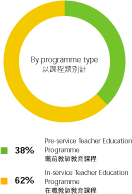
STUDENT ENROLMENT
As at 30 June 2002 |
| |
|
| |
|
| |
|
| |
|
| |
|
Non-academic achievements in areas
such as the arts, music, sports, creative writing and
community service are also taken into account under
the Joint University Programmes Admission System, with
principals encouraged to recommend students who have
excelled in these areas irrespective of their performance
in academic subjects.
In these ways, and with the help of today's school leaders,
we are confident we can choose young people who may
eventually become principals themselves. Then, once
enrolled at the Institute, we can ensure they attain
the key attributes of a professional teacher. We achieve
this in a variety of ways.
Developing the whole person
Our fully integrated programme of academic studies is
complemented by a rich variety of on-formal curriculum
activities, many of which come under the umbrella of
the Student Affairs Office (SAO). The Quality Teacher
Development Award scheme (QDTA), for instance, helps
students plan and monitor their own all-round development
and prepares them for lifelong learning. Award winners,
in bronze, silver, gold and platinum categories, have
achieved a balance in their personal growth, academic
and professional development, community contributions
and cultural and recreational achievements.
One award winner summed up QTDA's relevance to student
life: "It helps me to set targets and work hard to achieve
them. This has become part of me now." Another said:
"The service helped me to integrate what I have learned
and to apply it in school situations."
Hostel life as an education in itself
Hostel life also gives students an opportunity to develop
life skills through self-management and learning the
art of negotiation and the value of independence. In
particular, in 2001-02 students formed hostel associations
and organised high table dinners, orientation camps,
competitions and sharing sessions. Hostels also reached
outside the Institute to co-ordinate with local educators.
In one instance, they organised a project with the Tai
Po primary and secondary school heads and Tung Wah Group
of Hospitals schools to give our students learning opportunities
in teaching, organising student activities and taking
part in school administration. Students also set up
a mini-library on hot educational issues and operated
a welfare corner.
|
|
|

|
| |
|
|
|
|
|
|
|