
 Postgraduate Student Sharing
Date: 4 Dec 2020 (Fri)
Time: 2:00 – 4:00 pm
Venue: D2-LP-08 and via Zoom
A Postgraduate Students Sharing event will be organised by Graduate School (GS) and Centre for Learning, Teaching and Technology (LTTC) to promote reflective and peer learning and to encourage students’ participation in the Festival.
| Time | Rundown | ||||||
|---|---|---|---|---|---|---|---|
| 14:00 – 14:35 | Welcome Remarks
Professor LO Sing Kai |
||||||
| Keynote Speech: Evidenced-based Quality Enhancement in Learning and Teaching
Professor Chetwyn CHAN |
|||||||
| 14:35 – 15:00 | Keynote Speech: Learning and Teaching Scientific Argumentation
Professor Fang-Ying YANG |
||||||
| 15:00 – 15:30 | Sharing by Postgraduate Students
|
||||||
| 15:30 – 16:00 | Open Forum
|
Evidenced-based Quality Enhancement in Learning and Teaching
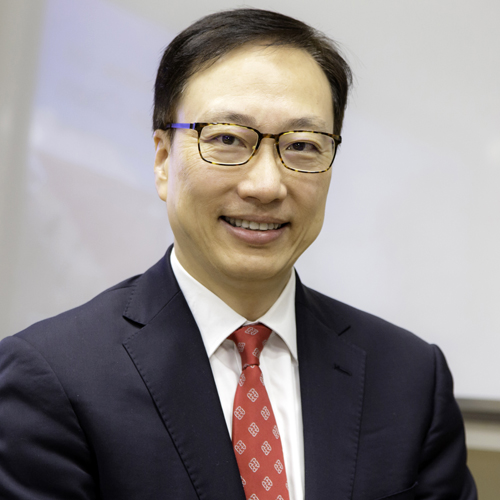
Professor Chetwyn CHANAssociate Vice President (Learning and Teaching) |
 |
Abstract
Quality enhancement is essential process in the provision of higher education. In this presentation, Prof. Chan will share his experience in collecting different types of data related to day-to-day operation in higher education institution. The collected data serve different purposes ranging from reflecting quality, identifying issues, or informing solutions. Prof. Chan will use three case studies to demonstrate usefulness of data for initiating enhancement of learning and teaching quality.
About the Speaker
Prof. Chetwyn Chan is Associate Vice-President (Learning and Teaching), Chair Professor of Rehabilitation Sciences, and Director of the University Research Facility in Behavioral and Systems Neuroscience at The Hong Kong Polytechnic University. Prof. Chan obtained his PhD in Educational Psychology in 1996 from University of Alberta, Canada. He has been an elected Fellow of the American Psychological Association since 2008 and Fellow of the Hong Kong Psychological Society since 2007. As a member of the senior management, Prof. Chan is involved in formulating policies of academic quality assurance, and is leading the quality enhancement team for conducting reviews and implementing improvements in learning and teaching.
Learning and Teaching Scientific Argumentation
Professor Fang-Ying YANGChair Professor, Graduate Institute of Science Education |
 |
Abstract
Science teachers are always struggling with what to teach and how to teach in their classrooms. In this talk, Prof. Yang will first discuss the need of including scientific argumentation in science classrooms from both theoretical and practical perspectives. Some recent studies will then be introduced, showing learners’ argument skills are related to their epistemic beliefs in science and the information processing behaviors. In conclusion, it will be argued that learning and teaching science argumentation need take into consideration learners’ cognitive traits.
About the Speaker
Prof. Fang-Ying Yang is currently the Chair professor in Graduate Institute of Science Education (GISE), National Taiwan Normal University. Prof. Yang’s research interests include the development of scientific reasoning, learners’ conceptual and epistemological development in science, science-text reading and comprehension, digital and interactive learning. Her current research is centered on issues pertaining to how learners make arguments when encountering uncertain science information, and how students conceptualize science in the digital interactive learning environments. Prof. Yang has established an eye-tracking lab in GISE to explore the processes of science learning and scientific reasoning.
Moving Your Writing Instructions out of Class
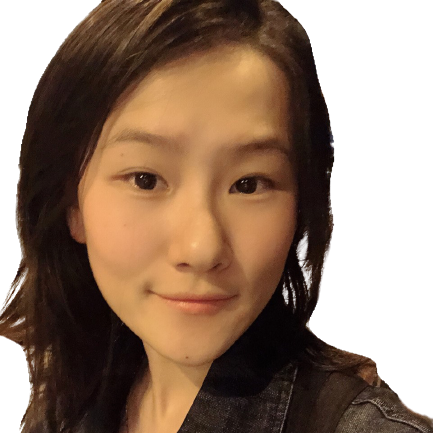
Ms SU FanEdD student |
 |
Abstract
The appearance of flipped classroom around the year of 2007 gradually changed the classrooms of English subject. The advantages brought by flipped classroom, such as the creation of student-centered classroom and more classroom interaction (Bergmann & Sams, 2012) contributed to the popularity of flipped English classes. It was said that English writing was the most demanding (Hwang & Fu, 2019; Lan, Sung, Cheng, & Chang, 2015). In this sharing session, I attempt to discuss the flipped writing instructions to engage students in the whole writing process (i.e., pre-, while, and post-writing).
About the Speaker
Fan Su is an EdD student at the Department of English Language Education in The Education University of Hong Kong. Her research interests include second-language writing and technology-enhanced language learning.
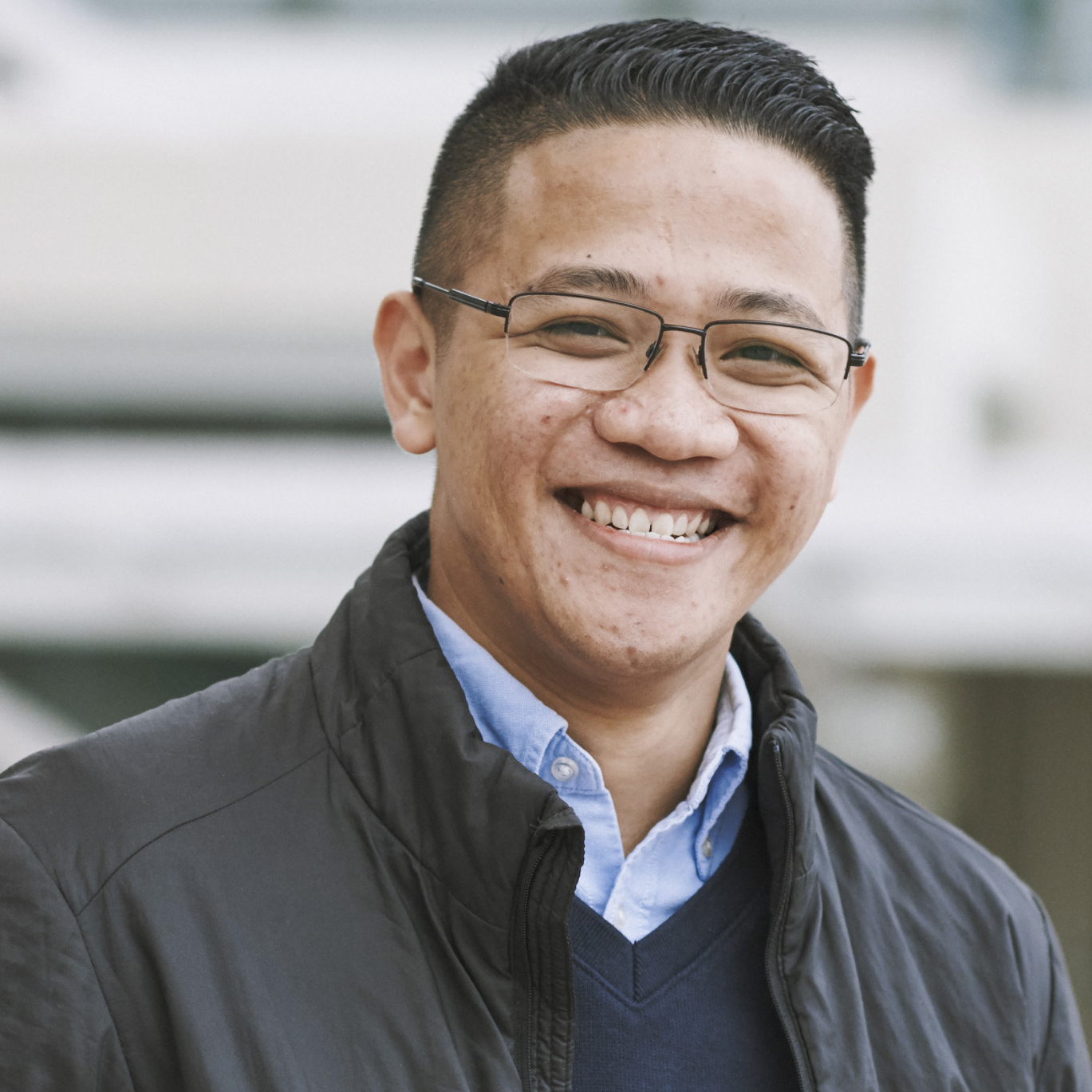
Self-assessment Practices in the Philippine Context: Involved and Autonomy-supportive Teachers Make Reflective Students
Mr Norman MENDOZAPhD student |
 |
Abstract
Using data from 778 secondary school students from the Philippines, I validated the Self-assessment Practices Scale by Yan (2018) which was originally developed in Hong Kong. We then used regression analyses to examine the link between three types of teaching practices (i.e., involved, structured, and autonomy-supportive) and student’s four self-assessment actions (i.e., seeking external feedback by monitoring, seeking external feedback by inquiry, seeking internal feedback, and self-reflection). Results showed that involved teaching predicted self-assessment practices, with small to medium effect sizes. Involved and autonomy-supportive teaching practices had medium effect sizes to self-reflection and seeking external feedback by monitoring, respectively, while structured teaching did not. These findings highlight the importance of teacher involvement and autonomy-support on promoting students’ self-assessment.
About the Speaker
Mr Norman B. Mendoza is a PhD student from the Department of Curriculum and Instruction, FEHD. He is a recipient of the Belt & Road Scholarship at EdUHK. His research interests are in student motivation, assessment, and well- being in the educational context. He is also the co-founder of LifeRisksPH, a non-profit youth organization focused on youth well-being and mental health based in Pampanga, Philippines.
Learning and Teaching in 21st Century: Research through the Values Perspective
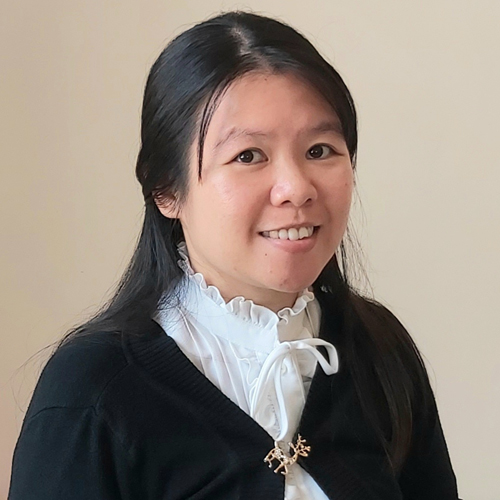
Ms CHIA Hui MinPhD student |
 |
Abstract
In the 21st century, the challenging part will be what practitioners can do to prepare learners for learning in this new era. As mentioned in most of the curriculum, the main aim is to nurture human development. Besides, due to globalisation and development of technology, mathematics classrooms are getting more multicultural, and teachers and students are required to adapt to the new culture of teaching and learning. Thus, this presentation is proposed to research through values perspective. Perhaps it can provide some insights into how educators and researchers help teachers in adapting changes and how the integration of values into the mathematics classroom can be possible.
About the Speaker
Miss CHIA Hui Min is a PhD student of The Education University of Hong Kong. She obtained her Master’s Degree in Mathematics Education from Universiti Sains Malaysia, Malaysia. Her interest in improving pedagogical practices and students’ learning in Mathematics classroom has led her to research in fields related to pedagogical practice, Lesson Study, value and valuing in Mathematics Education.
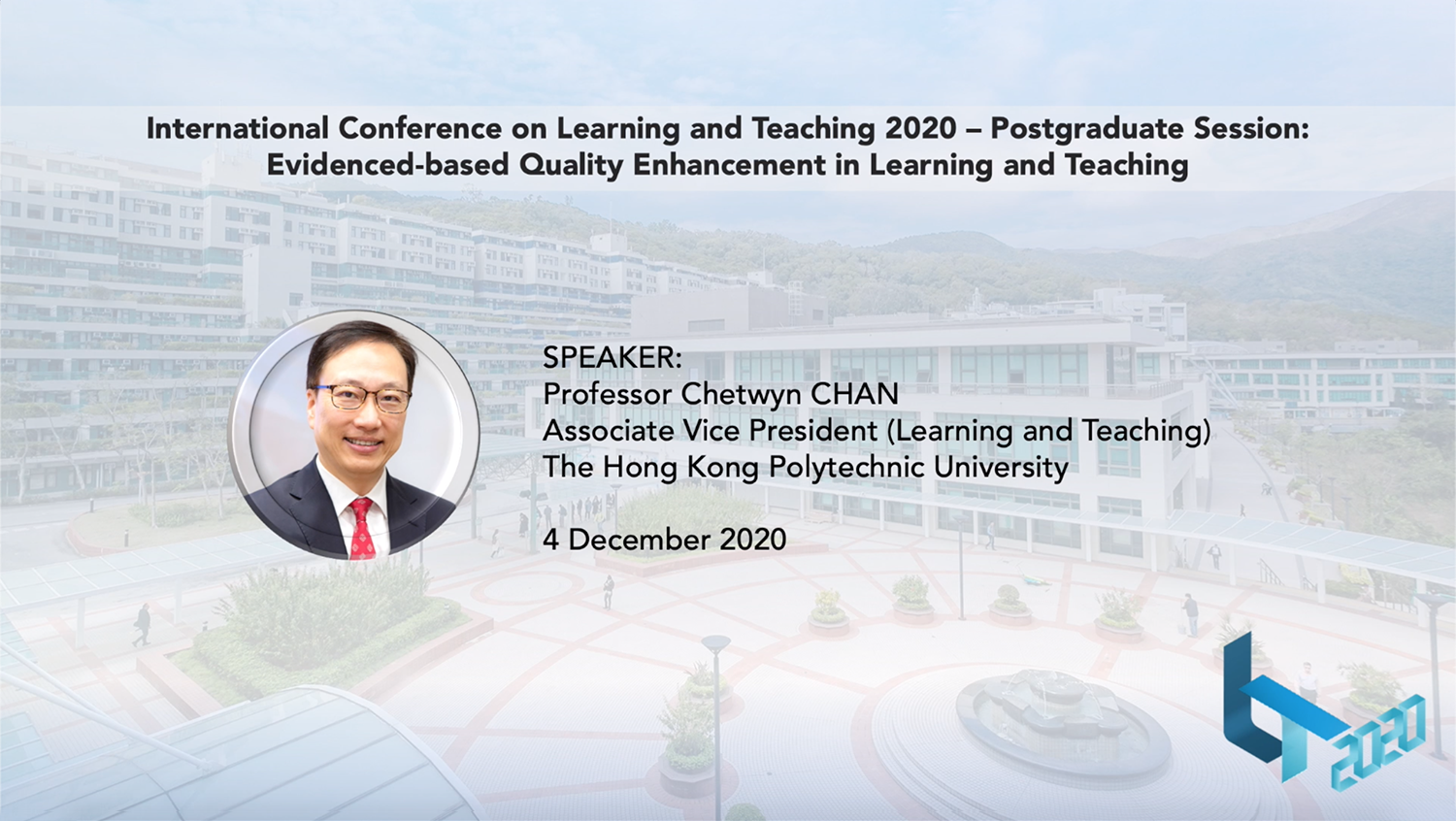
| Keynote Speech: Evidenced-based Quality Enhancement in Learning and Teaching (34mins) |
| Professor Chetwyn CHAN Associate Vice President (Learning and Teaching) The Hong Kong Polytechnic University |
 |
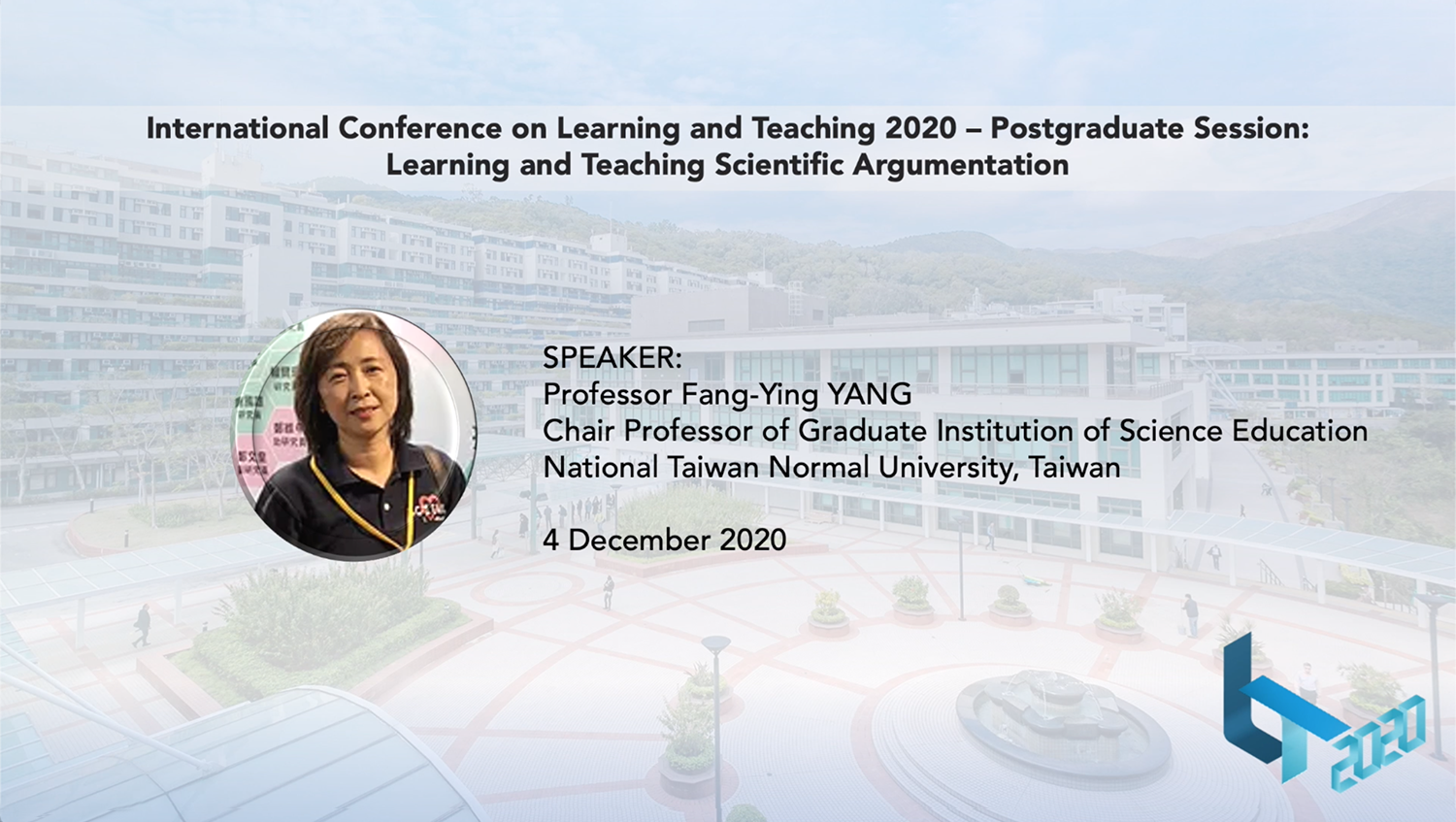
| Keynote Speech: Learning and Teaching Scientific Argumentation (31mins) |
| Professor Fang-Ying YANG Chair Professor, Graduate Institute of Science Education National Taiwan Normal University |
 |
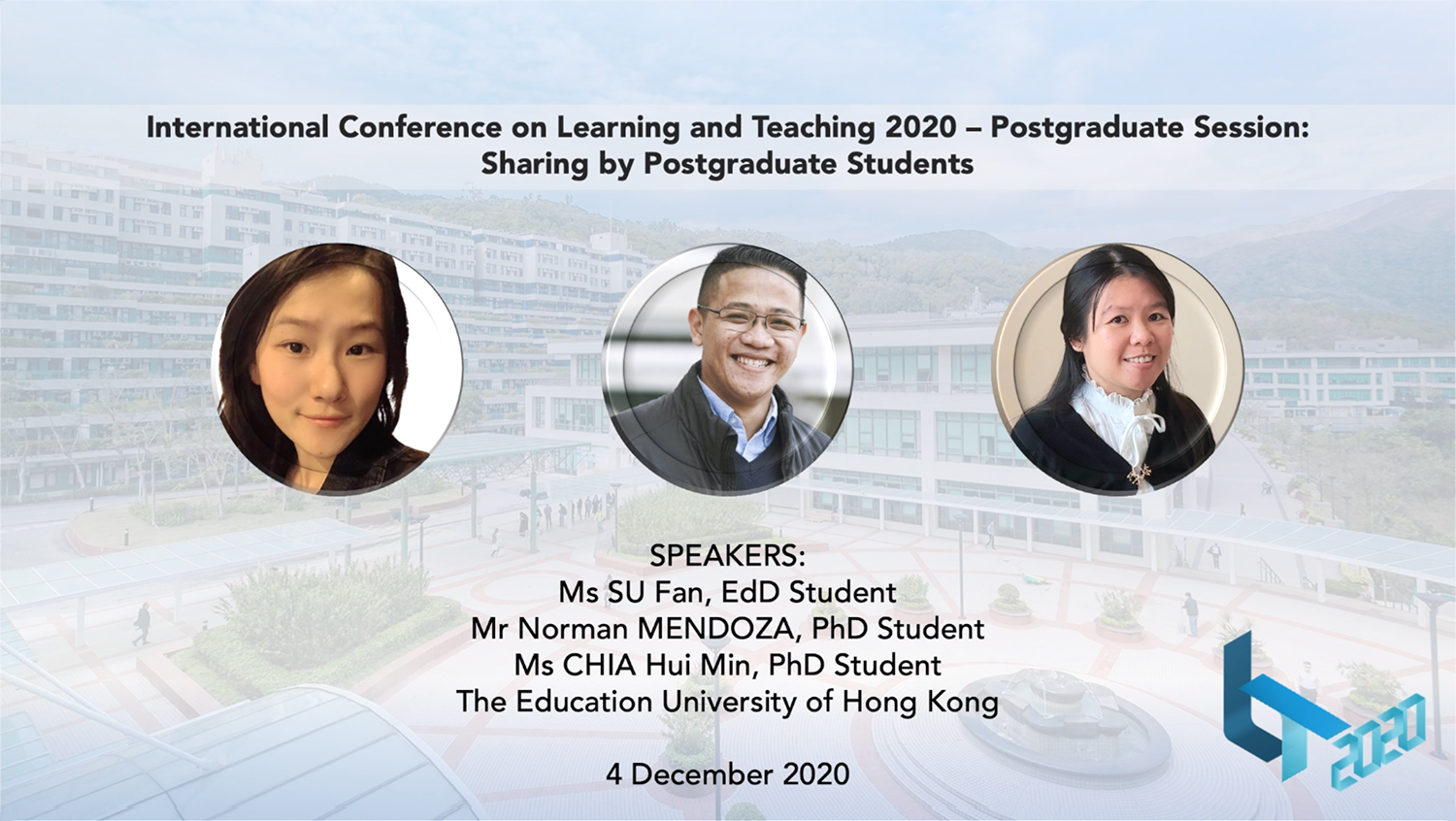
| Sharing by Postgraduate Students (29mins) |
| (i) Ms SU Fan, EdD student, EdUHK (ii) Mr Norman MENDOZA, PhD student, EdUHK (iii) Ms CHIA Hui Min, PhD student, EdUHK |
 |
For enquiries, please contact GS at gradsch@eduhk.hk or LTTC at lttc@eduhk.hk.
