International Conference on Learning and Teaching 2026
Keynote Speakers
Teacher Education and Teaching
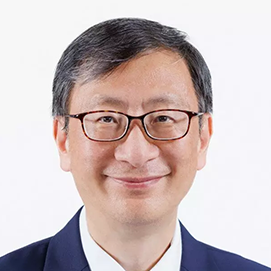
Professor Lee Chi Kin John, JP
President,
Director, Academy for Applied Policy Studies and Education Futures,
Director, Academy for Educational Development and Innovation,
Chair Professor of Curriculum and Instruction,
The Education University of Hong Kong
Abstract
本演講從多個角度探討新時代教師的師德養成與教師教育。隨著今年《中華人民共和國民族團結進步促進法》的出台,以及人工智能的迅速發展,對師德教育提出了新的要求。在理論層面上,以至聖先師孔子為典範,通過研讀《論語》中的相關內容,歸納師德的基本內涵與實踐原則。在比較與實踐層面,進一步比較了中國內地、香港特別行政區及其他國家在教師專業信念建構與師德培養方面的制度與做法,並探討教師職業倫理與個人品德之間的關係,分析了教育家精神在當代的重要意義。此外,本演講以香港教育大學(教大)作為案例,介紹教大在師德培養及價值教育方面的實踐,涵蓋師德教育、國家安全教育、中華文化教育,以及「大思政」相關教育等,表明教大高度重視立德樹人,致力於培養具備家國情懷與專業操守的優秀人才。
Professor John Lee Chi-Kin, President and Chair Professor of Curriculum and Instruction, joined The Education University of Hong Kong (the then Hong Kong Institute of Education) in 2010. He was Vice President (Academic) from 2010 to 2019, and Vice President (Academic) and Provost from 2019 to 2023. Professor Lee was previously Dean of Education and a Professor at the Department of Curriculum and Instruction at The Chinese University of Hong Kong (CUHK). He was also the Director of the Centre for University and School Partnership and served as a Fellow of United College and Morningside College at CUHK. Professor Lee was a recipient of The Vice-Chancellor’s Exemplary Teaching Award 1999 at CUHK. Before that, he worked as a secondary school teacher and as a Lecturer in the Sir Robert Black College of Education.
Professor Lee graduated from The University of Hong Kong and subsequently received an MSc degree from the University of Oxford, and an MA (Education), PhD and Diploma in Education (with distinction) from CUHK. His research interests focus on curriculum and instruction, geographical and environmental education, life and values education, and teacher development and school improvement. He is active in leading education research and development projects and has a solid track record in securing external grants. Professor Lee was named among the top 1% most-cited scientists in the world in terms of career-long impact, in the latest list released by Stanford University. He was a Fellow of the Hong Kong Primary Educational Research Association.
Professor Lee has served as Editor of the International Journal of Children's Spirituality, Executive Editor of Teaching and Teacher Education and editorial board member of Teachers and Teaching, as well as an editorial board members or advisory editor of many local, regional and international journals. He is also a prolific writer, having edited and written more than 25 books, and published over 175 journal articles and book chapters. He is the leading co-editor of the Springer book series, Curriculum and School Development in Asia and Education for Sustainability, as well as The Routledge Series on Life and Values Education and The Routledge Series on Chinese Language Education.
Professor Lee has actively participated in education and social service in Hong Kong, Chinese Mainland and overseas. He has held many visiting, guest and adjunct professorships at universities overseas and in Chinese Mainland. He has served as Changjiang Scholar Chair Professor, conferred by the Ministry of Education of the People’s Republic of China. He has served as Honorary Advisor (Education) of Sik Sik Yuen, the Hong Kong Kindergarten Association, and the Hong Kong Federation of Education Workers; as Advisor of the Character Education Foundation (CEF) and the Hong Kong Association of Deputy Principals; as Academic Advisor of the Association of Inspectors, Education Bureau (AIEDB), and so forth. He is also a Member of the Academic Committee of the Guangdong-Hong Kong-Macao Greater Bay Area Primary and Secondary Schools Principal Federation and Chairman of the Academic Committee of the Center for Hong Kong and Macao Research of South China Normal University. In addition, he was appointed by the Hong Kong SAR Government as a Justice of the Peace (JP).
Professor Lee is a member of the 14th National Committee of the Chinese People’s Political Consultative Conference, the UNESCO Chair in Regional Education Development and Lifelong Learning (2019-2023; 2023-2027), a Research Fellow of The Southeast Asian Ministers of Education Organization (SEAMEO), and Director of the Academy for Applied Policy Studies and Education Futures, Academy for Educational Development and Innovation, and Centre for Religious and Spirituality Education at EdUHK.
Professor Lee is active in leading education research and development projects and has a solid track record in securing external grants. In 2008, his project, entitled ‘Accelerated Schools for Quality Education Project’, won the Quality Education Fund Outstanding Project Award. Another project (together with Professor Jim Chi-yung, Dr Alice Chow Sin-yin and team), entitled “Tree Assessment for Life Education (TALE) Project”, won a Silver Medal in the first-ever virtual edition of the Geneva Inventions Expo held in March 2021, and won a Gold Medal and a Special Award in the International Invention Innovation Competition in Canada (iCAN) in August 2021. Professor Lee’s another project (led by Dr Song Yanjie), entitled ‘Learningverse – A 3D Metaverse for Online Collaborative Learning’, was awarded a Bronze Medal in the 48th Geneva International Inventions Exhibition in 2023. Professor Lee also received the President’s Award for Outstanding Performance in Knowledge Transfer (Team Award) in 2016/17 and 2021/2022.
Professor Lee served as a council member of the Advisory Committee on Teacher Education and Qualifications (ACTEQ), the Hong Kong Examinations and Assessment Authority (HKEAA), and the Hong Kong Council for Accreditation of Academic & Vocational Qualifications (HKCAAVQ); a member of the Citizens Advisory Committee on Community Relations of the Independent Commission against Corruption (ICAC), and the Task Force on Professional Development of Teachers of the Education Bureau; and a co-opted member of the Hospital Governing Committee of Queen Mary Hospital, Tsan Yuk Hospital, and so on. He was a UNESCO consultant for an environmental education project in China, an executive governing board member of the International Congress for School Effectiveness and Improvement, and so forth. Professor Lee was involved in a research project on small class teaching in early childhood and primary education, supported by the Education and Youth Affairs Bureau of Macau, China. And he led a team of colleagues appointed by the World Bank as consultants for the Vietnamese Ministry of Education and Training’s Enhancing Teacher Education Program in 2017/18.
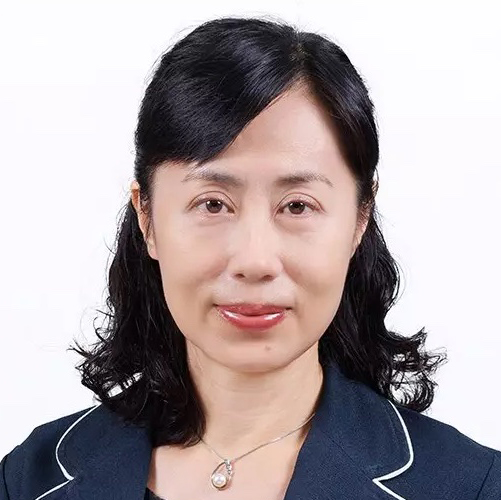
Professor Cheng May Hung May
Vice President (Academic),
Executive Co-Director, Academy for Applied Policy Studies and Education Futures,
Chair Professor of Teacher Education,
The Education University of Hong Kong
Abstract
In an era characterised by rapid globalisation, accelerated technological advancement and pervasive societal transformation, educational systems worldwide are being compelled to respond proactively to what the Organisation for Economic Co‑operation and Development (OECD, 2018) describes as a VUCA environment, marked by volatility, uncertainty, complexity and ambiguity. Economic restructuring, political contestation and evolving cultural norms now exert continuous influence on Initial Teacher Education (ITE) governance, reframing what were once episodic disruptions as enduring features of the sector.
This presentation first examines how ITE systems globally have been reshaped by the challenges and opportunities arising from major drivers of change. It foregrounds discussion of policy priorities, cultural‑historical legacies and local realities, while identifying patterns of convergence and divergence in ITE practice that emerge from the dynamic interplay of global pressures, local reform, data‑intensive policy instruments, emergent technologies, resource disparities and demographic shifts.
Against this backdrop, Hong Kong is situated within a context of profound, multidimensional change, influenced both by global trends and by local demographic dynamics and newly articulated guidelines and standards concerning teachers’ professional roles, conduct and ethics. The presentation concludes with a case analysis of The Education University of Hong Kong, showing how we have realigned curricula and programmes to address local and national imperatives in ITE.
Keywords: Initial Teacher Education, policy, governance, Hong Kong, curriculum reform, teacher professionalism, VUCA.
Professor May Cheng May-hung is currently Vice President (Academic) and Chair Professor of Teacher Education of The Education University of Hong Kong (EdUHK).
Professor Cheng began her teacher education work at the Sir Robert Black College of Education in 1990. As a long-serving member of EdUHK and the former Hong Kong Institute of Education, she has taken up academic leadership positions at different stages, such as Associate Vice President (Academic Affairs), Registrar, Acting Dean of the Faculty of Arts and Sciences, Associate Dean (Programmes), and Programme Director. Between 2010 and the end of 2011, Professor Cheng was a Reader in Professional Education in the Department of Education at the University of Oxford, and a fellow of the Governing Body at Kellogg College.
Professor Cheng graduated from The University of Hong Kong with a BSc (First-class Honours) degree, a Certificate in Education (Distinction) and a Master’s in Education. She obtained a PhD at the University of Waikato, New Zealand. She served as President of the East Asian Association for Science Education (EASE) from 2016 to 2019. Professor Cheng has actively participated in and made contributions to the international teacher education and science education arena.
She has been an International Committee member of the National Association for Research in Science Teaching in the US, and has chartered status as a fellow of the Royal Society of Biology in the UK. She is on the editorial boards of various international journals, such as Cogent Education, Teaching and Teacher Education, Teachers and Teaching, and Asia Pacific Journal of Teacher Education. She has obtained various research and project grants from the General Research Fund, the Quality Education Fund and the Education Bureau. She is also a prolific writer, having edited and written more than 13 books and published over 140 journal articles and book chapters.
Professor Cheng has actively participated in education services in Hong Kong. She was appointed a registered auditor of the Quality Audit Committee under the University Grants Committee (UGC), a specialist and member for institutional review by the Hong Kong Council for Accreditation of Academic and Vocational Qualifications, a member of the Council of the Hong Kong Examinations and Assessment Authority (HKEAA) and to the Curriculum Development Council. She has also served on various subject committees at the HKEAA, the Curriculum Development Committee of the Curriculum Development Institute, and the Education Committee at the Maritime Museum. Professor Cheng is also an elected Academic Board representative on the Council of EdUHK.
In her role as Associate Vice President cum Registrar, Professor Cheng led the Registry in various tasks, including meeting the challenges of the double cohort due to the New Senior Secondary reforms, preparation for the second QAC, and development of the Key Performance Indicators. She has coordinated the secretariat team and completed various exercises and reviews with successful results, including programme validations and revalidations, programme area accreditation, the UGC review exercise for the University title, the second QAC Review, the development of the 10-year strategic plan for the University, preparation for the sub-degree QAC, and the submission for the Triennial Planning Exercises.
She has been one of the key drivers in upgrading Registry functions through the development of the Academic Management Information System, developing software systems for student assessment, upgrading the student information management system, and devising the admissions strategy.
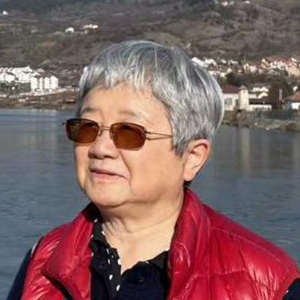
Professor Chen Xiangming
Professor of the Graduate School of Education,
Peking University, Beijing, China
Abstract
實踐、理論與教師作為「人」的面向(teacher as person)之間的落差,長期以來一直是教師教育中的重要議題。本研究整合了 Korthagen 洋蔥模型的修正版與中國文化資源作為理論框架,探討在中國舉辦的一場敘事行動研究工作坊如何嘗試彌補這一落差。本研究採用質性研究方法蒐集並分析資料,聚焦於一位班主任的「整體性學習」(holistic learning)。研究結果顯示,在引導者帶領下的核心反思(core reflection),幫助該教師識別並糾正了其學習中多個層面(如:行動、認知、情感與志向)之間的不一致。引導者輔助教師學習的機制包括:1)透過發人深省的提問,促使教師意識到其實踐中的錯位。2)引入理論以解釋其係踐為何以及如何產生不一致。3)透過核心反思,喚起她體現中國文化精髓的核心特質——同理心與慈悲心。本研究的價值在於闡明了中國教師整體性學習的典型文化特徵,這不僅能為中國,也能為世界其他地區的教師教育提供參考。
陳向明為北京大學教育學院教授,並擔任北京大學基礎教育研究中心名譽主任及教育質性研究中心名譽主任。此外,她亦擔任中國教育學會學術委員會委員、世界課堂研究學會(WALS)理事及華東師範大學特聘研究員。其研究領域主要涵蓋教師教育、課程與教學以及質性研究方法論。她曾先後主持十餘項研究課題,出版專著 20 餘部,發表學術論文 300 餘篇,並榮獲「北京市優秀教師」稱號。
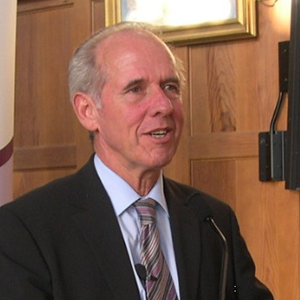
Professor Christopher W. Day
Professor of Education, Faculty of Social Sciences
Member of the Centre for Research on Educational Leadership and Management (CRELM)
University of Nottingham, UK
Abstract
A range of research internationally reveals growing evidence of emotional exhaustion, disenchantment, stress, burnout, and attrition among teachers. This is often associated with unacceptable workloads, curriculum and pedagogical change demands, and pressures of so-called performativity agendas. Together, these are claimed to challenge the resilience of many teachers who stay and their commitment to strive to teach to their best and well. Yet,relatively little is known beyond the individual level about how and why teachers stay in the profession, if not always in the same school, over a career. There is a scarcity of longitudinal data across teachers’ life and career courses, and little comprehensive examination and explanation about the combined influences of different layers of the educational eco-system. Drawing upon international research and an in-depth case study of the stories of mid- and later- career teachers in primary and secondary schools in England, this presentation will focus on the key role played by professional identity and values driven agency in teachers’ decisions to stay, despite the many challenges that they face. It will discuss the implications for the curriculum of teacher education, professional learning and development, and school leadership.
Christopher Day is Professor of Education in the School of Education, University of Nottingham. He is Visiting Professor at several universities in Europe, South-East Asia, and the Americas, and recipient of Honorary Doctorates from Linkoping University, Sweden, the Education University of Hong Kong. He was awarded the AERA Michael Huberman Award for research on teachers’ work and lives. He is judged to be in the top one hundred scholars globally for the range and lifetime impact of his research, Founder of The International Study Association for Teachers and Teaching (ISATT) and founding Editor-in-Chief of Teachers and Teaching: Theory and Practice, an international SSCI rated journal. During the last twenty years, he has led national, European and international research and development projects in the areas of teachers' work, lives and effectiveness, school-university partnerships, and successful school principalship. Recent publications include Educational Research and the Quality of Successful School Leadership (Paper commissioned for the 2024/25 Global Education Monitoring UNESCO Report “Leadership in Education”); Going Beyond the ‘Effective’: How successful principals build and sustain teachers’ and students’ academic, social and individual learning and achievement (2024); Resilient Schools, Resilient Teachers (2016); and Teacher Professionalism During the Pandemic: Courage, Care and resilience (2023).

Professor Kelly Freebody
Head of School,
Sydney School of Education and Social Work,
The University of Sydney, Australia
Abstract
This presentation considers the critical questions driving teacher education in 2026. It is based on the foundation al idea that Education, at its core, is a hopeful undertaking. Societies invest significant amounts of money and energy ensuring a robust education systems which is predicated on the belief that all children can and should learn, grow and change, and that the society has history, knowledge and culture that is of value to the next generation. Since the introduction of mass education systems globally, many have written about the purpose of schooling, and whether schools, policies, and (critically) teachers are 'fit for purpose'.
Drawing on poststructuralist methodologies, I explore how pedagogical and ideological ideas are enacted in the complex policy, institutional and relational settings of the classroom, in both schools and teacher education programs. Using a framework to unpack the complex forces that are brought to bear on the everyday work of teachers and teacher educators, I consider how the purpose of schooling is positioned and how this positioning impacts the work of teachers and teacher educators around the world.
Kelly Freebody is a Professor and Head of the Sydney School of Education and Social Work, The University of Sydney. Kelly has held several leadership positions throughout her career, including Associate Dean of the Faculty of Arts and Social Sciences, and Program Director of Secondary Education. Her teaching in the Secondary Education program focuses on creative and critical pedagogy, school-community relationships, and pedagogies of hope.
Kelly's research merges her key interests in drama, education, creativity and social justice. It seeks to develop theoretical and practical understandings of the ways in which drama of, for, and about social change operates in a variety of institutional and educational settings. Using innovative methodologies drawn from the fields of critical policy studies, ethnomethodology, sociology, and education, her work aims to provide new perspectives for researchers and practitioners in applied theatre, drama education, and creativity education.
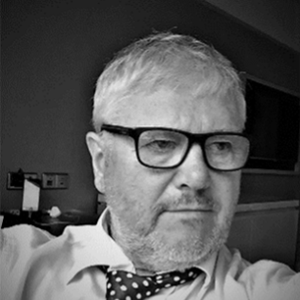
Professor John Furlong
Emeritus Professor of Education
University of Oxford, United Kingdom
Abstract
The debate about the role of theory and research in teacher education is long standing and deeply contested, indeed it is a debate that goes right back to the beginning of organised teacher education itself. At its heart lie questions about how different forms of professional knowledge relate to each other; how propositional knowledge, derived from research and theory, relate to knowledge and experience derived from the actual practice of teaching - teaching these pupils, this curriculum in this classroom. It is now twelve years since I chaired the BERA (British Educational Research Association) and RSA (Royal Society of Arts) inquiry into the role of Research in Teacher Education. Much has happened since that time. On the one hand there has been the international move towards more practically focused, ‘school-based’ forms of training; on the other hand, we have seen the rise of the ‘what works’ movement with its focus on the ‘science’ of teaching. In this paper I intend to continue the debate, particularly focusing on the strengths and weaknesses of different models for linking theory and practice. I will argue that in reviewing the effectiveness of any particular model, we need to pay close attention both to its implicit pedagogy as well as its curriculum – both the ‘how’ and the ‘what’ of professional learning.
John Furlong is a former Director of Oxford’s Department of Education, having previously held posts at Bristol, Cardiff, Swansea and Cambridge Universities. A former President of the British Educational Research Association (BERA), he was until recently an adviser to the Welsh Government on Initial Teacher Education (ITE) having been author of a number of government reports on this topic over the years. In 2022, he and colleagues from Oxford were awarded the BERA Public Engagement and Impact prize in recognition of their work on the reform of teacher education in Wales. In 2015, his book ‘Education – an anatomy of the discipline’ was awarded first prize by the British Society for Educational Studies for the best educational research book of the year. John Furlong is an elected Fellow of the Academy of Social Sciences and has been a member of Research Excellence Framework (REF) sub-panels in Education in the UK, Hong Kong, Latvia, Luxembourg and Portugal. He was awarded the OBE for services to educational research and advice to government in 2017.

Professor Kathleen Pithouse-Morgan
Professor of Education, University of Nottingham, United Kingdom
Honorary Professor, University of KwaZulu-Natal, South Africa,
Co-Editor, Teaching and Teacher Education,
Co-Convenor, Centre for International Education Research, School of Education, University of Nottingham
Abstract
This keynote explores poetic self-study as a creative and transformative research approach
that contributes to innovation in teaching and teacher education. Grounded in arts-based
and self-reflexive inquiry, poetic self-study promotes collaborative creativity and learning,
enabling educators to engage deeply with their lived experiences. It bridges personal
reflection with broader educational impact by enhancing learning opportunities for both
teachers and those affected by their professional practices. The presentation traces the
genre's development from its 1990s origins to its global reach, using poetic personal
narrative and vignettes from diverse academic contexts. Poetry is shown to support
self-exploration, critical dialogue, and imaginative expression, while also cultivating
understandings of educational experience that may elude conventional academic forms.
A central meta-analysis offers theoretical insights and practical guidance.
Through poetic self-study, educators envision ethical and hopeful possibilities for
professional practice, contributing to more inclusive, responsive, and socially just
approaches to teacher education and teaching.
Dr Kathleen Pithouse-Morgan serves as a Professor of Education at the University of Nottingham's School of Education and an Honorary Professor at the University of KwaZulu-Natal. Specialising in professional learning, self-reflexive scholarship, and arts-based educational research, her work emphasises the generative power of collaborative reflexivity and creativity in teaching and teacher development. Dr Pithouse-Morgan's dedication to methodological and theoretical innovation for social change has led to transnational collaborations that spotlight the contributions of the Global South to educational research. Her recent collaborative book publications include Arts-Based Educational Research Narratives of Academic Identities: Perspectives from Higher Education (2024) and Poetic Inquiry for the Social and Human Sciences: Voices from the South and North (2024).
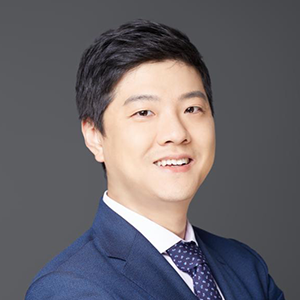
Professor Song Huan
Professor of the Center for Teacher Education Research,
Associate Dean, Faculty of Education,
Beijing Normal University, Beijing, China
Abstract
教師專業發展的根本關切在於專業判斷的形成。其核心在於知行合一:這是一個非二元對立的過程,在此過程中,科學與藝術、證據與經驗不被視為分離的領域,而是在教育實踐中建立起富有成效的關聯。從這個視角來看,實證取向的教學研究(教研)不僅是改進教學的技術性工具,更是一種認識論的實踐——教師透過這種實踐來探究、詮釋並重構實踐本身。其生成性的潛能,在於它重新配置了專業認識的條件。我們針對中國大陸人工智慧增強的實證教研所做的研究發現,證據與數據不僅作為外部資源發揮作用,更作為關鍵的邊界物件,在集體探究的共享框架中,使實踐經驗、研究證據與技術表徵之間的差異得以顯現並被協商。在此過程中,教師並不將證據視為確定性的答案或外部指令,而是將其作為理解教學問題、重新審視經驗判斷、反思教學決策的參照點。因此,教師發展並非外於教師能動性,而是透過能動性得以實現。實證教研的意義,並不在於提供現成的解決方案,而在於創造認識論與實踐的條件,使實踐知識與專業智慧得以共同生成。
宋萑教授是教育領域的傑出學者,專長於教師教育及課程與教學論。現任北京師範大學教育學部教授、博士生導師,同時擔任學部副部長及教育部重點研究基地教師教育研究中心副主任。獲評國家級重大人才計畫青年學者、仲英青年學者,主持國家級及省部級科研項目二十餘項,在SSCI及CSSCI期刊發表學術論文逾一百二十篇,提交多份政策諮詢報告,並出版多部專著。此外,他兼任華東師範大學兼職教授、香港教育大學高級研究員。在學術組織中積極任事,包括擔任中國高等教育學會教師教育分會副秘書長,並在中國民主促進會中擔任要職。他致力於建構具有中國特色的教師教育理論體系,服務國家高品質教育體系建設,並透過人工智慧融合與實證導向的路徑,推動教師教育的創新發展。
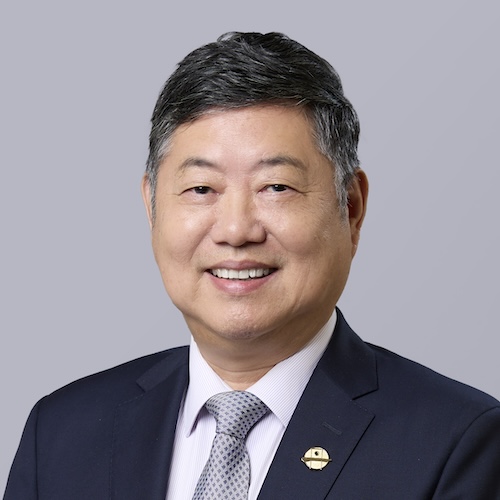
Professor Zhang Minxuan
Professor and Former President of Shanghai Normal University,
Director of Teacher Education Centre under the Auspices of UNESCO
Abstract
TALIS是由经济合作与发展组织与2008年发起的“教师教学国际调查”,2024年已有55个国家/地区的28万教师参加。本发言以上海初中教师连续三届参加TALIS调查的数据,呈现上海教师终身学习、并在协作中实现专业发展的特色。发言也力图揭示,推进“学习与协作专业”形成的上海教师政策与教师日常实践,包括校本三组(教研组、年级组与科研组)活动、教师培养工程、与教师发展阶梯,等。
Prof. ZHANG Minxuan, PhD (University of Hong Kong), the founding director of Teacher Education Centre under the auspices of UNESCO since 2017. He worked as the Principal of Shanghai Experimental School (1997-2005), Deputy President of Shanghai Normal University (2022-2024), Vice Director-general of Shanghai Municipality Education Commission (2004-2010), President of Shanghai Academy of Education Sciences (2005-2010) and President of Shanghai Normal University (2011-2014).
Prof. ZHANG published over 60 papers and 7 books, such as How Shanghai Does It,Professionalism and Excellence and Shanghai Teachers’ Development in English; and A Comparative Study on the Policies of Student Financial Aids and International Organizations and Education Development in Chinese.
Prof. Zhang has quite international experience, he was a member of the Advisory Board of UNESCO-IIEP (2006-2012), a board member of UNESCO Institute of Lifelong Learning (2008-2017). He also worked as the National Project Manager for Shanghai PISA,TALIS and SABER. He chaired UK-China Mathematics Teachers Exchange Program, and he also worked as a World Bank and UNICEF education expert for international development.
AI, Metaverse and STEAM Education
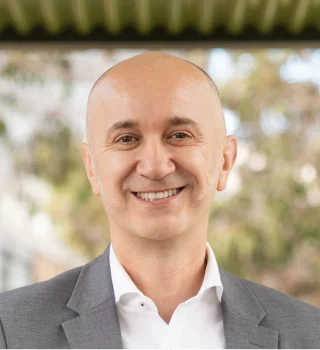
Professor Dragan Gašević
Professor of Learning Analytics,
Faculty of Information Technology,
Monash University, Australia
Abstract
When generative AI first entered educational discourse, it prompted intense and often polarized debate. Some saw it as a threat to established practices, while others viewed it as a catalyst for innovation. These early reactions were shaped by uncertainty and limited evidence. A growing body of empirical research now enables a more grounded understanding of how generative AI is affecting teaching and learning. This keynote will synthesize emerging evidence on how generative AI is being used to enhance educational practice, and what this implies for learning processes and teaching decisions. It will then examine key concerns related to learner agency, overreliance, and assessment integrity, and consider directions for assessing future-ready skills in AI-mediated environments. Drawing on findings from multiple studies, the talk will argue for a stronger and more diverse evidence base on educational impacts of generative AI, and will conclude with a forward-looking research agenda to guide responsible innovation.
Dragan Gašević is Distinguished Professor of Learning Analytics and Director of Research in the Department of Human Centred Computing of the Faculty of Information Technology and the Director of the Centre for Learning Analytics at Monash University. Dragan’s research interests center around data analytic, AI, and design methods that can advance understanding of self-regulated and collaborative learning. He is a founder and served as the President (2015-2017) of the Society for Learning Analytics Research. He has also held several honorary appointments in Asia, Australia, Europe, and North America. He is a recipient of the Life-time Member Award (2022) as the highest distinction of the Society for Learning Analytics Research (SoLAR) and a Distinguished Member (2022) of the Association for Computing Machinery (ACM). In 2019-2025, he was recognized as the national field leader in educational technology in The Australian’s Research Magazine that is published annually. He led the EU-funded SHEILA project that received the Best Research Project of the Year Award (2019) from the Association for Learning Technology.
Virtual and Blended Teaching and Learning
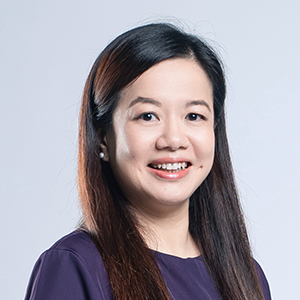
Professor Chen Wenli
Associate Dean, Office for Research,
National Institute of Education,
Nanyang Technological University, Singapore
Abstract
As AI continues to evolve at an unprecedented pace, the educational landscape is being transformed in ways that challenge traditional learning paradigms. This keynote talk will address the intersection of rapid AI advancements and the nuanced, reflective nature of human learning. It will discuss the distinction between AI for learning and AI for performance, urging AIED designers to prioritize genuine “slower” effortful learning processes over “faster” learning outcomes and solutions.
From a learning science perspective, Prof. Chen Wenli will examine how AI-augmented learning environments can be designed not just as tools for quick answers, but as cognitive partners that enhance human agency, foster self-regulation, critical thinking, and metacognitive skills. Drawing on her empirical research, Prof. Chen will share human-centric AIED designs to empower learners and enhance their cognitive capacities, rather than undermining them. This talk advocates a shift in focus from efficiency to meaningful learning, highlighting the importance of human learners’ deep cognitive engagement in human-AI collaboration for learning.
Professor CHEN Wenli is the Associate Dean of Office for Research at National Institute of Education (NIE), Nanyang Technological University (NTU) Singapore. She is co-chairing NIE’s Emerging Technologies Strategic Growth Area, and AIED@NIE. She served as the Head of Learning Sciences and Assessment Department from 2021 to 2025. She specializes in computer-support collaborative learning (CSCL), multi-modal leanring analytics (MMLA), and human-centered AI for education (AIED). She has been invited as the keynote speaker for many international conferences. She has won a dozen Best Paper Awards from international conferences. In 2020, the Asia-Pacific Society for Computers in Education presented her with the Distinguished Researcher Award. She received the "Excellence in Research Commendation" "Excellence in Teaching Commendation", and the "Nanyang Education Award" from NIE/NTU.
Professor Chen serves as the Editor-in-Chief for both the Journal of Computers in Education, and Learning: Research and Practice. She also serves as an Associate Editor for Instructional Science, and Research and Practice in Technology Enhanced Learning. Moreover, she is an editorial board member for the International Journal of Computer-Supported Collaborative Learning.
Professor Chen serves on the Board of Directors of the International Society of the Learning Sciences (ISLS). She also served as co-chair of the CSCL Community Committee of the International Society of the Learning Sciences from 2016 to 2021. She is the executive committee member of the Asia Pacific Society of Computers in Education (APSCE) and the Global Chinese Society of Computers in Education (GCSCE).
Digital Humanities

Professor Miriam Posner
Associate Professor,
Information Studies and Digital Humanities,
University of California, Los Angeles, United States
Abstract
Almost as soon as ChatGPT made its entrance in 2022, teachers were besieged by opinions about how they should respond. Is the teacher’s job to incorporate LLMs in lesson plans? To show students how to use LLMs “responsibly”? To banish the technology from the classroom? I argue for an approach that acknowledges AI’s dual identity as both a package of technologies and the encapsulation of powerful socioeconomic forces. Our responsibility as educators includes the obligation to make students aware that they are targets and sources of data for vendors of educational technology.
Miriam Posner is an associate professor at UCLA in the Department of Information Studies. She’s also a digital humanities scholar with interests in labor, race, feminism, and the history and philosophy of data. Miriam has published widely on technology, data, and the humanities. Her book, Seeing Like a Supply Chain: Data in the Circuits of Global Trade, tells the story of the technology that makes supply chains work, from punch-cards to neural nets. It will be published in the fall of 2026 by Yale University Press.
Quality Assurance in Higher Education and Training
Professor Angela Yung Chi Hou
Professor,
College of Education,
Chengchi University, Taiwan
Abstract
Given the diversity of higher education systems across Asia, quality assurance (QA) frameworks have evolved through three major phases: an initial focus on legitimacy and accountability, followed by an emphasis on internationalization, and more recently, a shift toward diversification. This talk revisits current standard frameworks in higher education and explores emerging quality assurance standards from the perspective of Asian quality assurance agencies. In addition, the study discusses the most critical challenge in developing and implementing these new QA standard frameworks, namely effective stakeholder engagement.
Angela Yung-Chi Hou is a Professor of Higher Education at the College of Education, National Chengchi University, Taiwan. She served as Executive Director of the Higher Education Evaluation & Accreditation Council of Taiwan (HEEACT), National accreditor of Taiwan from 2016 to 2021 and has been deeply engaged in quality assurance practice and international research for over 20 years. Her leadership roles include serving as Vice President and Board Member of both the International Network of Quality Assurance Agencies in Higher Education (INQAAHE) and the Asia-Pacific Quality Network (APQN). In 2024, she was invited by INQAAHE to serve as an international reviewer for accrediting quality assurance agencies worldwide. She is the Editor-in-Chief of the Springer book series “Higher Education in Asia: Quality, Excellence and Governance” and serves on the editorial boards of several peer-reviewed journals in the field of higher education. She is recognized among the world’s top 2% most-cited scholars in the field of higher education quality assurance. She is recognized as the top 5 researcher in field of quality assurance of higher education worldwide according to SCOPUS. In 2025, she is being listed as top 2 % as highly cited scholar by ScholarGPS. She serves as Chief-in-Editor of Higher Education Evaluation and Development (HEED) Emerald and Higher Education in Asia: Quality, Excellence and Governance by Springer, Associate Editor of Journal of Asian Pacific Educational Review (SSCI) and Quality in Higher Education (SCOPUS) and several editorial boards of peer-reviewed journals in higher education field. Up to present, she has published more than 150 English and Chinese journal papers, articles, book chapters, reports and monographs in higher education, international education, and quality assurance. In 2023, she was granted “Outstanding Research Award” by National Science and Technology of Council Taiwan and “Excellent Research Award “at National Chengchi University. In 2024, She was awarded “the Best Researcher and Teacher” and from 2023-2025, she was awarded as “Best Research Award” by National Chengchi University. Google Scholar Profile: https://scholar.google.com/citations?user=vljMifEAAAAJ&hl=zh-TW