On 1 and 3 September 2026, the Department of Curriculum and Instruction (C&I), The Education University of Hong Kong (EdUHK), hosted two academic sessions featuring Prof. Sibel Erduran from the University of Oxford, United Kingdom. As the first visitor of C&I’s Oxford Scholar Series, Prof. Erduran’s visit marked a significant milestone in the Department’s ongoing efforts to foster international scholarly exchange and research engagement. The two sessions attracted a total of 256 registrations, reflecting strong interest from participants in current issues in science education and educational research methodology.
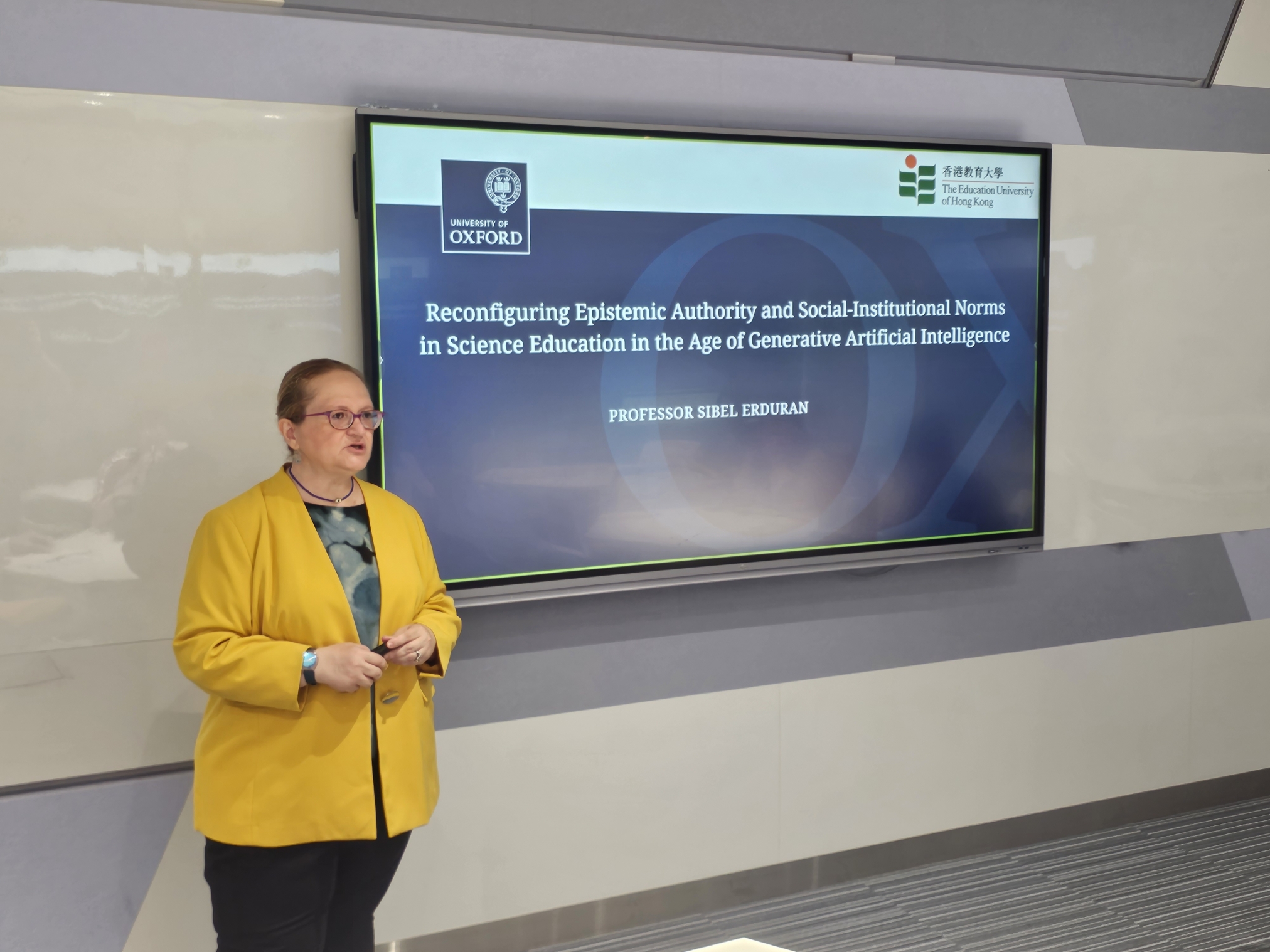
The first session, held on 1 September 2026, was titled “Reconfiguring Epistemic Authority and Social-Institutional Norms in Science Education in the Age of Generative Artificial Intelligence.” In this presentation, Prof. Erduran examined how the rapid uptake of Generative Artificial Intelligence (GenAI) in education raises fundamental questions about how knowledge is produced, justified, and authorised in science classrooms. While much existing research has focused on teachers’ use of GenAI and its instructional affordances, the session highlighted the need to pay closer attention to its epistemic implications.
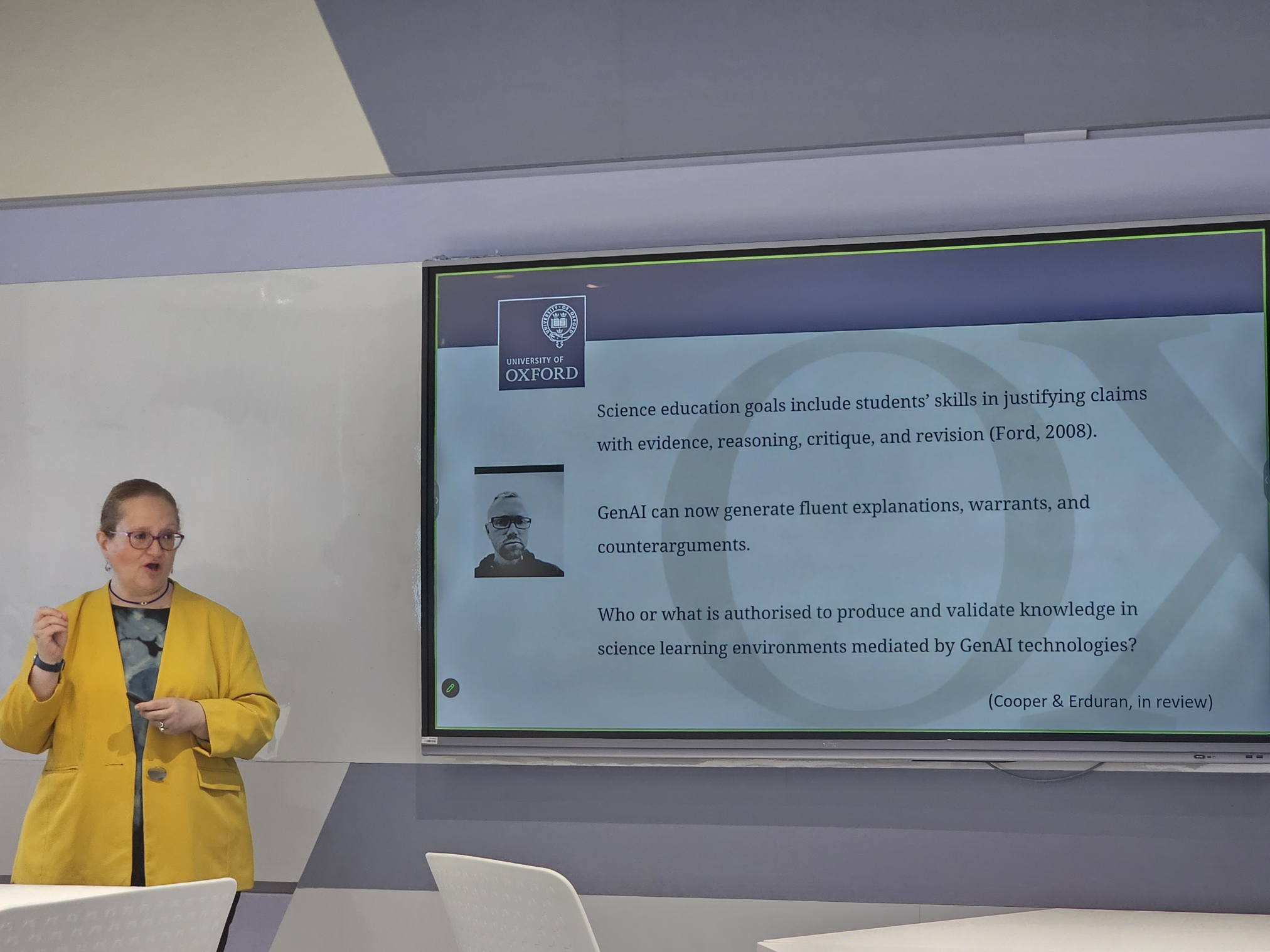
Drawing on dialogism and research on scientific argumentation, Prof. Erduran explored GenAI as a dialogic partner in science education and discussed how its presence may reshape classroom discourse by introducing a linguistically fluent and persuasive voice. The session considered how GenAI can both enrich and constrain dialogic engagement, reconfigure who or what participates in scientific argumentation, and transform how epistemic authority is negotiated among students, teachers, and AI agents. Prof. Erduran also addressed the broader impact of AI on science itself, pointing to the importance of recognising not only epistemic authority but also the social and institutional dimensions of scientific practice. The presentation concluded by emphasising the need for science education to foreground evidence-based reasoning, critical evaluation, dialogic engagement, and social-institutional norms so that GenAI supports, rather than displaces, the epistemic agency of students and educators.
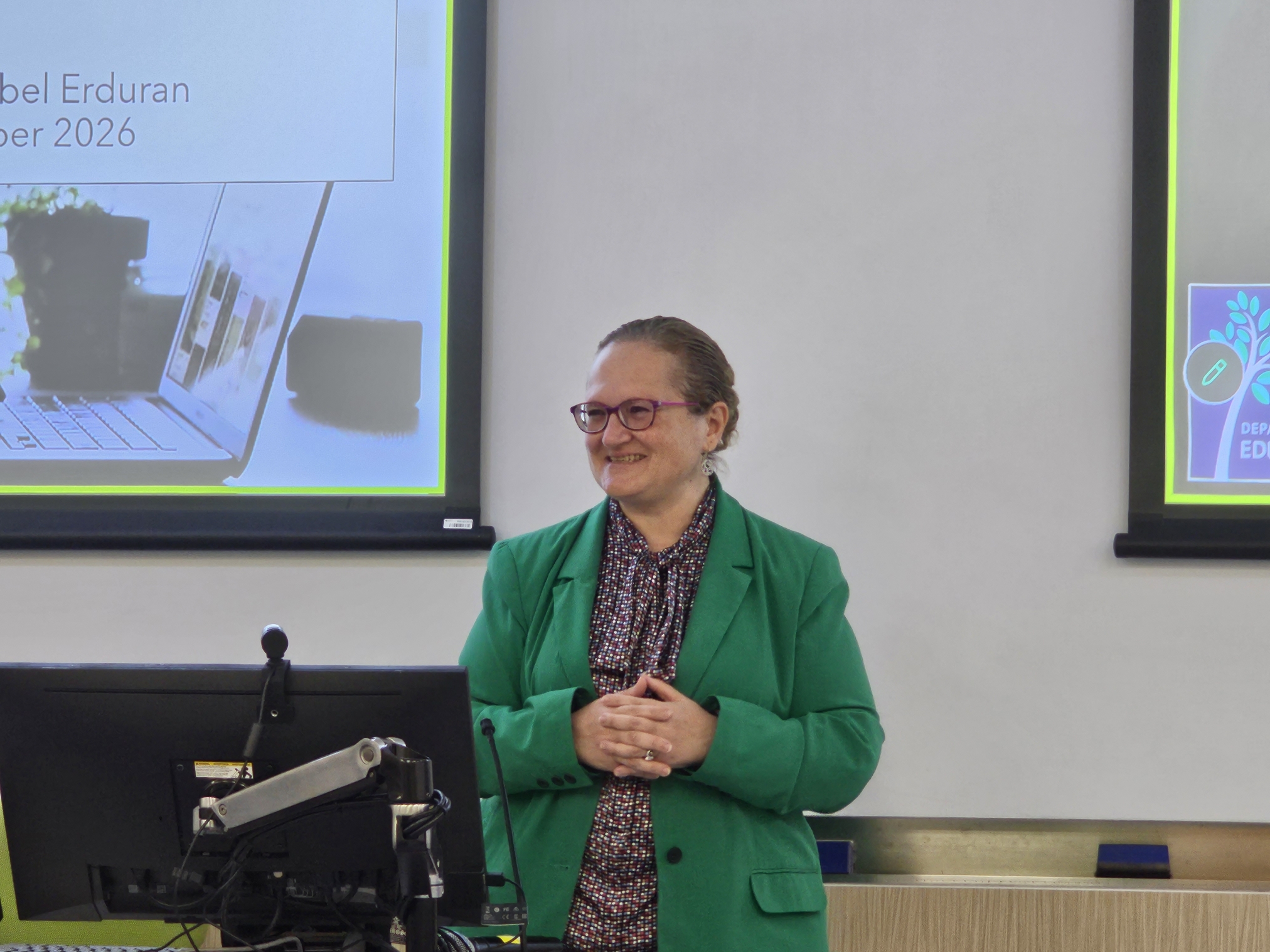
The second session, held on 3 September 2026, was titled “Discourse Analysis in Educational Research.” This session introduced participants to different approaches to discourse analysis and addressed key questions concerning what discourse is, why it matters in educational research, and what major traditions and methodological approaches are commonly used in the field. Prof. Erduran illustrated prominent perspectives, including those of Fairclough and Gee, and provided concrete examples to help participants understand how discourse analysis can be applied in educational contexts. Participants also had the opportunity to apply their learning to excerpts from classroom conversation transcripts, enabling them to engage directly with the analytical process.
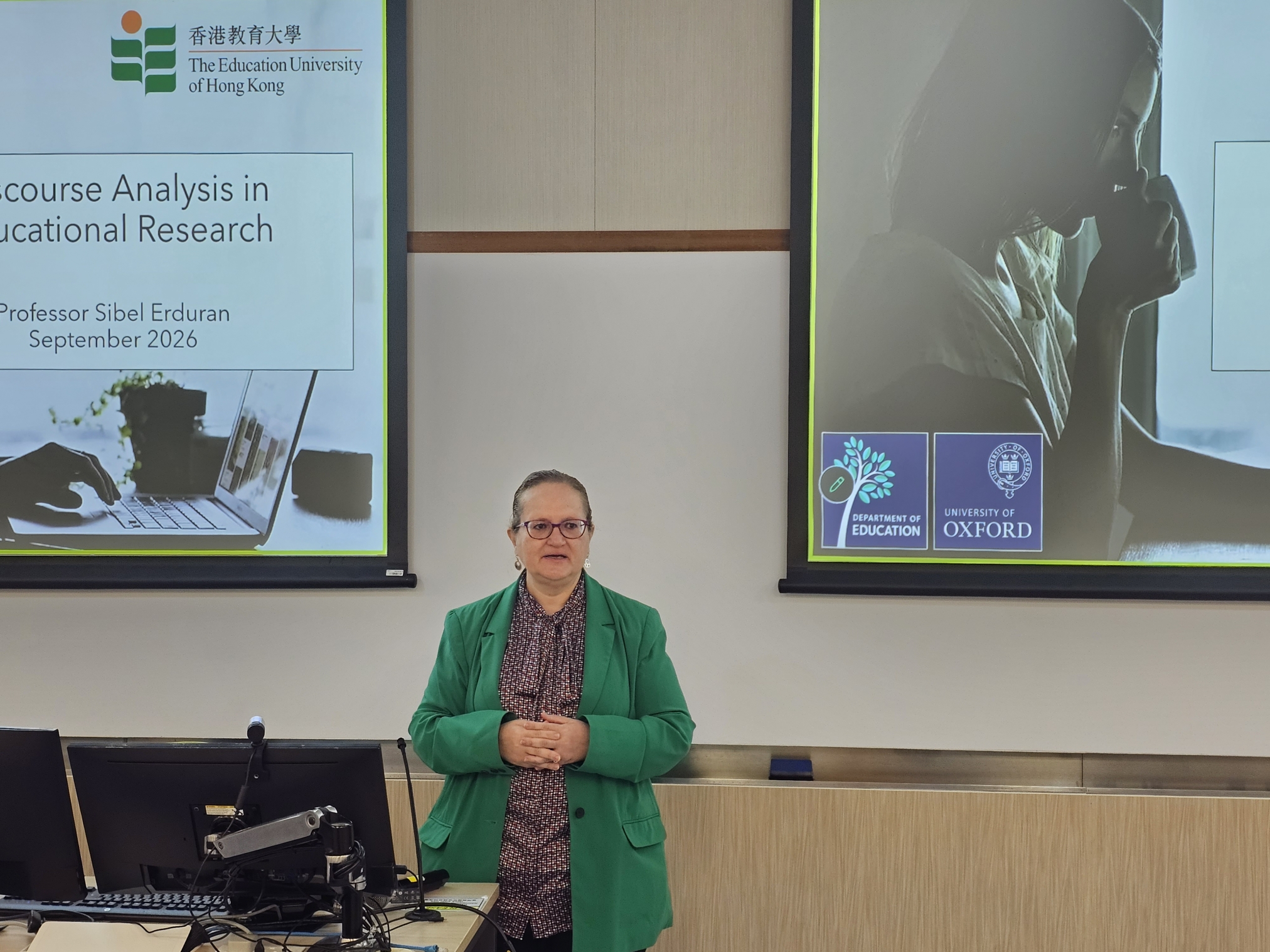
Feedback from participants was highly positive. Most participants strongly agreed that the seminars were well-organized, helpful in enhancing their understanding, and that they planned to apply the knowledge gained from the seminars to optimise their professional or research practice. The strong response highlighted the relevance of the topics and the value of Prof. Erduran’s contributions to the field.
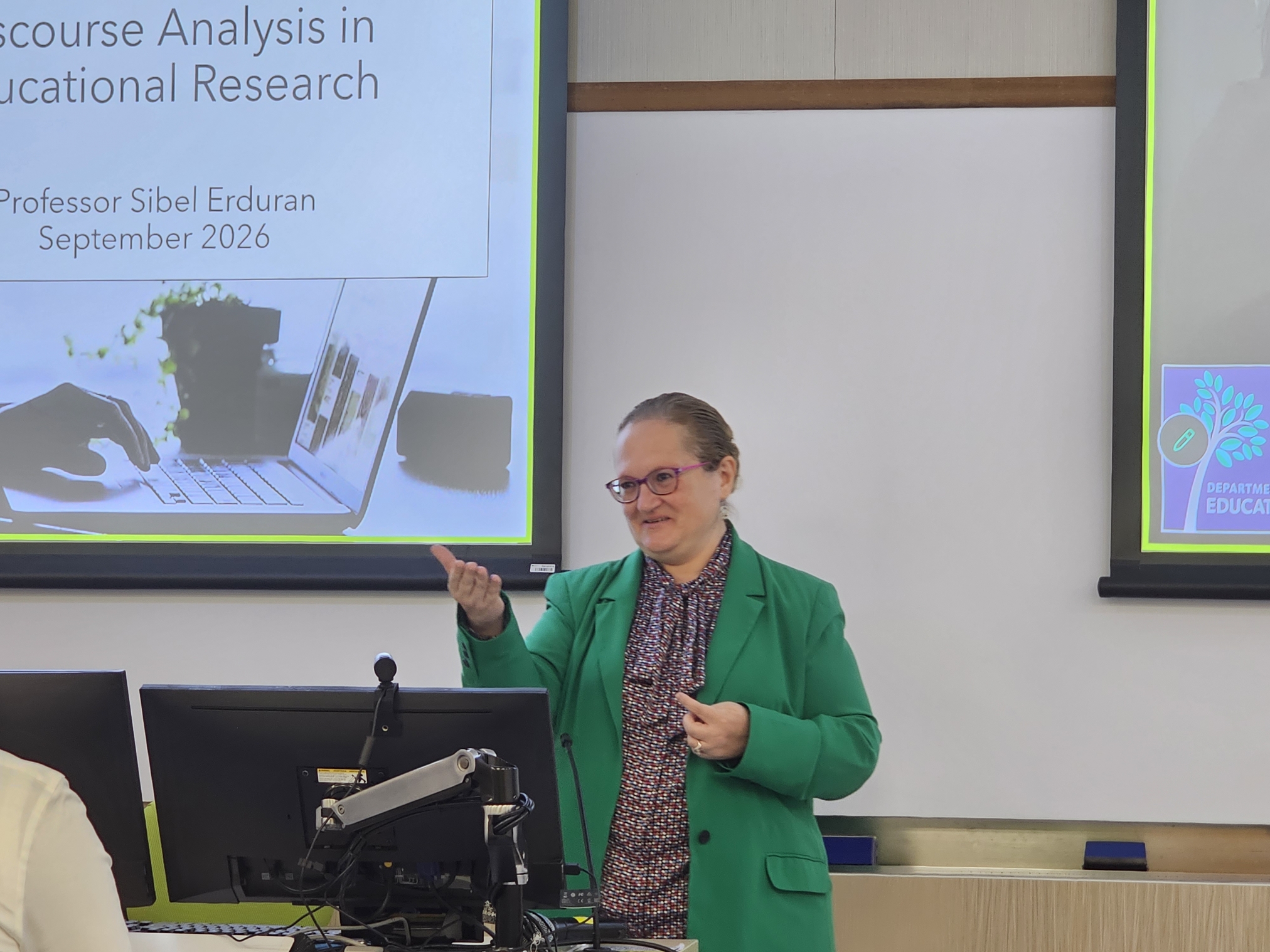
Together, the two sessions reflected C&I’s continued commitment to promoting scholarly dialogue and strengthening research capacity in education. By addressing both emerging theoretical issues in science education and methodological approaches in educational research, the events provided participants with meaningful opportunities to engage with current developments in the field.